
Did you know that if you last used a tax incentive to buy a bicycle in 2022, you are officially eligible for a brand-new upgrade on 1 January 2026? It is a common misconception that you must wait a full forty-eight months to the day, but the ride to work scheme Ireland actually resets with the tax year. This means thousands of commuters are currently sitting on a significant saving without even realising it.
We understand that the paperwork and varying price caps can feel daunting. You might worry about whether a high-performance e-bike fits the criteria or how the salary sacrifice impacts your monthly take-home pay. It’s a lot to manage whilst you’re just trying to find a better way to get to the office. This guide is designed to remove that friction. We’ll show you how to maximise your savings, clarify the €3,000 limit for cargo bikes, and explain the simple steps to getting your quote organised. By the end of this article, you’ll know exactly how to secure a premium ride for up to 52% less than the retail price.
Key Takeaways
- Learn how to leverage salary sacrifice to save up to 52% on the retail price of premium road, gravel, or e-city bikes.
- Identify the exact 2026 price thresholds for standard, electric, and cargo bikes to ensure you fully utilise your tax-free allowance.
- Clear up any confusion surrounding the four-year eligibility rule and find out why 2026 is the ideal time for many commuters to upgrade.
- Navigate the ride to work scheme Ireland application journey with a simple, step-by-step guide from initial quote to final collection.
- Discover how specialist Shimano workshop servicing can protect the longevity of your new commuter bike against the challenging Irish elements.
What is the Ride to Work Scheme in Ireland?
Choosing to cycle to the office shouldn’t be a financial burden. The ride to work scheme Ireland is a government-backed initiative designed to make active commuting more accessible and affordable for everyone. At its core, it’s a tax incentive that allows your employer to purchase a bicycle and safety equipment on your behalf without you paying a cent in income tax, PRSI, or USC on the benefit. This Cycle to Work Scheme overview explains how these programmes have evolved to become a cornerstone of sustainable transport policy across Europe.
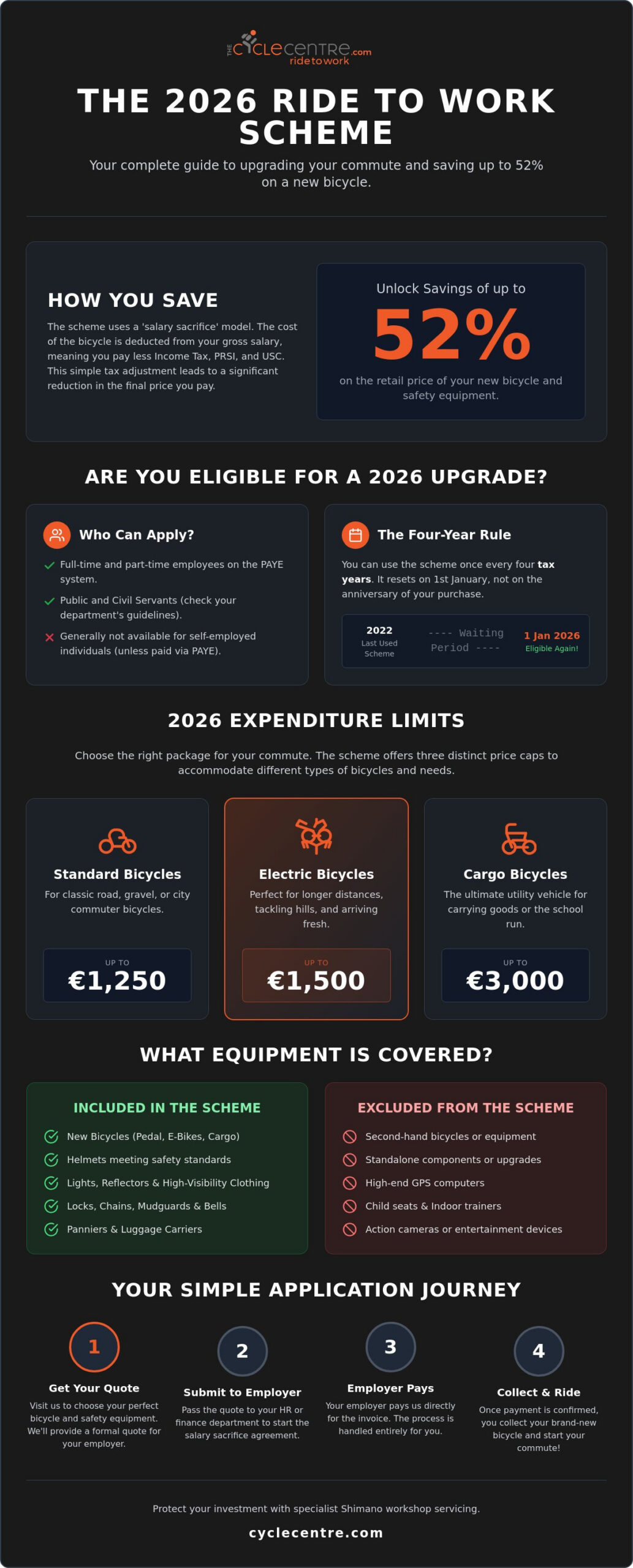
The scheme operates as a salary sacrifice arrangement where you agree to forgo a portion of your gross salary to cover the cost of the equipment, which effectively reduces your overall taxable income. Because the deductions come out before tax is applied, you end up paying significantly less than the retail price. In 2026, the eligibility remains fixed at once every four tax years. It’s a common point of confusion, but the rule is based on the tax year itself. If you last utilised the scheme in 2022, you’re eligible to apply again starting from 1 January 2026, regardless of which month you bought your previous bike.
Who is Eligible for the Scheme?
Most people working across the country can take part in this programme. It’s available to both full-time and part-time employees who are processed through the PAYE system and pay PRSI and USC. This wide net ensures that whether you’re working in a small local business or a large multinational, the savings are within reach. Self-employed individuals are generally not eligible unless they’re also processed as employees under the PAYE system. Public and civil servants are also highly encouraged to participate, though it’s vital to check your department’s specific internal guidelines, as some may have restricted supplier lists or specific procurement windows.
As the landscape of the modern workplace continues to evolve, many professionals are seeking environments that support these flexible and active lifestyles. For those exploring premium office options, BizCity Group offers flexible workspace solutions that cater to the needs of dynamic businesses and their employees.
Eligible Equipment and Safety Gear
The primary focus of the scheme is to provide you with a reliable, new commuter machine. This includes everything from traditional road bikes to modern pedelecs, more commonly known as e-bikes. The equipment you choose must be new; the tax exemption doesn’t apply to second-hand purchases. Along with the bike, you can include a range of essential safety gear to ensure you’re prepared for the Irish weather and road conditions. This includes:
- Cycling helmets that meet recognised safety standards.
- Front and rear lights and reflectors.
- High-visibility or reflective clothing.
- Panniers, luggage carriers, and straps.
- Locks and chains to keep your investment secure.
- Mudguards and bells.
It’s equally important to know what you cannot include. Standalone components like high-end GPS computers, child seats, and indoor trainers are excluded from the scheme. The goal is to facilitate your journey to work, so the equipment must reflect that purpose. By focusing on quality essentials, you ensure your application is processed without a hitch.
Calculating Your Savings: Tax, PRSI, and USC Benefits
The financial appeal of the ride to work scheme Ireland lies in its simplicity. Instead of paying for a bicycle from your take-home pay, the cost is deducted from your gross salary before any taxes are applied. This mechanism reduces your taxable income, which means you pay less income tax, PRSI, and Universal Social Charge (USC) overall. It’s an efficient way to stretch your budget whilst securing a high-quality machine that might otherwise feel out of reach.
Your specific savings depend largely on your tax bracket. If you’re a higher-rate taxpayer at 40%, you’ll likely see the most dramatic reduction in cost, often exceeding 50% of the retail price. For those on the standard 20% rate, the savings remain substantial, typically hovering around 30% once all tax exemptions are tallied. It’s a rare win-win scenario where the government effectively subsidises your commute. You can use our online quote tool to see how these figures apply to your preferred model.
It isn’t just employees who benefit from this arrangement. Employers also see a direct financial incentive for supporting the programme. For every employee who participates, a company saves 10.75% in employer PRSI contributions on the amount of the salary sacrificed. This makes it a popular initiative for HR departments across Ireland, as it promotes a healthier workforce whilst simultaneously reducing corporate tax liabilities.
Beyond financial incentives, maintaining a high-quality workplace environment is essential for business success. To see how professional support can help your organisation operate more effectively, discover The CFS Group and their tailored facilities management solutions.
The Three Expenditure Limits in 2026
The 2026 scheme recognises that different cyclists have different needs, offering three distinct price caps. A limit of €1,250 applies to standard pedal bicycles and essential safety equipment. If you’re looking to tackle longer hills or arrive at the office without breaking a sweat, the limit increases to €1,500 for pedelecs or e-bikes. For those needing to transport children or heavy groceries, the cargo and e-cargo bike limit is set at €3,000, reflecting the more robust technology required for these versatile machines.
Understanding Salary Sacrifice
The repayment process is steady and methodical. According to the Citizens Information guide, the repayment period through salary sacrifice must not exceed 12 months. On your payslip, this will usually appear as a ‘gross deduction’ before your net pay is calculated. For the vast majority of workers, this has a negligible impact on pension contributions or other benefits, but it’s always wise to confirm with your payroll department. This structured approach ensures you can pay off your investment over a year without any interest charges or hidden fees.
Choosing Your Commuter: E-Bikes, Road Performance, or Gravel?
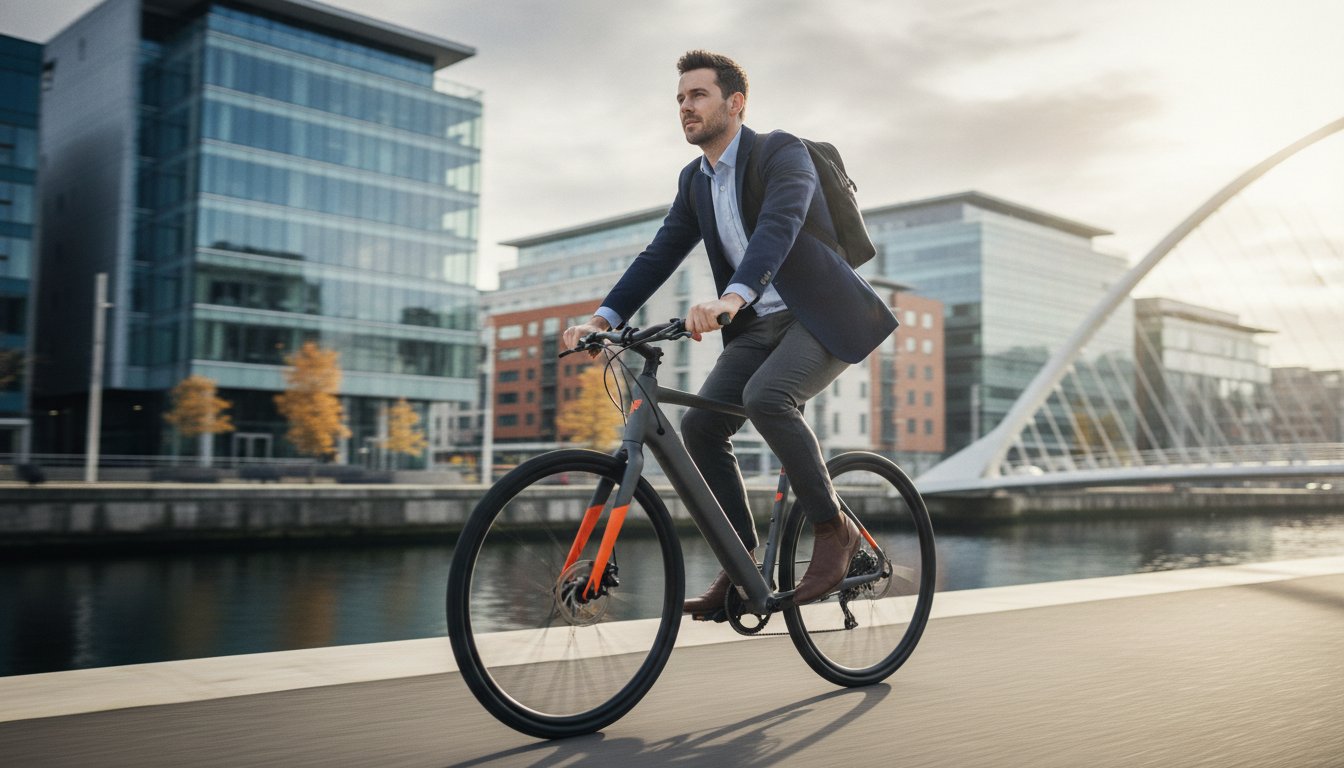
Selecting the right bicycle is a personal decision that depends heavily on the geography of your daily route and your personal fitness goals. A five-kilometre urban sprint across flat city streets requires a different tool than a twenty-kilometre trek through rolling hills. The ride to work scheme Ireland provides the perfect opportunity to invest in a machine that makes your commute the best part of your day rather than a chore. Whether you prioritise raw speed, rugged versatility, or effortless assistance, matching the bike to the terrain is the first step toward a successful transition to active travel.
For those with fitness-oriented goals, road performance bicycles offer unmatched efficiency. These bikes are designed for speed on tarmac, allowing you to cover ground quickly whilst building significant cardiovascular health. Conversely, if your commute involves varied surfaces or the occasional shortcut through a park, a gravel bike might be the smartest choice. These bikes have become a favourite amongst Irish commuters because they handle the grit and unpredictable surfaces of backroads with ease, especially during the damp winter months. You can find detailed Official Cycle to Work Scheme Rules to ensure your chosen model fits within the standard entitlements.
The Rise of the E-Bike in the Workplace
Electric bikes have transformed the way we think about distance. The €1,500 limit for pedelecs makes premium e-bikes more accessible than ever, allowing you to flatten hills and neutralise headwinds with a simple turn of the pedals. One of the greatest benefits of e-commuting is arriving at your desk feeling fresh and energised. You won’t necessarily need a shower or a change of clothes, which removes one of the biggest hurdles for many office workers. Before you make your choice, it is vital to understand the Electric Bike Laws in Ireland to ensure your new ride is fully compliant with road regulations.
High-End Road and Gravel Options
If you prefer the feel of a traditional bike, the €1,250 limit is more than enough to secure a high-performance model from industry-leading brands like Giant and Cube. These manufacturers specialise in frames that balance weight and durability, providing a smooth ride even on less-than-perfect road surfaces. For those seeking a blend of comfort and speed, our guide to Endurance Road Bikes Ireland offers a deep dive into the best models for long-distance comfort. Gravel bikes are particularly well-suited to the Irish climate; their wider tyres provide better grip on wet leaves and road salt whilst offering the clearance needed for mudguards. This versatility makes them a robust year-round companion for any dedicated commuter.
Step-by-Step Application Guide for 2026
Starting your journey with the ride to work scheme Ireland is a logical progression once you’ve decided on the type of bike you need. The process is designed to be methodical and transparent, ensuring both you and your employer are clear on the financial commitments from the outset. First, confirm that your organisation is registered for the programme. Whilst most Irish companies are happy to facilitate this, some may have specific internal windows for applications or preferred administrative partners that you’ll need to use.
Once you have the green light, the next step involves visiting a specialist retailer to select your equipment. You’ll choose your bike and any necessary safety gear, then request a formal quote or invoice. This document is submitted to your HR or accounts department for approval. After they’ve authorised the purchase, your employer pays the retailer directly. Once the payment has been processed and confirmed, you can collect your new machine and begin your commute. It’s a simple, linear journey that moves you from a state of uncertainty to one of informed confidence.
Obtaining a No-Obligation Quote
The selection process should be enjoyable. We recommend using tools like our Smart-bike Search to narrow down your favourite models before visiting the shop. It’s vital to include all necessary safety gear, such as helmets and high-quality locks, in your initial quote to ensure they’re covered by the tax savings. If your heart is set on a premium model that exceeds the government limits, don’t worry. You can simply pay the balance exceeding the €1,250, €1,500, or €3,000 cap directly to the retailer whilst still enjoying the maximum tax relief on the eligible portion of the cost.
Signing the Salary Sacrifice Agreement
The final administrative step involves signing a salary sacrifice agreement with your employer. This document outlines the total cost of the equipment and the agreed repayment term, which cannot exceed 12 months. It’s a formal way to organise your deductions before they reach your bank account. Regarding ownership, the bike is technically yours to use for commuting purposes once the agreement is fulfilled. For a deeper dive into the technicalities of these contracts, you can consult our Ultimate Guide to the Bike to Work Scheme Ireland 2026. Ready to get started? You can request your formal quote online today to begin the process with ease.
Protecting Your Investment with Specialist Servicing
Once you have secured your new bicycle through the ride to work scheme Ireland, the focus shifts from acquisition to longevity. A high-quality machine is a precision instrument. It requires more than just a cursory glance once a month to remain in peak condition. Because you’ve likely chosen a premium brand like Giant or Cube, it is vital to treat the bike with the professional care it deserves. Maintaining your investment ensures that your morning commute remains a reliable and enjoyable experience for years to come.
Irish weather conditions present unique challenges for any daily cyclist. Rain, grit, and road salt whilst commuting can be incredibly abrasive on moving parts. Salt is particularly corrosive; it can quickly degrade your chain, cassette, and derailleur if it isn’t managed correctly. We’ve seen decades of industry evolution since 1974, and one constant remains: the environment is the biggest threat to your bike’s health. Utilising a Shimano accredited workshop provides the peace of mind that your components are being handled by experts who understand these specific environmental pressures.
The Importance of Accredited E-Bike Care
Modern e-bikes are sophisticated pieces of technology that require specialised attention. Beyond the traditional mechanical parts, the electrical systems need regular monitoring to ensure efficiency. Our technicians provide specialist diagnostics for Bosch, Shimano, and Yamaha motors, identifying potential issues before they lead to a breakdown. Software updates are equally crucial for modern e-bike performance, as they often include optimisations for battery management and motor responsiveness. For those who have opted for a high-performance model, our guide to High-End Road Bike Service in Ireland offers a deeper look into the technical standards required for specialist maintenance.
Silver and Gold Service Packages
Choosing the right level of care depends heavily on your annual commuting mileage. A rider covering fifty kilometres a week will have different needs than someone tackling a twenty-kilometre round trip every day. Our Workshop Silver Service is ideal for general upkeep, whilst the Workshop Gold Service provides a comprehensive strip-down and deep clean for high-mileage users. During a professional safety inspection, a mechanic looks for subtle signs of wear in brake pads, stretched chains, and loose bearings. Consistent preventative maintenance prevents small issues from escalating into incredibly costly repairs amongst daily commuters. By staying ahead of the wear and tear, you ensure your ride to work scheme Ireland purchase retains its value and remains a joy to ride.
Your Journey to a Better Commute Starts Here
The 2026 tax year represents a fresh opportunity for thousands of Irish workers to upgrade their daily travel. By utilising the ride to work scheme Ireland, you aren’t just saving up to 52% on a premium bicycle; you’re investing in your long-term health and daily freedom. We’ve explored how simple the application process is and why matching your bike to your specific terrain is the key to a successful transition. From navigating the four-year eligibility rule to understanding the higher price caps for e-bikes, you now have the knowledge to move forward with confidence.
As an independent family business since 1974, we remain dedicated specialists in high-end e-bikes and road performance. Our Shimano accredited workshop is always ready to help you protect your investment against the rigours of the Irish climate. There’s never been a better time to swap the steering wheel for handlebars and enjoy a more invigorated start to your day. Take the first step towards your new ride today.
Get a No-Obligation Quote for Your Tax-Free Bike Today
Frequently Asked Questions
How often can I use the Ride to Work scheme in Ireland?
You can avail of the scheme once every four tax years. This means if you used the programme at any point in 2022, you become eligible again on 1 January 2026. The rule is strictly based on the calendar tax year rather than a rolling forty-eight-month period from the date of your last purchase. This allows many commuters to upgrade their equipment sooner than they might expect.
Can I buy an electric bike through the scheme?
Yes, electric bikes or pedelecs are fully supported and have a specific expenditure limit of €1,500. This higher threshold acknowledges the increased cost of motor and battery technology compared to standard bicycles. Choosing an e-bike through the ride to work scheme Ireland is an excellent way to manage longer commutes whilst ensuring you arrive at the office feeling fresh and ready for the day.
What is the maximum limit for a cargo bike in 2026?
The maximum limit for cargo and e-cargo bikes in 2026 is €3,000. This significant allowance is designed to encourage the use of bicycles for transporting heavy loads or passengers, providing a viable alternative to car journeys for families and urban deliveries. The limit includes both the bicycle itself and any qualifying safety equipment purchased as part of the same transaction.
Does my employer have to participate in the scheme?
Participation is voluntary for employers, though the vast majority of Irish companies choose to offer it due to the PRSI savings they receive. For every employee who takes part, the employer saves 10.75% in PRSI contributions on the amount of the salary sacrifice. If your company doesn’t currently offer the scheme, it’s often worth highlighting these corporate financial benefits to your HR or accounts department.
Can I use the scheme for a second-hand bicycle?
No, the tax incentive applies only to new bicycles and safety equipment purchased from a retailer. Second-hand bikes or private sales do not qualify for the tax exemption under Revenue guidelines. By purchasing a new model, you also benefit from manufacturer warranties and the peace of mind that the equipment meets current safety standards, which is essential for a reliable daily commute.
What happens to the bike if I leave my job before the 12 months are up?
If you leave your employment before the salary sacrifice agreement is complete, the remaining balance is typically deducted from your final net salary. Because this final payment is taken from your net pay rather than your gross pay, you will lose the tax benefit on that specific portion of the cost. The bicycle remains your property once the outstanding balance has been settled with your employer.
Is safety equipment like helmets and lights included in the price cap?
Yes, all qualifying safety equipment is included within the relevant price cap for your chosen bicycle type. This includes essential items such as helmets, lights, locks, mudguards, and reflective clothing. It’s sensible to include these items in your initial quote to ensure you maximise your tax savings across the entire purchase. Standalone components or accessories not related to safety are generally excluded.
Can I pay the difference if the bike I want costs more than the limit?
You can certainly choose a bicycle that exceeds the government limits by paying the balance directly to the retailer. In this scenario, your employer will process the maximum eligible amount through the ride to work scheme Ireland to secure your tax relief. You then settle the remaining cost using your own funds at the point of purchase. This allows you to access premium models whilst still benefiting from the maximum available incentive.