

What if the biggest obstacle to your first weekend spin isn’t your physical fitness, but the confusing jargon and a nagging fear of Irish traffic? It’s a common feeling amongst newcomers who want to explore the countryside but feel held back by technical uncertainty or the dread of an uncomfortable saddle. We understand that the transition from a casual commute to purposeful road cycling can feel daunting. This guide simplifies the process by offering practical beginner road cycling tips for women, ensuring you feel empowered rather than overwhelmed.
You deserve to feel safe and comfortable every time you head out. We’ve gathered expert advice to help you choose a bike that fits your unique proportions and identify the gear that actually matters for our local roads. We will also walk you through the financial benefits of the Cycle to Work scheme and show you how tools like our Smart-bike Search make finding the perfect fit simple. From mastering gear shifts to building confidence in a group, this 2026 guide provides a clear, step-by-step roadmap for your new cycling journey.
Key Takeaways
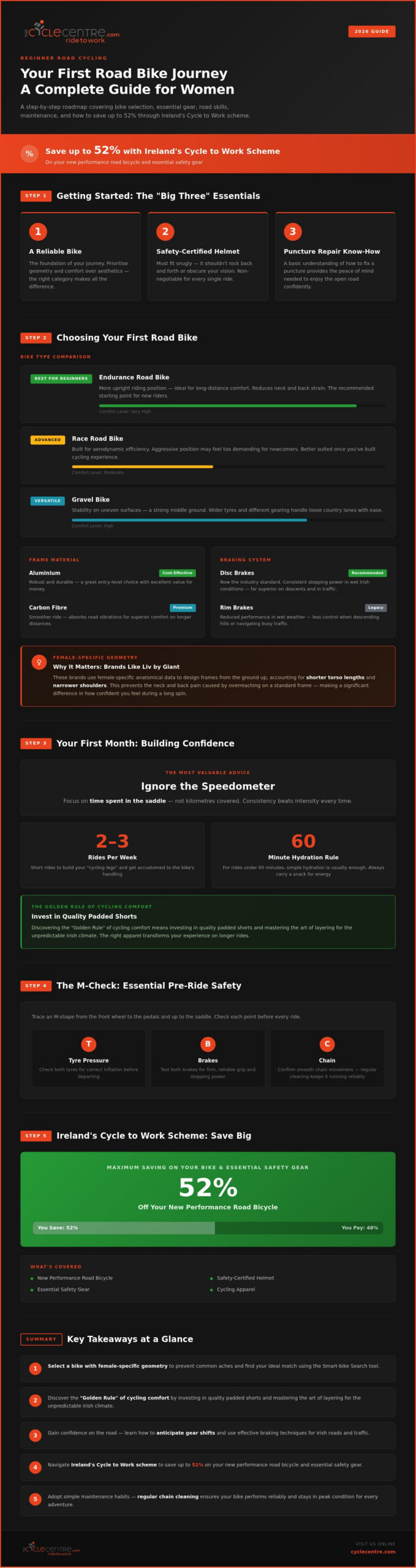
- Learn how to select a bike with female-specific geometry to prevent common aches and find your ideal match using our Smart-bike Search tool.
- Discover the “Golden Rule” of cycling comfort by investing in quality padded shorts and mastering the art of layering for the unpredictable Irish climate.
- Gain confidence on the road with essential beginner road cycling tips for women, including how to anticipate gear shifts and use effective braking techniques.
- Understand how to navigate the Cycle to Work scheme in Ireland to save up to 52% on your new performance road bicycle and essential safety gear.
- Pick up simple maintenance habits, such as regular chain cleaning, to ensure your bike performs reliably and stays in peak condition for every adventure.
Getting Started: The Mindset and Basic Equipment for New Riders
Road cycling offers a unique blend of physical challenge and mental clarity. Whether you want to escape the office or improve your fitness, it’s a versatile pursuit. Many women feel a sense of hesitation, often called “imposter syndrome,” when stepping into a professional bike shop for the first time. You might worry about technical jargon or feel you aren’t “athletic enough” yet. Practical beginner road cycling tips for women often start with the mental approach. Every expert was once a beginner; the right shop should feel like a supportive community rather than an exclusive club.
If you’re planning to cover longer distances or join weekend group spins, a dedicated road bicycle is significantly more efficient than a hybrid. While hybrids are great for short hops, the lightweight frame and aerodynamic positioning of a road bike allow you to travel further with less effort. To get moving, you only need the “Big Three” essentials. These include a reliable bike, a safety-certified helmet, and a basic understanding of how to fix a puncture. These foundations provide the peace of mind needed to enjoy the open road with confidence.
Setting Realistic Goals for Your First Month
When looking for beginner road cycling tips for women, the most valuable advice is to ignore the speedometer. During your first month, focus on time spent in the saddle rather than how many kilometres you’ve covered. Consistency beats intensity every time. Aim for two or three short rides a week to build your “cycling legs” and get accustomed to the bike’s handling. Understanding your “why” helps too. Whether it’s for the fresh air or a faster commute, having a clear purpose keeps you motivated on damp Irish mornings.
The Essential Pre-Ride Checklist
A quick safety check ensures your ride isn’t cut short by mechanical issues. Follow the “M-Check” by tracing an M-shape from the front wheel to the pedals and up to the saddle. Check your tyres for pressure, your brakes for grip, and your chain for smooth movement. Your helmet must fit snugly. It shouldn’t rock back and forth or obscure your vision. For rides under 60 minutes, simple hydration is usually enough. Always carry a small snack to keep your energy levels steady and prevent fatigue before you reach home.
Finding Your Perfect Match: How to Choose Your First Road Bike
Choosing your first bicycle is an exciting milestone, but the variety of options can feel overwhelming. One of the most essential beginner road cycling tips for women is to prioritise geometry over aesthetics. Endurance bikes offer a more upright position, making them ideal for long-distance comfort. Race bikes are built for aerodynamic efficiency, which might feel too aggressive for a newcomer. Gravel bikes provide a middle ground, offering stability on uneven surfaces. Selecting the right category ensures that your first few months on the road are spent enjoying the scenery rather than managing physical discomfort.
Brands like Liv by Giant have revolutionised the market by using female-specific anatomical data to design frames from the ground up. These bikes account for shorter torso lengths and narrower shoulders, which helps prevent the neck and back pain often caused by overreaching on a standard frame. Staying informed about the latest equipment trends through sources like BBC Sport cycling coverage can help you understand what features professional riders value, but for a beginner, comfort remains the ultimate performance metric. These design nuances make a significant difference in how confident you feel during a long spin.
Frame material and braking systems also play a vital role in your experience. Aluminium frames are robust and cost-effective, while carbon fibre offers a smoother ride by absorbing road vibrations. Regardless of the material, modern disc brakes have become the industry standard for safety. They provide consistent stopping power in the wet Irish climate, giving you far more control than traditional rim brakes when descending hills or navigating traffic. Using these beginner road cycling tips for women as a checklist will ensure you invest in a bike that supports your growth as a rider.
Road vs Gravel: Which Terrain Will You Conquer?
Road bikes are designed for speed on smooth tarmac, featuring narrow tyres that minimise rolling resistance. However, if you plan to explore rugged country lanes, a gravel bike might be the better choice. These versatile machines use wider tyres and different gearing to handle loose surfaces with ease. You can use our Smart-bike Search to filter these categories and find a model that matches your intended routes and riding style.
The Rise of the Electric Road Bike (E-Road)
E-road bikes are a fantastic entry point for building confidence on the road. The motor assistance doesn’t replace your effort; instead, it levels the playing field on steep inclines and allows you to ride further without exhaustion. This technology is particularly helpful for beginners who want to keep up with more experienced groups or tackle hilly terrain with ease. If you are unsure which path to take, you can always explore our current range of performance road bicycles to see which style resonates with your goals.
Essential Apparel and Gear: Prioritising Comfort and Performance
The “Golden Rule” of road cycling is simple: invest in high-quality padded shorts before anything else. While pro-level aero jerseys look the part, your comfort depends entirely on the interface between your body and the bike. These shorts, often called a chamois, feature a foam or gel pad designed to reduce friction and absorb road vibrations. It is a common mistake amongst newcomers to wear underwear beneath these shorts, but they are designed to be worn against the skin to prevent chafing. Following these beginner road cycling tips for women will help you avoid the most common cause of early-season discomfort.
Saddle choice is equally critical, yet frequently misunderstood. You might be tempted to choose the softest, widest saddle available, but these often lead to more pain on longer rides. A “squishy” saddle allows your sit bones to sink in, which puts pressure on soft tissue and restricts blood flow. A firmer saddle that matches your specific anatomy provides the necessary support for your skeleton. Transitioning to clipless pedals, where your shoes “click” into the pedals, is another major step. Don’t feel pressured to do this on day one. Start with flat pedals to build your confidence in traffic and move to a clipless system once your bike handling feels like second nature.
The Layers of Success: Dressing for Variable Weather
The Irish climate is notoriously unpredictable, so a versatile three-layer system is your best defence. Start with a breathable base layer to wick sweat away from your skin. Add a thermal mid-layer for warmth and carry a packable rain cape in your jersey pocket for sudden showers. High-visibility colours and reflective details are essential for safety on our national roads. Don’t forget quality socks and gloves. Numb fingers make braking difficult, whilst the right socks prevent painful blisters during longer weekend spins.
Solving the Saddle Soreness Puzzle
Comfort is a science, not a matter of “toughening up”. Most saddle pain stems from a mismatch between the saddle width and your sit bones. Many women require a slightly wider saddle to accommodate their pelvic structure. Using a dedicated chamois cream can also provide a protective barrier against skin irritation on rides exceeding an hour. Ultimately, a professional bike fit is the most effective way to ensure your gear works in harmony with your body. It eliminates the guesswork and allows you to focus on the joy of the ride. This tailored approach is one of the most effective beginner road cycling tips for women looking to enjoy the sport long-term.
Master the Road: Essential Handling Skills and Safety Tips
Confidence on the bike grows as you master the mechanics of movement. One of the most practical beginner road cycling tips for women involves mastering your gears. You should always anticipate the road ahead. If you see an incline approaching, shift into an easier gear before the gradient increases. Shifting whilst under heavy pressure can strain the chain and cause a loud, unsettling clunk. By planning your shifts, you maintain a steady cadence and protect your bike’s components from unnecessary wear.
Braking technique is another fundamental skill. New riders often rely too heavily on the rear brake, but your front brake actually provides the majority of your stopping power. Use both brakes together with a smooth, progressive squeeze to avoid skidding, especially on damp Irish surfaces. Positioning yourself correctly on the road is equally vital. Don’t be afraid to “take the lane” when approaching narrow sections or junctions. This prevents motorists from attempting dangerous overtakes and ensures you remain visible. Use clear hand signals to communicate your intentions, making your movements predictable to everyone else on the road.
Navigating Irish Roads with Confidence
Our national roads present unique challenges, from deep potholes to loose gravel on rural lanes. Keep your gaze focused several metres ahead to spot these hazards early. When approaching roundabouts, stay central in your lane to claim your space and avoid being “squeezed” by larger vehicles. We also recommend using daytime running lights on every spin. These high-output LEDs significantly increase your visibility to drivers, even in bright sunshine, providing an extra layer of security during your journey. To ensure your bike is always in peak condition for these conditions, you can book a professional workshop service to maintain your brakes and drivetrain.
Your First Group Ride: Etiquette and Benefits
Joining a local club or a group of friends is the fastest way to improve. You’ll learn through observation and benefit from the collective experience of seasoned riders. Communication is the backbone of group safety. Use standard calls like “Hole!” to warn those behind of road defects, or “Car up!” to signal approaching traffic. You will also discover the science of drafting. By riding closely behind another cyclist, you can save up to 30% of your energy, allowing you to travel further and faster than you could alone. These sessions are also a great way to pick up more beginner road cycling tips for women from those who have already mastered the local routes.
Beyond the First Ride: Maintenance, Community, and the Cycle to Work Scheme
Owning a performance road bicycle is a commitment to your long-term well-being, but it also requires a basic understanding of the logistical and financial tools available to you. Your journey doesn’t end once you’ve mastered the road; it evolves as you learn to care for your equipment and connect with the wider cycling community. One of the most valuable beginner road cycling tips for women is to treat your bike as a precision machine that needs regular attention to perform at its best. A well-maintained bike is not only faster and smoother but also significantly safer on the road.
Finding a community of like-minded riders is the final piece of the puzzle. Ireland has a thriving scene of women-only sportives and local events designed to be inclusive and encouraging. These gatherings provide a safe space to ask questions, share experiences, and discover new routes without the pressure of a competitive race. Engaging with these groups transforms cycling from a solo exercise into a social adventure, helping you stay motivated throughout the year. Whether you’re aiming for your first 50km event or simply want a regular weekend spin, the support of a community is invaluable.
The Cycle to Work Scheme: Your Financial Shortcut
The Cycle to Work scheme Ireland remains the most efficient way to fund your new hobby. This government initiative allows you to save up to 52% on the cost of a new bike and essential safety gear through tax relief. It’s the perfect way to upgrade to a premium brand like Cube or Giant without the upfront financial burden. To begin, simply request a quote for your chosen equipment and submit it to your employer. The cost is then deducted from your gross salary over a set period, making high-performance cycling accessible to everyone.
Maintenance for Longevity: Keeping Your Bike Smooth
Simple habits prevent expensive repairs. A 5-minute post-ride wipe down is essential, especially during the damp Irish winter, to prevent road salt and grit from damaging your frame. Regularly checking your tyre pressure is the easiest way to prevent “snakebite” punctures, which occur when an under-inflated tyre hits a sharp edge. Whilst basic cleaning can be done at home, a Shimano accredited workshop is vital for deeper technical care. We recommend a Silver or Gold service at least once a year to ensure your drivetrain, brakes, and E-bike motor systems are functioning perfectly, giving you total peace of mind on every journey.
Your Journey to the Open Road Starts Here
Mastering the road is about more than just pedalling. It’s about the confidence that comes from the right preparation and expert support. You now have a clear understanding of how female-specific geometry prevents discomfort and why the right layers are essential for the Irish climate. These beginner road cycling tips for women are designed to remove the barriers between you and the horizon. This allows you to focus on the sense of freedom that only two wheels can provide.
As a family-owned business established in 1974, we’ve spent decades helping riders find their perfect match. We are proud to be authorised Giant and Cube stockists. Our Shimano Accredited Gold Service Workshop ensures your investment is always protected. Whether you are navigating your first junction or preparing for a weekend sportive, our team is here to offer the seasoned authority and community spirit you need to succeed.
Explore our range of women’s road bikes and get a Cycle to Work quote today
The open road is waiting for you; it’s time to take the first step with a community that supports your every move.
Frequently Asked Questions
Do I need to wear Lycra to start road cycling?
You don’t need to wear full Lycra to begin your journey, but some specialised apparel is highly beneficial. Whilst loose-fitting athletic gear is fine for short distances, we suggest prioritising a pair of padded cycling shorts worn under your clothes. These reduce friction and improve comfort on the saddle significantly. As you progress, you might find that form-fitting jerseys prevent flapping in the wind and offer useful pockets for snacks and spares.
How much should I spend on my first road bike in 2026?
Investing in your first road bike is a balance between performance and budget. In 2026, entry-level models from reputable brands like Giant and Cube offer incredible value with reliable components and lightweight frames. Rather than focusing on the lowest price, consider the longevity of the bicycle and whether it meets your specific needs. Utilising the Cycle to Work scheme can also make premium performance road bicycles more affordable by spreading the cost through tax-free payments.
Is road cycling safe for women riding alone in Ireland?
Road cycling is generally safe for women riding alone in Ireland, provided you follow basic safety protocols. Always plan your routes to include roads with lower traffic volumes and maintain high visibility with daytime running lights. Share your live location with a friend or family member through your phone or bike computer. Building confidence through beginner road cycling tips for women, such as assertive road positioning, ensures you stay safe whilst enjoying the freedom of the Irish countryside.
What is the difference between a mens and womens road bike?
The primary difference between men’s and women’s bikes lies in the geometry and contact points. Women’s specific bikes, such as those from the Liv range, are designed using anatomical data to account for shorter torso lengths and narrower shoulders. They also typically feature saddles designed for female pelvic structures and narrower handlebars to improve control. These adjustments prevent common issues like neck strain and overreaching, making the riding experience far more intuitive and comfortable for female riders.
How do I prevent my hands and feet from getting numb whilst riding?
Numbness in your extremities is usually caused by excessive pressure or poor circulation. Ensure you aren’t gripping the handlebars too tightly and change your hand position frequently during the ride. Quality padded gloves and moisture-wicking socks can also help. If the problem persists, it often indicates a need for a professional bike fit to adjust your saddle height or reach. Correct alignment ensures your weight is distributed evenly, preventing nerves from being compressed whilst you ride.
Can I get an electric road bike on the Cycle to Work scheme?
Yes, you can absolutely purchase an electric road bike through the Cycle to Work scheme. The Irish government has set higher price caps for electric bikes compared to standard bicycles to encourage sustainable transport and accessibility. This allows you to save up to 52% on a premium E-road bike, making it a fantastic financial shortcut for beginners. Our team can provide a no-obligation quote to help you get your employer on board with the application process.
How often should I get my road bike serviced?
We recommend a professional service at least once a year, or more frequently if you are a high-mileage rider. A Shimano accredited Silver Service is ideal for routine maintenance, whilst a Gold Service provides a deep-clean and detailed inspection of all components. Between professional visits, you should perform weekly home checks on your tyre pressure and chain lubrication. Keeping your drivetrain clean and well-oiled prevents premature wear and ensures your gear shifts remain crisp and reliable.
What should I carry in my saddlebag for emergencies?
Your saddlebag should contain the essential tools to handle common mechanical issues on the road. This includes a spare inner tube, tyre levers, and a multi-tool with various hex keys. You should also carry a small pump or a CO2 inflator to re-inflate your tyres after a repair. Having these items on hand provides peace of mind and ensures you aren’t left stranded. Learning how to use these tools is one of the most empowering beginner road cycling tips for women.