

More motor power won’t necessarily make a technical trail feel easier. The best e-mtb for technical trails is a bike that stays composed on steep climbs, rough ground and tight turns, where you need to place each wheel carefully. A large battery or impressive torque figure may catch your eye, but neither tells you how confidently a bike corners, absorbs impacts or responds to your input.
Comparing geometry, suspension, motor assistance and weight can quickly feel complicated. Look beyond headline specifications and assess how the features work together. This guide explains how to build a shortlist around your terrain, riding style, fit and expectations for ongoing support.
We’ll compare full-power and lighter e-MTBs, explain how suspension and handling affect demanding rides, and consider battery capacity as part of the overall package. We’ll also cover practical service needs: The Cycle Centre’s specialist workshop supports e-bikes with Bosch, Shimano, Yamaha and Bafang motors. The aim is to help you find a bike that feels controlled and manageable, not merely powerful on paper.
Key Takeaways
- Identify the trail features you ride most, from steep gradients to tight turns, before comparing bike designs.
- Consider how geometry and suspension affect your position, steering response and composure over rough ground.
- Compare fit, tyres, motor feel and serviceability alongside battery capacity and bike weight.
- Use a safe, representative test ride to check fit, assistance modes, braking and handling within your ability.
- Choose the best e-mtb for technical trails by matching the bike to your needs and checking the maintenance guidance for its components.
What makes an e-MTB the best choice for technical trails?
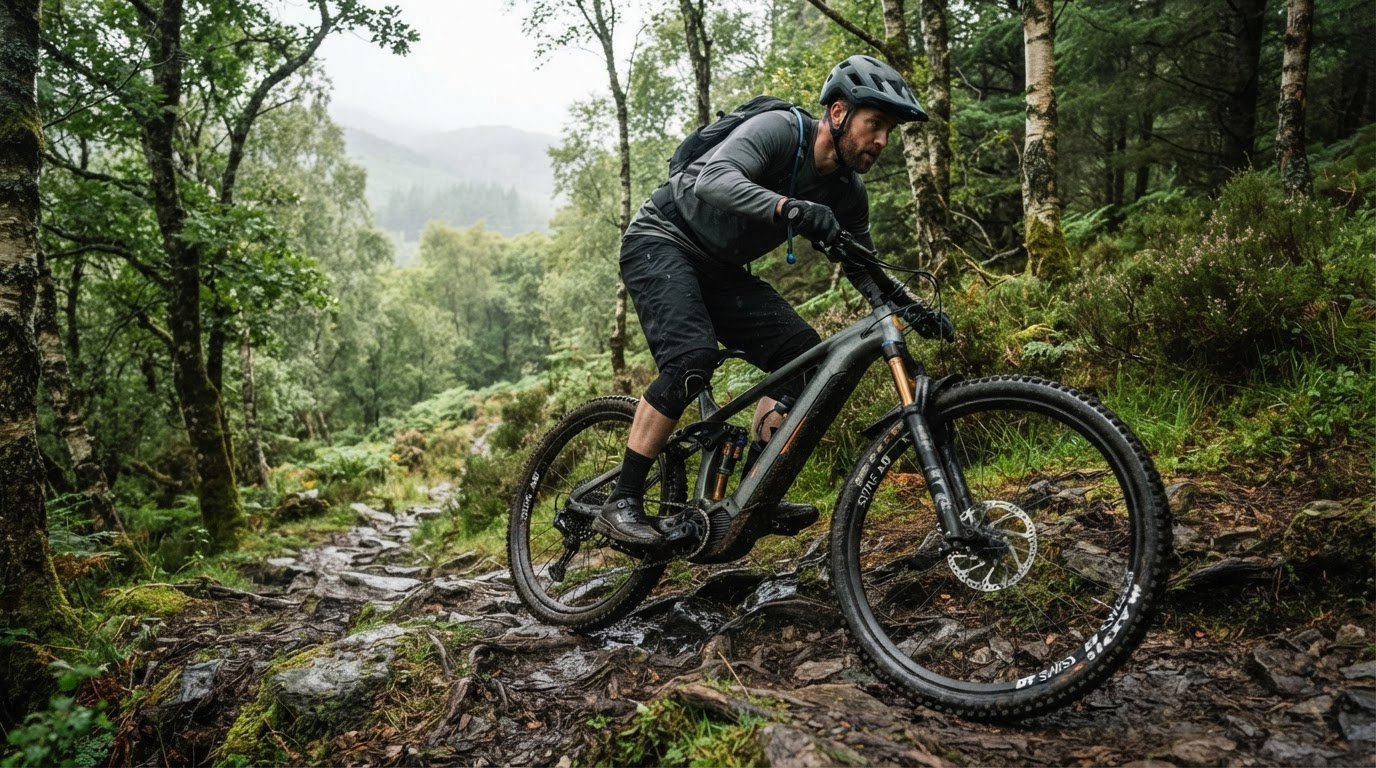
A technical trail asks more of a bike and rider than a smooth, predictable route. Steep gradients, roots, rocks, tight turns and changing grip all call for careful choices about speed, line and balance. Difficulty depends on conditions as well as the route: a familiar climb may feel manageable when dry and much more challenging when the surface is loose or wet.
An e-MTB combines mountain-bike handling with pedal assistance. Assistance can help you keep moving on climbs, but it doesn’t steer, choose a safe line or replace sound judgement. As Mountain bike designs and features explains, e-MTBs share the off-road design principles of mountain bikes, adapted with an electric drive system. Your confidence and control still depend on the bike’s fit and setup, your ability and the ground beneath your tyres.
Which trail features put the most demand on an e-MTB?
Steep climbs and loose surfaces make traction and balance especially important. If assistance arrives more abruptly than you expect, it can be harder to manage your effort and hold a steady line. Roots and rocks create repeated impacts, while tight turns call for predictable steering at lower speeds. On descents, dependable braking and a balanced riding position can matter more than carrying extra speed.
Start with the trails you actually ride, rather than the hardest terrain you can imagine. Short, rocky climbs create different demands from long descents or routes with frequent tight corners. Conditions also change, so a bike that feels composed on firm ground may need more careful handling when grip is limited. Consider your experience and ride within your ability.
Why does technical-trail suitability mean more than motor power?
Motor output is only one part of the ride. Power delivery affects how assistance responds as you pedal, while bike weight and its distribution can influence how easy it feels to manoeuvre through a turn or reposition on a climb. These qualities work alongside steering, braking and suspension. A peak figure or long specification list can’t tell you on its own whether the bike will feel controlled at your pace on your usual terrain.
A technical-trail e-MTB is a balance of fit, handling, suspension and predictable assistance, not just a power rating. When comparing options, ask how each feature supports your riding rather than assuming more power means more control. Rider ability, trail conditions and careful setup all affect the result. The best e-mtb for technical trails is one that helps you ride your chosen terrain confidently while still feeling manageable and rewarding.
How geometry, suspension and motor behaviour shape trail control
A bike’s control comes from how its parts work together, not from one standout component. Geometry influences your position and how the bike steers; suspension helps the wheels track uneven ground; and motor assistance affects how smoothly you can add effort. Tyres connect the whole package to the trail. A mismatch in any one area can make a bike feel less settled, even if its specification looks impressive.
Which geometry details should riders compare?
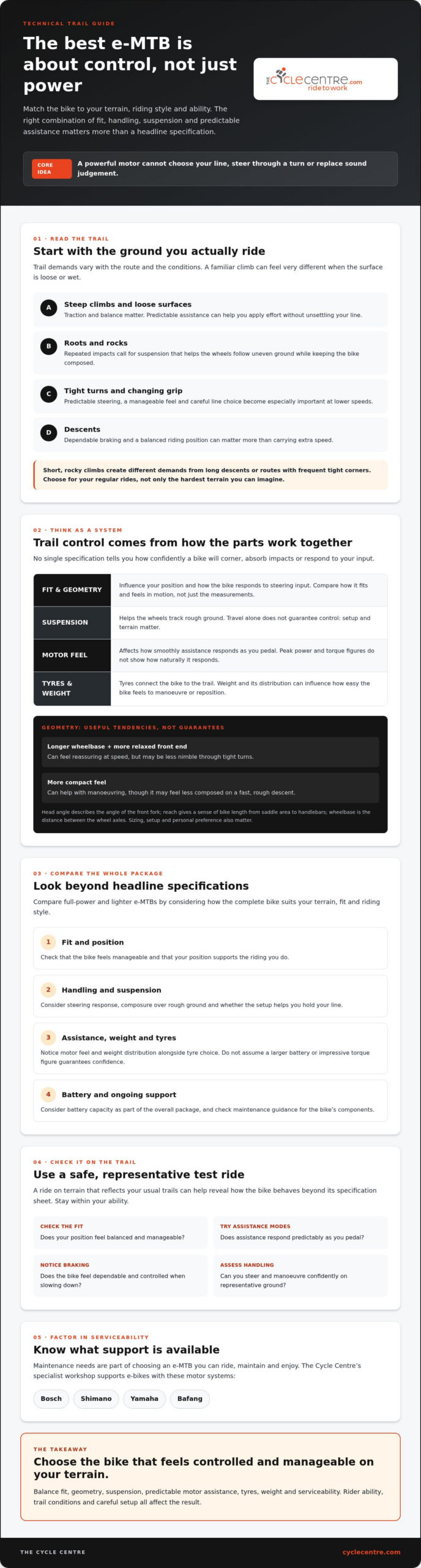
Three terms are useful starting points. The head angle describes the angle of the front fork, reach gives a sense of the bike’s length from the saddle area to the handlebars, and wheelbase is the distance between the wheel axles. Together, these measurements influence your position and how the bike responds to steering input.
A longer wheelbase and a more relaxed front end can feel reassuring at speed, but may be less nimble through tight turns. A more compact feel can help with manoeuvring, though it may feel less composed on a fast, rough descent. These are tendencies, not guarantees: sizing, setup and personal preference matter. Compare how the bike fits and feels in motion instead of chasing a particular geometry number.
How should suspension and motor assistance feel on a trail?
Suspension should help the wheels follow rough ground while keeping the bike supported through impacts and turns. More travel alone doesn’t guarantee better control. The right amount and setup depend on the terrain and your riding style. Poorly matched suspension can feel harsh or overly soft, so notice whether the bike stays composed without making it difficult to hold your line.
On a steep or uneven climb, predictable assistance makes it easier to apply power without upsetting your balance or traction. Peak power and torque figures don’t show how naturally a motor responds to your pedalling. If serviceability is part of your decision, The Cycle Centre’s specialist workshop supports e-bikes with Bosch, Shimano, Yamaha and Bafang motor systems.
Use this checklist to assess the bike as a complete package:
- Frame: Does the fit and steering feel suit your body and typical trails?
- Suspension: Does it absorb rough ground while remaining supportive?
- Motor: Is assistance predictable when you start pedalling or adjust your effort?
- Tyres: Do they feel suited to the surfaces and conditions you ride?
Before riding, check the access guidance for the specific trail you plan to use, as conditions and permitted activities can vary. To compare fit and components in person, browse electric mountain bike options. The best e-mtb for technical trails is the one whose geometry, suspension, motor and tyres work together for your terrain and ability.
How to compare e-MTBs for technical trails without chasing headline specs
A useful comparison starts with your rides, not a league table. Note the surfaces, climbs and ride length you expect, then assess each bike against the same needs. Specifications can help narrow a shortlist, but check current manufacturer information for the exact model year and build. Components can differ between versions of what appears to be the same bike.
Which specifications belong in an e-MTB comparison?
Use this table to organise the details, then consider how each bike feels in practice. Numbers are a starting point, not a verdict.
| What to compare | What to check | Why it matters |
|---|---|---|
| Fit and geometry | Available sizes, rider position and model-specific geometry | A comfortable, controlled position helps you move around the bike. |
| Suspension | Hardtail or full-suspension design, travel and adjustment guidance | Consider the roughness of your regular trails and how you like the bike to respond. |
| Motor system | System and assistance settings, alongside how support feels under pedalling | Headline output won’t tell you whether assistance feels manageable on a climb. |
| Battery and weight | Capacity and stated bike weight for the exact build | Relate range to your ride plans, and weight to manoeuvring and handling. |
| Tyres and serviceability | Tyre type and component details; motor system and suitable service support | Match the tyres to your surfaces, and check where the motor system can be serviced. |
No single specification predicts how an e-MTB will perform on your trails; the complete bike and your needs matter. A larger battery may suit longer rides, but consider its weight as part of the package. For shorter rides with frequent technical manoeuvres, handling and feel may deserve more attention. For broader buying context, compare your shortlist with BikeRadar’s expert guide to electric mountain bikes, then check current details directly with manufacturers.
How should riders compare full-suspension and hardtail e-MTBs?
A full-suspension bike has suspension at both ends. It may offer added comfort and traction over sustained rough ground, but has more suspension components to maintain. A hardtail has a suspension fork and a rigid rear end. Its design is simpler, though rough trails may feel more demanding. Neither is automatically the better choice. Consider your trail surfaces, experience and willingness to follow the maintenance guidance for the bike and its components.
Keep rankings in perspective. Without consistent test evidence, verified current availability and a clearly defined rider and trail profile, a “best” list can’t establish which bike will suit you. The best e-mtb for technical trails is the option that meets your priorities across the whole package, not the one with the longest specification sheet.
How to test-ride and set up an e-MTB for technical trails
A short, controlled test ride can tell you things a specification sheet can’t: whether the bike fits, how assistance responds and whether the handling feels reassuring. If a test ride is available, choose a safe route that reflects the kind of riding you expect, without taking on obstacles beyond your ability. A gentle climb, a few turns and a familiar uneven section can offer useful clues.
What should you check during an e-MTB test ride?
- Check your fit. Notice whether you can reach the handlebars comfortably and move into a balanced standing position. You should be able to shift your weight without feeling cramped or stretched.
- Try the assistance modes. On a suitable, manageable gradient, compare how support responds as you begin pedalling and adjust your effort. Look for a response you can control, especially on uneven ground.
- Assess braking. At a controlled pace, check that the brakes feel predictable and easy to modulate. Don’t use a test ride to explore the limits of your braking on unfamiliar terrain.
- Evaluate handling and suspension. Notice how the bike steers through safe turns and responds to representative bumps. Does it feel composed, and can you hold a comfortable line?
Use your own ride priorities as a guide. A bike that feels steady at a gentle pace may suit you better than one that feels demanding or difficult to manoeuvre. If the route doesn’t include the terrain you care about, treat the ride as a fit and handling check, not proof of how the bike will perform everywhere.
What should you confirm before choosing a bike?
Ask whether the bike’s fit and setup can be adjusted for your body and intended trails. Confirm the exact motor system and current specification for the particular model and build you’re considering. You can also ask how suspension setup is guided, which parts need routine attention, and where motor diagnostics and specialist servicing are available for that system. Maintenance requirements vary, so follow the manufacturer’s guidance for the bike and its components.
The Cycle Centre’s Smart-bike Search can help you explore bicycle options. When comparing fit and handling, focus on how the bike suits your needs rather than chasing headline figures. Before deciding on the best e-mtb for technical trails, check that the bike feels manageable and that you understand how to look after it. Further details are available with the e-MTB options.
Choose an e-MTB you can ride, maintain and enjoy
Your shortlist should lead to a bike that suits both your rides and your routine after them. Fit, trail demands, handling and motor assistance all matter, as does understanding what care the bike’s components require. The best e-mtb for technical trails isn’t necessarily the most powerful or feature-packed option. It’s the bike you can ride with confidence and maintain according to the manufacturer’s guidance.
Maintenance needs vary with the bike, its components, riding conditions and the manufacturer’s recommendations. Regular use on wet or rough trails may mean paying closer attention to cleaning and wear, but check the model-specific guidance rather than relying on a generic service schedule. Before deciding, find out what routine checks the bike needs and whether suitable support is available for its motor system.
Why does e-bike workshop support matter after purchase?
An e-MTB’s motor is part of a wider electrical system, so motor-specific diagnosis and servicing may be relevant when choosing a bike and later on. The Cycle Centre sells electric mountain bikes, and its specialist workshop services e-bikes with Bosch, Shimano, Yamaha and Bafang motors. This doesn’t confirm compatibility or repair outcomes for every model, so check the exact system and bike with the retailer before you buy.
Ask what workshop support applies to the specific e-MTB you’re considering, and what to do if it needs motor diagnosis or component attention. The answer can help you assess practical ownership alongside handling and trail suitability, without assuming every workshop works on every system.
What is a sensible next step when your shortlist is ready?
Before making a final comparison, check current stock and verify the exact model, build and specifications. Similar bike names can cover different component packages, so confirm the details rather than relying on an old review or a general product description. Bring your shortlist and describe your usual terrain, ride length and fit preferences. This gives a retailer useful context without assuming there’s one perfect match.
The Cycle Centre’s Smart-bike Search can help you explore bicycle options, and practical guidance can help you assess suitability against your riding needs. Take your time, confirm the details and choose an e-MTB you’ll be comfortable riding and maintaining. See the current electric mountain bike range.
Make your shortlist work for the rides ahead
The right choice comes down to how well a bike fits you, your trails and the way you want assistance to feel. Geometry, suspension and motor behaviour matter most as a working combination, while a careful comparison and safe test ride can reveal more than headline figures alone. The best e-mtb for technical trails is the one that feels controlled under you and makes sense to maintain over time.
The Cycle Centre is an independent, family-owned bicycle retailer founded in 1974. Its Smart-bike Search helps you explore bicycle options, and its specialist e-bike workshop supports Bosch, Shimano, Yamaha and Bafang motors. Check current models and specifications, then ask about a bike that suits your fit and terrain.
Explore electric mountain bikes at The Cycle Centre and ask about options for your fit, trails and riding style.
Frequently Asked Questions
What is the best type of e-MTB for technical trails?
The best e-MTB for technical trails depends on your fit, usual terrain and how you want the bike to handle. Look for a comfortable riding position, predictable steering, and suspension and assistance that feel manageable on your regular climbs and descents. A bike suited to rocky, sustained routes may not be ideal for tight, smoother trails. Use a safe test ride and compare the whole package rather than choosing by motor figures alone.
Is a full-suspension e-MTB better for technical trails?
Not automatically. A full-suspension e-MTB may offer more comfort and traction over repeated bumps, which can be useful on rough trails. It also has additional suspension components to maintain, and its setup affects how it rides. A hardtail may suit smoother routes or riders who prefer a simpler design. Consider your typical terrain, experience and willingness to maintain the suspension, then assess the bike with a suitable setup.
How much motor power do I need for technical e-MTB trails?
There isn’t one power figure that suits every rider or trail. Motor output figures describe part of a system, but don’t show how smoothly assistance responds as you pedal or how easy it is to control on a loose climb. Think about the gradients you ride, your preferred effort and whether the support feels predictable. If possible, try the assistance modes on safe, representative terrain before deciding.
Can a hardtail e-MTB handle technical trails?
A hardtail e-MTB may suit some technical trails, depending on the route, setup and rider. Its front suspension can help manage uneven ground, but the rigid rear end may feel less forgiving over repeated rocks and roots than a full-suspension bike. Consider how rough your regular trails are and how confidently you ride them. A safe test ride can help you assess comfort, traction and control for yourself.
What should I look for in an e-MTB test ride?
Check that the bike fits comfortably, including your reach to the handlebars and standing position. On a safe, representative route within your ability, try the assistance modes on a manageable gradient and notice whether support feels predictable. Assess steering through turns, braking response and suspension over suitable uneven ground. Don’t use a test ride to attempt obstacles beyond your experience; focus on whether the bike feels controlled at a comfortable pace.
Does battery size matter more than weight on an e-MTB?
Neither matters more in every situation. Battery capacity should make sense for your planned ride length and terrain, while bike weight can affect how manageable it feels when manoeuvring. A larger battery may be useful for longer rides, but consider its effect as part of the complete bike. Compare the stated capacity and weight for the exact model and build, then weigh those details against your routes and priorities.
How often does an e-MTB need servicing?
There isn’t a single service interval for every e-MTB. Follow the manufacturer’s maintenance guidance for your specific bike and components, and consider how often and in what conditions you ride. Wet, muddy or demanding use may call for closer attention to cleaning and wear. If you notice a change in performance or aren’t sure what checks are due, ask a suitable workshop to assess the bike and its motor system.