



What if the barrel adjuster isn’t the answer to your shifting problem? A careful bicycle gear indexing adjustment can help the rear derailleur line up with each cassette sprocket, but it won’t repair a worn chain, a bent derailleur hanger or other damaged parts. If your chain skips, rattles or hesitates between gears, resist the temptation to keep turning the adjuster until things sound right. Small, controlled changes make it easier to judge what is helping.
This guide explains what indexing does, what it can’t correct and how to adjust a rear derailleur step by step. You’ll learn which way to turn the barrel adjuster, how to test each change and what signs mean you should stop rather than risk the chain shifting beyond the cassette. We’ll also cover faults that need a closer drivetrain inspection, so you can distinguish a minor cable adjustment from a more involved repair.
With a methodical approach, you can check the basics with more confidence. If shifting remains unreliable, The Cycle Centre’s Shimano-accredited workshop provides drivetrain assessment and specialist service for road bikes and e-bikes.
Key Takeaways
- A bicycle gear indexing adjustment aligns derailleur movement with shifter clicks, but it won’t repair worn or damaged parts.
- Check the chain, cassette, cable and derailleur hanger before changing cable tension, especially if shifting worsened after an impact.
- Make small barrel-adjuster changes while gently turning the pedals, then test the shift before adjusting further.
- Use indexing adjustments for alignment problems, not limit screws or faults that need inspection.
- If careful adjustments don’t improve shifting, stop and have the drivetrain diagnosed by a mechanic.
What bicycle gear indexing adjustment changes, and what it cannot fix
Indexing is the alignment between each shifter click and the derailleur’s position, so the chain moves cleanly from one sprocket to the next. In a cable-operated system, the shifter sets the movement in steps; cable tension positions the derailleur in relation to the cassette. If tension is slightly off, the derailleur may sit between sprockets, causing hesitation, rattling or a shift that needs more than one click.
Indexing matches derailleur position to the shifter’s clicks; limit adjustment sets the boundaries of the derailleur’s travel. Limit screws restrict how far the derailleur can move at either end of the cassette. They don’t align every intermediate gear. A bicycle gear indexing adjustment can refine cable-operated shifting, but it cannot repair a worn chain or cassette, a bent hanger or a damaged derailleur. The derailleur mechanism guides the chain between sprockets, but different designs can require different adjustment methods.
What correctly indexed gears feel and sound like
A well-indexed drivetrain responds promptly, moving the chain one sprocket per shifter click, with little persistent rattling in the selected gear. Check shifts by turning the pedals gently while the bicycle is stable. Avoid testing under heavy pedalling load, which can make shifts harsher and put extra strain on the drivetrain. Since designs vary, follow the component manufacturer’s guidance for the precise adjustment procedure.
Which gear systems use derailleur indexing?
The practical steps in this guide focus on conventional, cable-operated rear derailleurs, where a barrel adjuster can fine-tune cable tension. Electronic shifting uses motors and system-specific controls rather than a standard cable-tension adjustment, whilst internal hub gears change ratios inside the rear hub and follow their own adjustment procedures. Don’t apply a cable-derailleur method to either system. For electronic or hub gearing, use the manufacturer’s instructions for that drivetrain.
Check these drivetrain faults before adjusting bicycle gear indexing
Before changing cable tension, look for clues that the problem is mechanical rather than a gradual indexing drift. Shifting that has become slightly hesitant over time may point to cable tension needing attention. If the gears became unreliable immediately after the bike fell or the derailleur took a knock, suspect damage or misalignment first. Adjusting around a bent part can make shifting worse and may allow the chain to travel unpredictably.
With the bike stationary, check that the chain and cassette teeth aren’t visibly damaged or excessively worn, and look for dirt that could interfere with smooth movement. Inspect the exposed gear cable for fraying, kinks or corrosion, and look at the derailleur hanger from behind. A hanger that appears bent needs assessment, not a barrel-adjuster correction. These checks can reveal warning signs, but they don’t confirm a fault on their own.
What skipping, delayed shifts and drivetrain noise can indicate
Use symptoms as clues, not a diagnosis. Sheldon Brown’s comprehensive derailleur adjustment guide explains derailleur adjustments in detail. First, compare what you notice with these possible causes:
| Symptom | Possible cause |
|---|---|
| Hesitation or noise across several sprockets | Cable tension may be off; contamination or cable friction can also affect movement. |
| Skipping under pedalling load | A worn chain or cassette, damage, or another drivetrain fault may be involved. |
| Shifting changes suddenly after a knock | The derailleur hanger or another component may have moved or been damaged. |
Skipping under load can have causes beyond indexing. If the chain jumps unpredictably, or any component looks damaged, stop riding and don’t keep testing shifts under force.
When not to continue with home adjustments
Don’t use cable tension to compensate for worn chain or cassette teeth. Stop if the hanger is visibly bent, the cable is frayed or the drivetrain is damaged; further adjustment won’t make those parts work properly. If careful checks and adjustment don’t resolve persistent or complex shifting faults, The Cycle Centre’s Shimano-accredited workshop can assess the drivetrain. For e-bike repairs, the workshop also works with Bosch, Shimano, Yamaha and Bafang motor systems.
If the cause remains unclear, arrange professional drivetrain diagnosis rather than continuing to turn the adjuster.
How to adjust rear bicycle gear indexing with the barrel adjuster
This bicycle gear indexing adjustment is for a conventional cable-operated rear derailleur. Start only if the chain, cable and derailleur appear undamaged. Exact procedures can vary by drivetrain, so use the manufacturer’s instructions if they differ from these general steps. Shimano’s overview of Shimano Indexed Shifting (SIS) explains the relationship between shifter clicks and derailleur movement.
Set up the bike and identify the adjuster
Secure the bicycle in a repair stand, or support it firmly with the rear wheel clear of the ground and able to spin. Don’t rely on an unstable lean. The barrel adjuster may be at the rear derailleur, near the shifter or in-line with the gear cable housing. If you can’t identify it confidently, check the component instructions before turning anything. Note its starting position so you can reverse your adjustment.
Make small changes and test each shift
- Choose a starting sprocket. Use a middle sprocket where practical, and gently turn the pedals by hand. Keep fingers, clothing and tools clear of the chain, cassette and spokes.
- Shift one gear at a time. Listen and watch how the chain responds to each click. It should move cleanly onto the next sprocket rather than hesitate or chatter between them.
- Make a small adjustment. If the chain is slow to climb towards a larger sprocket, cable tension may be too low. On most cable systems, turning the barrel adjuster anti-clockwise increases tension; turning it clockwise reduces tension. Make only a slight change, as the effect depends on the system and adjuster position.
- Test before changing more. Pedal gently and try the same shift again. If it improves, check the neighbouring sprockets. If shifting gets worse, return the adjuster to its noted starting position or undo the change, then reassess.
- Check across the cassette. Shift through the gears gradually in both directions, pausing to check any noisy or reluctant changes. Don’t force the chain or keep turning the adjuster if it behaves unpredictably.
A change has helped if the chain moves promptly onto the intended sprocket with less hesitation or noise, and neighbouring gears still shift cleanly. If you can’t improve one area without making another worse, stop rather than making repeated, larger changes. The cause may not be cable tension, and component-specific instructions should take precedence over a general procedure.
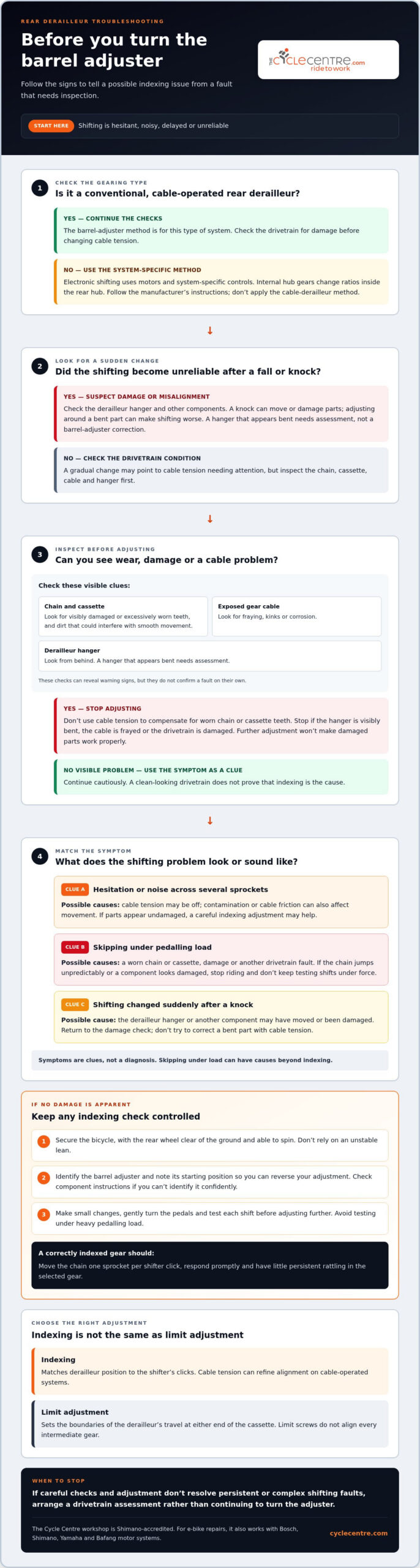
Indexing or limit screws? Match the adjustment to the shifting problem
These adjustments solve different problems. Indexing aligns each shifter movement with the matching sprocket; limit screws set how far the derailleur can travel at the cassette’s inner and outer edges. A barrel adjuster changes cable tension on a cable-operated system. Limit screws aren’t routine tension controls, so don’t use them to correct ordinary hesitation or noisy shifts. Misadjusting them can let the chain move beyond the cassette.
| Adjustment or issue | What it affects | Clue to consider |
|---|---|---|
| Cable indexing | Alignment between shifter movement and sprocket position | Delayed or noisy shifts across several sprockets may warrant checking cable tension. |
| Limit screws | The derailleur’s maximum travel at either end of the cassette | The chain struggles to reach an end sprocket, or travel at that edge appears restricted. |
| Fault needing inspection | Parts or alignment that cable adjustment can’t correct | Shifting remains poor after small adjustments, or a component looks damaged or misaligned. |
Symptoms that may point to indexing rather than travel limits
If several shifts between sprockets are sluggish or accompanied by rattling, cable tension may be one factor to assess. The direction of the problem can offer a clue: for example, difficulty shifting towards larger sprockets may be consistent with insufficient cable tension on many conventional systems. But symptoms don’t prove the cause. Check for other faults first, then make one small adjustment at a time and test before changing anything further.
When limit screws or hanger alignment need attention
A problem confined to reaching the largest or smallest sprocket may involve a travel limit, but it can also have another cause. If the derailleur appears out of line with the cassette, barrel-adjuster turns won’t straighten it. A bent hanger, damaged derailleur or uncertain limit setting needs proper assessment. Don’t turn limit screws to fix ordinary hesitation between middle sprockets. If you’re unsure, or shifting remains unreliable after careful checks, leave the adjustment to a mechanic.
For persistent or complex shifting faults, arrange a drivetrain assessment with The Cycle Centre’s workshop. The Shimano-accredited workshop offers Silver and Gold service packages, and specialist e-bike repairs for Bosch, Shimano, Yamaha and Bafang motor systems.
Know when to stop adjusting and get expert bicycle gear diagnosis
A careful bicycle gear indexing adjustment should follow a clear sequence: inspect the drivetrain, make one small change, test the result, then decide whether to continue. If repeated adjustments don’t improve shifting, or one gear gets better whilst another gets worse, cable tension may not be the real issue. A worn chain or cassette, damaged cable, bent derailleur hanger or another alignment fault needs a different diagnosis.
A practical stop-and-check sequence
- Inspect first. Look for visible damage, frayed cable or a derailleur that appears out of line. Don’t try to adjust around a damaged part.
- Record the starting point. Note the barrel adjuster’s position before changing it, so you can undo the adjustment if needed.
- Change one thing at a time. Make a small adjustment, then gently turn the pedals and test the shift. Avoid heavy pedalling, which can strain the drivetrain and make a poor shift harder to assess.
- Stop if the result worsens. If the chain overshifts beyond the cassette, shifting becomes less reliable, or a part looks damaged, don’t keep turning adjusters or ride the bike until the issue is assessed.
- Escalate if the fault persists. If careful checks and small adjustments don’t restore consistent shifting, have the drivetrain inspected rather than repeating the same changes.
These stop points matter. Limit screws, hanger alignment and worn components aren’t corrected by repeated barrel-adjuster turns. If you’re unsure what has moved, or the chain skips unpredictably, further trial and error could make the problem worse.
When the Cycle Centre workshop can help
For persistent skipping, suspected damage or uncertain derailleur alignment, workshop diagnosis is a sensible next step. The Cycle Centre’s Shimano-accredited workshop offers Silver and Gold service packages for high-end road bikes and e-bikes. It also provides specialist e-bike repairs for Bosch, Shimano, Yamaha and Bafang motor systems.
If your checks haven’t resolved the shifting fault, book a drivetrain assessment with The Cycle Centre workshop. A mechanic can identify whether the issue is indexing or another fault, helping you avoid adjustments that won’t address the underlying cause.
Get back to smooth, confident shifting
Good shifting starts with the right diagnosis. A bicycle gear indexing adjustment can align a cable-operated derailleur with the shifter, but it won’t fix a worn chain, damaged parts or a bent hanger. Check the drivetrain first, make small changes and test gently after each one. If shifting remains unreliable, stop rather than trying to correct every symptom with the barrel adjuster.
Persistent skipping, uncertain alignment or damage calls for a closer drivetrain assessment. The Cycle Centre’s Shimano-accredited workshop offers Silver and Gold service packages for high-end road bikes and e-bikes, as well as specialist repairs for e-bike motors from Bosch, Shimano, Yamaha and Bafang.
Explore The Cycle Centre workshop services and arrange a drivetrain assessment for persistent or uncertain shifting problems.
Frequently Asked Questions
What is bicycle gear indexing?
Bicycle gear indexing is the alignment between each shifter click and the derailleur’s position, so the chain moves to the intended sprocket. In a cable-operated system, the shifter sets the steps and cable tension helps position the derailleur. If alignment is slightly off, shifts may hesitate or rattle. Indexing doesn’t repair worn or damaged parts, and it’s different from setting limit screws, which restrict derailleur travel.
How do I adjust bicycle gear indexing?
For a cable-operated rear derailleur, secure the bike so the rear wheel can turn safely, then gently pedal and shift one gear at a time. If shifts are reluctant, make a small barrel-adjuster change and test again before changing anything further. Record the original setting so you can reverse the adjustment. Check the chain, cable and derailleur for damage first, and follow the component manufacturer’s guidance for your system.
Which way do I turn the barrel adjuster to improve shifting?
On many conventional cable-operated rear derailleurs, turning the barrel adjuster anti-clockwise increases cable tension, whilst turning it clockwise reduces tension. The adjuster’s position and drivetrain design can affect how it feels, so make a very small change and test the shift before continuing. If shifting gets worse, return towards the starting position. Don’t use the barrel adjuster to compensate for a worn chain, damaged parts or a bent hanger.
Can I adjust bike gears without a bike stand?
Yes, if you can support the bicycle securely and keep the rear wheel clear of the ground so it can turn. A repair stand makes this easier, but isn’t essential for a basic check. Avoid balancing the bike precariously or holding it in a way that could let it fall. Turn the pedals gently by hand, keep fingers and clothing clear of the drivetrain, and don’t test shifts under heavy pedalling load.
Why are my bike gears still skipping after indexing?
Skipping after adjustment may point to something other than indexing, such as a worn chain or cassette, a frayed or sticking cable, or a bent derailleur hanger. A chain that skips under load especially shouldn’t be assumed to need more cable tension. Stop if shifting becomes unpredictable or you spot damage. The Cycle Centre’s Shimano-accredited workshop can assess persistent drivetrain faults on road bikes and e-bikes, and provides specialist e-bike repairs for Bosch, Shimano, Yamaha and Bafang motor systems.
Are derailleur limit screws the same as gear indexing?
No. Indexing aligns the derailleur’s position with the shifter clicks across the sprockets. Limit screws restrict how far the derailleur can travel at either end of the cassette. They aren’t ordinary cable-tension controls, so don’t turn them to correct hesitation or noise between gears. If the chain won’t reach an end sprocket, or appears at risk of moving beyond the cassette, stop and have the setup checked rather than guessing.
Can I index electronic bike gears in the same way?
No. Electronic shifting uses motors and system-specific controls, not a conventional gear cable and barrel adjuster. The basic idea of matching shifts to sprockets still applies, but adjustment steps depend on the drivetrain and may involve its controls or setup process. Follow the manufacturer’s instructions for your exact system. Don’t apply cable-derailleur advice to electronic gears, and seek a drivetrain assessment if shifting remains unreliable after the prescribed checks.