


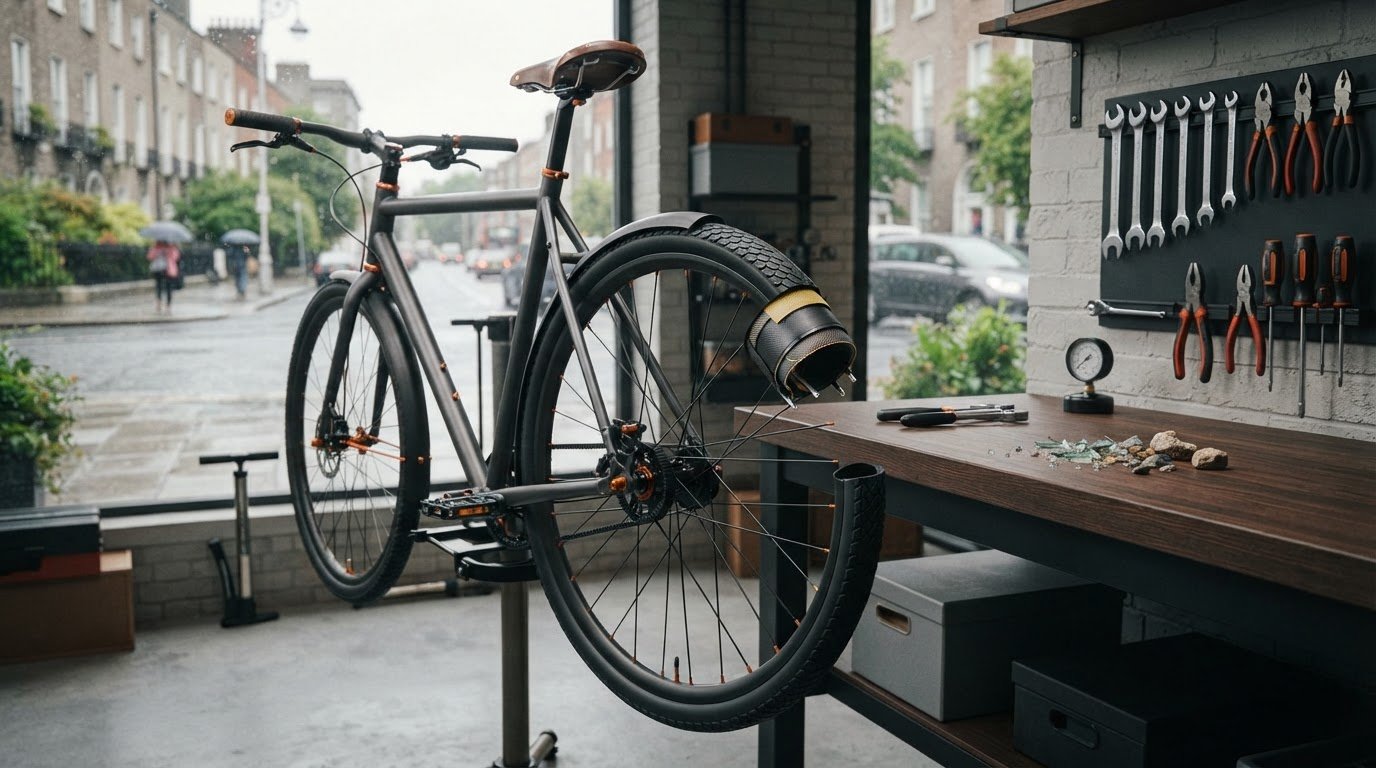
What if the toughest-looking tyre isn’t the best choice for your commute? The right puncture resistant tyres for commuting should reduce the risk of a roadside stop while still giving you the grip, comfort and rolling feel you need for everyday riding.
A puncture can disrupt your journey and leave you wondering whether you’ll arrive on time. It’s understandable to look for the strongest protection available, but a tougher construction can also affect a tyre’s weight and feel. No tyre can prevent every puncture, so aim for a practical balance that suits your bicycle and the roads you ride.
This guide explains how puncture protection works and what common tyre descriptions mean. You’ll learn which trade-offs matter, how to check that a tyre fits your bicycle and commute, and how correct fitting, suitable pressure and regular inspection support dependable cycling.
Key Takeaways
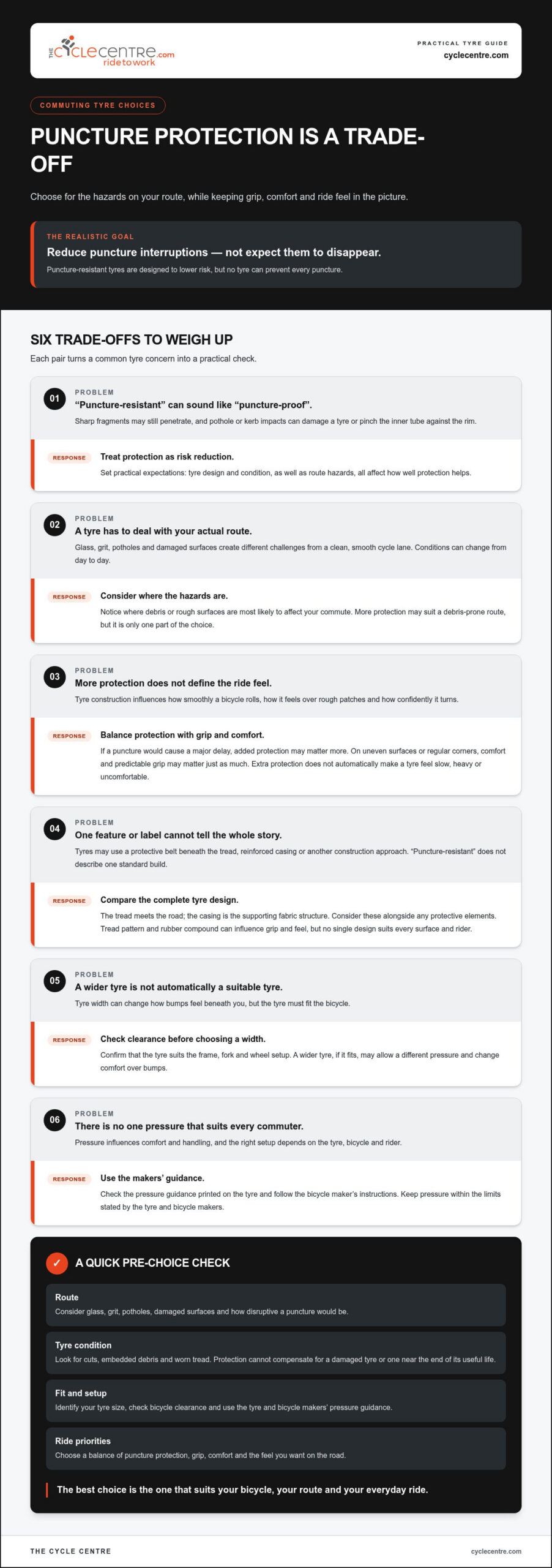
- Puncture-resistant tyres are designed to reduce puncture risk, not eliminate it.
- Choosing puncture resistant tyres for commuting means balancing protection with grip, comfort and the ride feel you prefer.
- Compare protected tyres, tyre liners and tubeless setups by how they work, their upkeep and their compatibility with your wheels.
- Before choosing, identify your tyre size and bicycle clearance, then consider your route surfaces and how disruptive a puncture would be.
- The Cycle Centre’s bicycle components and specialist workshop services support practical bike ownership.
What puncture-resistant tyres for commuting can, and cannot, do
A puncture halfway to work can turn a familiar journey into a roadside repair and an anxious glance at the clock. Tyre choice can reduce the chance of that interruption, but it’s only part of the picture. A route scattered with glass or grit presents different challenges from a clean, smooth cycle lane, and conditions can change from day to day.
Featured snippet definition: Puncture-resistant tyres are bicycle tyres designed with materials or construction features that help reduce the risk of punctures. They can’t prevent every puncture. Their effectiveness depends on the tyre’s design and condition, as well as the hazards on your route.
What makes a bicycle tyre puncture-resistant?
A tyre has several parts that work together. The tread is the outer surface that meets the road. Beneath it, the casing is the supporting fabric structure. Some tyres add a protective layer or use reinforced construction to make it harder for sharp objects to reach the inner tube. The materials and position of these features vary, so “puncture-resistant” doesn’t describe one standard build. Bicycle tire technology offers a broader overview of tyre construction and materials.
Added protection can help against some small, sharp debris on everyday roads. It can’t remove hazards from your route, and the tread, casing and protective elements should be considered as parts of the complete design, not as separate guarantees.
Why puncture-resistant does not mean puncture-proof
A sharp fragment may still penetrate a tyre, particularly if it reaches a vulnerable area or the tyre is worn. Impact damage is another risk: striking a pothole or kerb can damage the tyre or pinch the inner tube against the rim. Cuts and worn tread can also leave less material between road debris and the tube.
Protection varies between tyre designs and riding conditions. A commute with rough surfaces, debris or frequent riding near the road edge can expose a tyre to different hazards from a journey on smooth, well-kept paths. The realistic goal is to reduce puncture interruptions, not to expect them to disappear. No protective layer can guarantee immunity from sharp objects or hard impacts.
- Consider the whole route: Notice where glass, grit, potholes or damaged surfaces are most likely to affect your ride.
- Check tyre condition: Look for cuts, embedded debris and worn tread. Protection can’t compensate for a tyre that’s damaged or near the end of its useful life.
- Set practical expectations: Stronger protection may suit a debris-prone route, but the right choice also depends on your bicycle and how you want it to feel on the road.
With those limits in mind, judge puncture resistant tyres for commuting by how well their protection suits your regular journey, rather than by any promise of a puncture-free ride.
How puncture protection affects grip, comfort and rolling feel
More protection can bring welcome peace of mind, but it isn’t the only quality that matters on a daily ride. Tyre construction influences how the bicycle responds to the road, including how smoothly it rolls, how it feels over rough patches and how confidently it turns. The effect varies between designs, so extra protection doesn’t automatically make a tyre feel slow, heavy or uncomfortable.
Consider the trade-offs that matter on your commute. If a puncture would cause a major delay, you may value additional protection highly. If your route includes uneven surfaces or regular corners, comfort and predictable grip may matter just as much. A tyre that feels reassuring on one bicycle and route may not suit another.
Protection alone can’t identify the best commuter tyre; the right choice balances puncture resistance with grip, comfort and the feel you want from your bicycle.
Protection layers, tread and tyre construction
Some tyres use a protective belt beneath the tread, whilst others rely on reinforced casing or a different construction approach. These features are intended to resist certain kinds of damage, not guarantee a particular outcome. The tread is the surface that meets the road, and its pattern and rubber compound can influence how a tyre feels and grips. Compare the whole tyre rather than relying on one feature or label.
Think about what you notice most in everyday riding. A firm, direct feel may suit smooth roads, whilst a more forgiving ride can be welcome on a rough commute. Grip matters in corners and on damp surfaces, particularly where your route includes painted road markings or loose material. No single tread or construction is best for every surface and rider.
Tyre pressure, width and everyday comfort
Tyre width and inflation pressure both influence comfort and handling. A wider tyre, if it fits the bicycle, may allow a different pressure and change how bumps feel beneath you. Width must suit the frame, fork and wheel setup, and pressure must remain within the limits stated by the tyre and bicycle makers. Don’t use a general recommendation instead of those instructions.
Check the pressure guidance printed on the tyre and consult the bicycle maker’s instructions. The right setup depends on the tyre, bicycle and rider, so there isn’t one pressure or width that suits every commuter. If the bicycle feels harsh or unstable, review the fit and setup rather than simply adding more puncture protection.
- For a debris-heavy route: Prioritise protection, whilst checking that the tyre still gives you the grip and comfort you need.
- For a rough surface: Consider comfort alongside protection, and keep tyre width within the bicycle’s clearance.
- For mixed riding: Look for a balanced feel across the surfaces you ride regularly.
Compatibility comes first: a tyre must suit the wheel and fit within the bicycle’s available clearance. Then weigh its ride feel against the conditions and priorities of your journeys. The Cycle Centre stocks bike components and spare parts, and its Shimano-accredited workshop provides Silver and Gold service packages.
Compare commuting tyre options by protection and maintenance
There are several ways to add puncture protection, and each changes what sits between the road and the inner tube. The best fit depends on your wheel setup, willingness to do routine upkeep and the roads you ride. Use this comparison to narrow down the options, not as a universal ranking.
| Option | How it works | Maintenance and fit | May suit |
|---|---|---|---|
| Puncture-resistant tyre | Protective materials or reinforced construction are built into the tyre. | Check tyre condition and pressure as part of regular bicycle care. The tyre must match the wheel size and fit within the bicycle’s clearance. | Riders who want protection as part of a familiar tyre and inner-tube setup. |
| Tyre liner | A separate strip sits between the tyre and inner tube. | It needs to be fitted in the correct position and suit the tyre and wheel arrangement. The tyre must be removed for installation or inspection. | Riders considering an added protective layer whilst keeping a tube-based setup. |
| Tubeless setup | The tyre seals against a compatible rim without a conventional inner tube; sealant is commonly used inside. | Requires compatible tyres and wheels, with components fitted and maintained as specified by their makers. Sealant and the airtight setup need periodic attention. | Riders whose wheels and tyres support tubeless use and who are comfortable with its upkeep. |
Puncture-resistant tyres versus tyre liners
A liner adds a separate layer between tyre and tube, whilst a puncture-resistant tyre builds its protective features into the tyre itself. A liner may be worth considering if you want to keep your current tyre, but it can affect how the tyre and tube sit together. Correct sizing and careful fitting matter, and neither approach prevents every puncture.
With either option, confirm compatibility with the tyre and wheel rather than assuming every liner or protected tyre fits every bicycle. A well-matched setup is easier to assess and maintain than one chosen on the protection label alone.
Are tubeless tyres practical for a daily commute?
In a tube-based setup, the inner tube holds the air. A tubeless arrangement uses a compatible tyre and rim to hold air without that conventional tube, often with sealant inside. It can suit commuters who value its ride and maintenance characteristics, but it isn’t an automatic upgrade. Wheel and tyre compatibility is essential, and upkeep differs from checking a standard tube setup.
When comparing puncture resistant tyres for commuting, weigh protection against fitting requirements and the care you’re willing to do. The Cycle Centre’s bicycle components and servicing support a practical approach to everyday cycling.
Choose and care for puncture-resistant tyres for commuting
A dependable choice starts with fit, then takes account of the roads you ride and the disruption a puncture would cause. Before comparing protection levels, gather the details of your current setup. A tyre that doesn’t fit the wheel or bicycle properly isn’t a practical upgrade, however appealing its protection claims may sound.
Check tyre size, clearance and compatibility
Look for size markings on the tyre sidewall. They usually show the tyre’s diameter and width, giving you a starting point when considering replacements. Match these details to your wheel setup, then check the bicycle maker’s guidance before changing width. The frame, fork and other parts around the wheel need adequate clearance, including space for the tyre to rotate freely.
Use this checklist to narrow down puncture resistant tyres for commuting:
- Record your current tyre size. Read the markings on the sidewall and note the wheel setup, including whether you use an inner tube or a tubeless arrangement.
- Check available clearance. A wider tyre may not fit every frame or fork. Follow the bicycle manufacturer’s compatibility guidance rather than relying on appearance alone.
- Describe your route. Consider the balance of smooth roads, rough surfaces and areas where debris collects. Think about whether a puncture would mean a short delay or a missed connection.
- Choose a protection approach. Weigh the type of protection you want against comfort, ride feel and maintenance. Check that the tyre is compatible with your wheel and setup.
- Fit and inflate carefully. Follow the tyre and bicycle manufacturers’ instructions, including their pressure guidance. If a new tyre doesn’t seat or fit as expected, don’t ride on it until the issue is resolved.
Make simple checks part of your commuting routine
During regular bicycle checks, look over the tread and sidewalls for cuts, visible damage and embedded debris. Remove debris only when it’s safe to do so, and pay attention to anything that appears to have penetrated the tyre. Check pressure using the tyre and bicycle makers’ guidance. Suitable pressure supports the tyre’s intended use. There’s no single inspection interval for every commute, so build these checks into a care routine that suits your riding.
Don’t ignore a cut, bulge or other visible damage. Puncture protection can’t make a damaged tyre sound, and timely attention may help you spot a problem before setting off. Routine checks reduce uncertainty, but they can’t rule out every puncture on the road.
For broader bicycle care, The Cycle Centre’s high-end road bike service guide offers further servicing context. Explore bicycle servicing at The Cycle Centre as part of a considered approach to keeping your commuter in good order.
Find a practical tyre and servicing approach with The Cycle Centre
The most suitable setup brings together four things: a tyre that fits your bicycle, the surfaces and debris on your regular route, the level of protection you want and the maintenance you’re comfortable doing. There’s no universal winner. A rider covering smooth streets with easy access to a repair may prioritise a different balance from someone whose commute includes rough roads and little time to spare if a puncture occurs.
Use the checks above to narrow down puncture resistant tyres for commuting: confirm wheel and frame fit, consider how your route affects your priorities, then compare protection and upkeep. Keep the bicycle and tyre manufacturers’ compatibility and pressure guidance in view, particularly if changing tyre width or moving to a different wheel setup.
When specialist workshop support can help
Routine checks can help you spot visible wear or damage, but some concerns need a broader look at the bicycle. If you’re unsure about wheel clearance, notice damage elsewhere around the wheel, or have a fit concern you can’t resolve through the manufacturer’s guidance, a full bicycle service can be a useful next step. A tyre choice won’t address a problem elsewhere on the bike.
The Cycle Centre is an independent, family-owned bicycle retailer. Its Shimano-accredited workshop offers Silver and Gold service packages for high-end road bikes and E-scooters, alongside specialist E-bike repairs for Bosch, Shimano, Yamaha and Bafang motors. It also sells bike components and spare parts for everyday cycling needs.
Plan your next commuting ride
Before settling on a setup, picture the journey you actually ride: the surfaces, where debris gathers and how disruptive a delay would be. Then balance those conditions against the comfort, grip and maintenance routine you want. A tyre choice should make sense on your bicycle and commute, rather than simply topping a general ranking.
If you’re also considering a bicycle purchase, The Cycle Centre’s Bike to Work Scheme guide offers a related starting point. Otherwise, review your current setup and the care it needs. Explore The Cycle Centre’s cycling products and support as you plan a practical approach to dependable everyday riding.
Make your next commute feel more considered
Your next step doesn’t need to be a major change. Start by thinking about the part of your ride you’d most like to improve, whether that’s reducing puncture interruptions, finding a more comfortable feel or making routine checks easier. Use that priority to guide your choice, whilst keeping your bicycle’s fit and setup in mind.
The right puncture resistant tyres for commuting are the ones that make sense for your regular journeys and the way you want to care for your bike. A practical setup can bring greater confidence to everyday riding, even though no tyre removes every roadside risk.
Explore cycling products and support from The Cycle Centre as you plan your next step. Start with your current tyre size, route conditions and riding priorities, then choose a setup that fits your bicycle and routine.
Frequently Asked Questions
Are puncture-resistant tyres puncture-proof?
No. They’re designed to reduce the chance of some punctures, but sharp debris, impacts, damage and wear can still cause problems. A thorn or piece of glass may behave differently from a pinch caused by striking a pothole, and protection varies by tyre design. Correct fitting, manufacturer-recommended pressure and regular checks support reliable commuting, but no combination guarantees a puncture-free journey.
Do puncture-resistant tyres make a bike slower?
It depends on the tyre’s design and how it feels on your bicycle. Extra protective construction can affect weight or rolling feel, but there’s no single rule for every tyre. Assess how the tyre feels in the conditions you normally ride, rather than judging it by a protection label alone. For puncture resistant tyres for commuting, weigh reduced interruption risk against comfort and handling on your usual roads.
Can I fit puncture-resistant tyres to any bicycle?
No, not automatically. A replacement must suit the wheel and fit within the available space around the frame and fork. Check the size markings on your existing tyre, then compare them with the bicycle and tyre manufacturers’ compatibility guidance. Pay particular attention if considering a different width or tyre system. A tyre that fits one bicycle may not clear another, even if the wheel size appears similar.
Are puncture-resistant tyres suitable for wet commuting?
They can be used for wet-weather riding, but puncture protection alone doesn’t indicate how a tyre will grip. Tread, rubber compound, pressure, condition and the road surface all contribute to how the bicycle feels. Wet painted markings or loose material may call for extra care, regardless of tyre type. Keep tyres in good condition and adapt your speed and cornering to the conditions.
Does higher tyre pressure prevent punctures?
No. Increasing pressure isn’t a universal way to prevent punctures, and pressure must remain within the limits specified by the tyre and bicycle makers. The suitable setting depends on the particular tyre and bicycle setup. Don’t exceed the stated limits to try to reduce puncture risk. Instead, use those limits as your guide, check pressure as part of bike care and investigate visible damage before riding.
How often should I replace commuting tyres?
There’s no single replacement interval for every commuter. Wear depends on how and where you ride, as well as how the bicycle is stored and maintained. Look for worn tread, cuts, bulges or exposed casing, and note any change in how the tyre handles. A visual check after riding on debris-strewn roads can help you spot an issue early. Follow the manufacturer’s guidance if you’re unsure about the tyre’s condition.
What should I do if I get a puncture during my commute?
Move away from traffic to a safe place before working on the bicycle. If you carry suitable equipment and know how to use it, repair or replace the tube in line with your setup. Before refitting, look inside the tyre for the cause and remove any debris you can safely reach. Don’t ride on a visibly damaged tyre. If you can’t make a safe repair, arrange another way to finish your journey.