


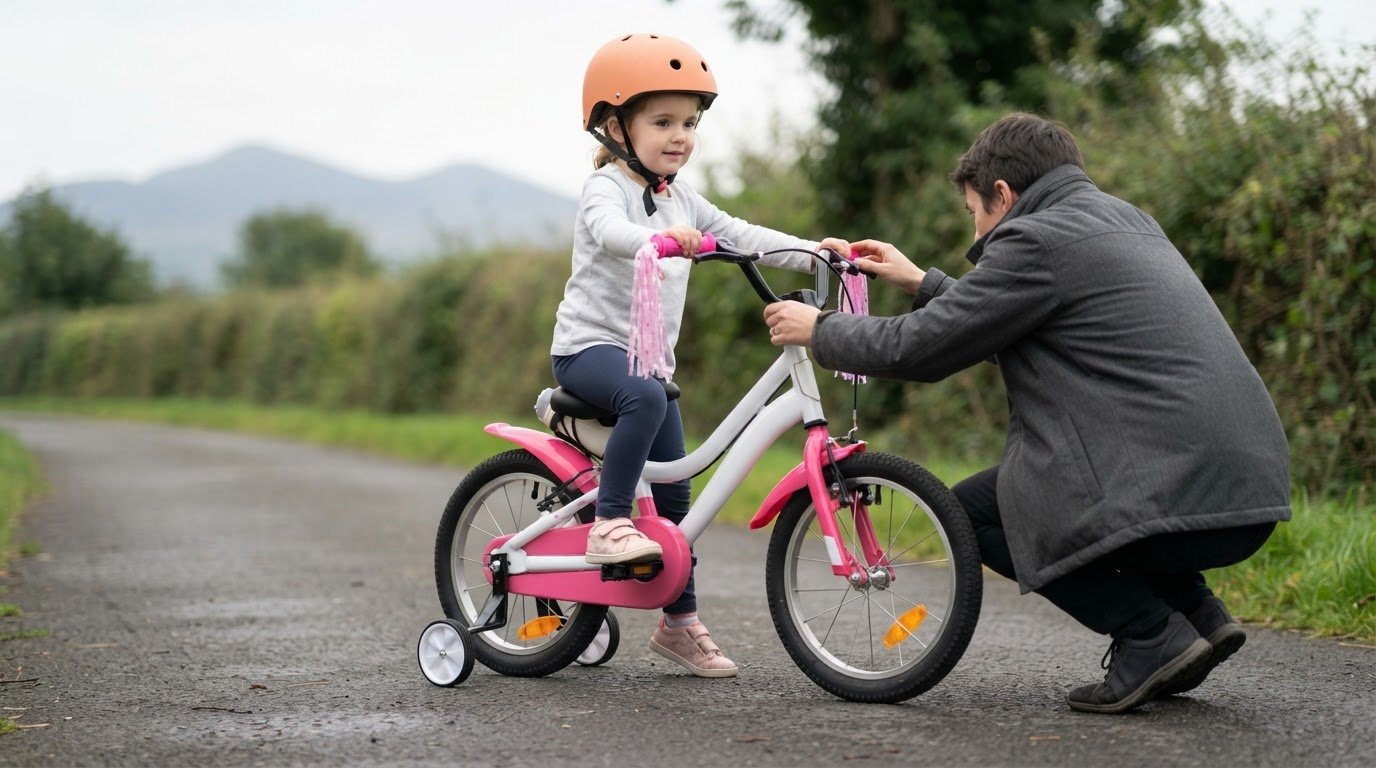
The right girls’ bike is about more than a favourite colour or theme. A comfortable fit and suitable wheel size make everyday cycling easier to manage, while removable stabilisers can help a child work towards riding independently.
It’s understandable to start with how the bike looks, especially when a child knows what they like. This guide explains how to weigh up wheel size, themed designs and colour, and how to decide whether stabilisers could help. You’ll have a clearer way to choose a bike that suits the child and the rides ahead.
Key Takeaways
- Use wheel size as a starting point, then consider how comfortably the child can sit, steer and reach the controls.
- Compare themed designs with practical fit so a favourite look doesn’t outweigh how the bike feels to ride.
- Choose a colour the child enjoys, while keeping size and comfort central to the decision.
- Removable stabilisers can support early practice and come off when the child is ready to work on balance independently.
Kids’ bike wheel sizes
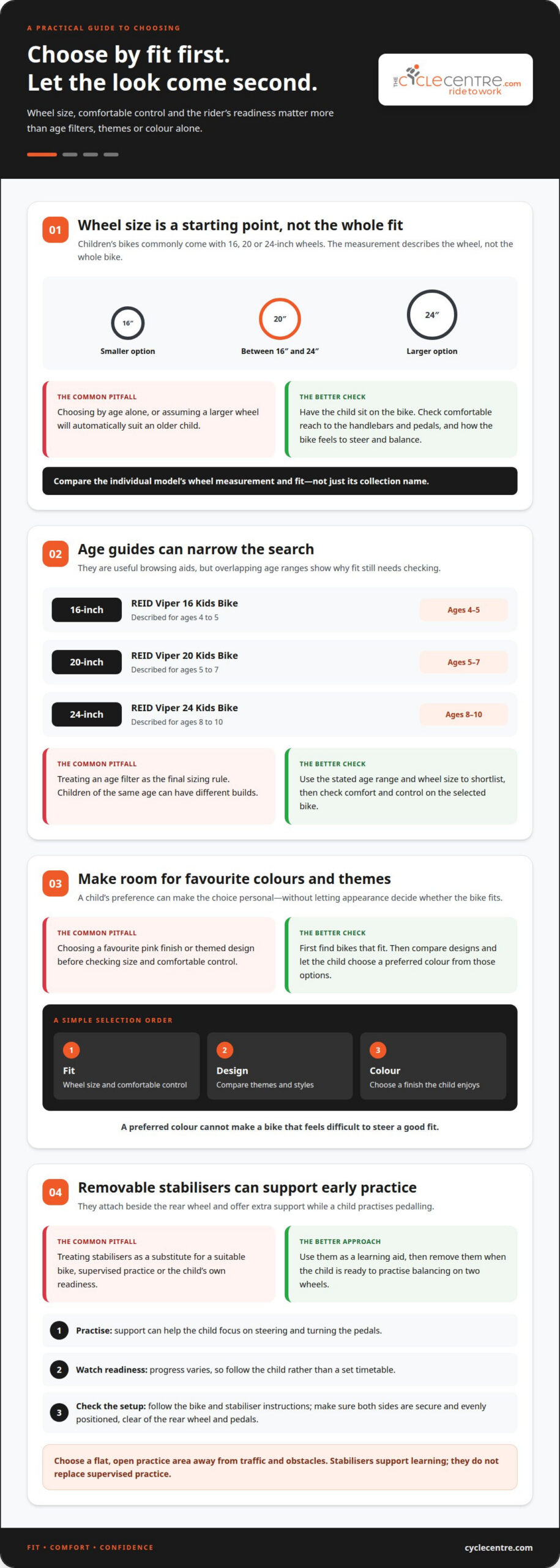
Children’s bikes commonly come with 16, 20 or 24-inch wheels. Use wheel size as a starting point, then consider the child’s fit and control.
Wheel size choices
A 16-inch wheel is one option for a smaller children’s bike. A 20-inch wheel sits between 16 and 24 inches, whilst a 24-inch wheel is larger. These measurements describe the wheel, not the whole bike. Compare how each size feels to steer and balance; a mountain bike may also feel different from a lighter-style children’s bike.
Sizing by height and age
Age can help narrow the options, but children of the same age can have different builds. Height and how comfortably a child reaches the handlebars and pedals are useful fit checks. Have the child sit on the bike and see whether they can manage the controls comfortably. Choose for fit, not age alone.
When comparing a girls’ or kids’ bike, check the individual model’s wheel size and fit rather than relying on its collection name. A collection may include different sizes and designs, so match the specific bike to the child. Check the listed wheel measurement before deciding.
Prices depend on the model, and colour choices vary between bikes. Compare the fit and features of options within your budget, then let the child choose a preferred colour. Pink may be one preference, but it is not a guide to sizing.
A well-fitting helmet and suitable cycling accessories complete the setup. Choose a helmet that sits securely without obstructing the child’s view. Before each ride, check the tyres, brakes and chain. Regular cleaning and attention to loose or worn parts help keep the bike in usable condition.
Girls’ and themed children’s bikes
Age filters and themed designs can narrow the options, but neither replaces checking the individual bike’s fit. Use the model’s stated age range and wheel size as practical starting points.
Bikes for ages six to twelve
For children aged six to twelve, age filters can help organise a broad selection. Treat the filter as a browsing aid, not a final sizing rule. The REID Viper 24 Kids Bike is described for ages 8 to 10, giving a specific example within this wider age group. Compare the rider’s comfort and control on the actual bike before settling on a size.
Bikes for ages three to six
For children aged three to six, the available examples span more than one age band. The REID Viper 16 Kids Bike is described for ages 4 to 5, while the REID Viper 20 Kids Bike is described for ages 5 to 7. These overlapping ranges show why an age filter should narrow the search, not dictate the choice. Check the child’s fit on the selected model.
Children’s bikes by wheel size
Wheel-size filters let you compare bikes with the same stated wheel measurement. The REID Viper examples include 16-inch, 20-inch and 24-inch options. Match the listed size to the child’s fit, rather than assuming that a larger wheel always suits an older child. Model descriptions can also provide an age guide, as with the Viper 24 for ages 8 to 10.
Themed designs can help a child feel involved in choosing a bike. For example, the Apollo Butterflies Bike has a butterfly theme in its name, while the IGNITE Starlet is described as a girls’ bike. Compare the design, wheel size and age guidance together. A favourite theme can make the choice personal, but should not outweigh fit.
Use age filters to start, then narrow the options by wheel size and model. If a child is approaching the next age band, compare both relevant sizes in person. This helps show whether the current option feels manageable or another model offers a more comfortable fit.
Pink and other colour options
Colour can help a child feel involved in choosing a bike. Ask which finishes they like, then compare suitable models in those colours. Pink may be a favourite, but it is one preference among several. Put fit and intended use ahead of appearance.
Named themes offer another way to narrow the choice. The Apollo Butterflies Bike makes its theme clear in its name. The IGNITE Starlet and Bottecchia Junior Girls are other examples of explicitly named children’s bikes. Use the names to identify styles that may appeal, then consider each bike’s size and features.
Colour descriptions can vary between product listings. Read the exact finish name rather than assuming two bikes are the same shade. If a child prefers pink, compare the pink options listed for suitable models. Apply the same approach if they prefer another colour. A colour label is no substitute for checking fit.
Try this selection order: narrow the options by fit, compare the designs, then let the child choose from suitable colours. If the Apollo Butterflies Bike appeals, for example, first consider whether its size suits the rider. The theme can help shape the shortlist, but the bike still needs to feel manageable.
A themed design may decide the choice for one child, while another may prefer a plain finish. Ask the child to choose between specific examples, such as the butterfly theme or the Starlet name. This makes their preference concrete without treating any colour as exclusively for girls. Children’s tastes differ.
Before settling on a model, compare its listed colour and design with the child’s preferences. Then return to practical criteria such as wheel size and comfortable control. A preferred pink finish, for instance, won’t compensate for a bike that feels difficult to steer. Choose a colour they’ll enjoy on a bike that fits.
Removable stabilisers
Stabilisers attach beside the rear wheel and offer extra support while a child practises pedalling. Removable designs let the bike change as the rider gains confidence. Stabilisers are a learning aid, not a substitute for a suitable bike and supervised practice.
Start by considering how the child rides now. If they’re learning to pedal, stabilisers can help them focus on steering and turning the pedals. Once they’re comfortable riding with support, remove the stabilisers so they can practise balancing on two wheels. Progress varies, so follow the child’s readiness rather than a set timetable.
Before fitting or removing stabilisers, read the bike and stabiliser instructions. Check that the fittings suit the bicycle, then follow the stated attachment method. Inspect both sides after any adjustment. The stabilisers should be secure and evenly positioned, without interfering with the rear wheel or pedals.
Choose a flat, open practice area away from traffic and obstacles. An adult can walk alongside the child as they start, helping them focus on steady pedalling and steering. Keep each attempt manageable. If the child becomes tired or frustrated, pause and try again later.
When the child starts riding without support, remove the stabilisers according to the manufacturer’s instructions. Keep them together for storage in case they’re needed again. Don’t leave them partly attached or unevenly adjusted, as this can affect how the bike moves. Check the wheels, pedals and brakes before the next ride.
Stabilisers aren’t the only consideration. The bike still needs to suit the child, and the riding position should allow comfortable control. A well-fitting helmet and adult supervision are sensible parts of each practice session. These checks keep the focus on learning, rather than equipment that doesn’t fit.
For a children’s bike that can support the next stage of learning, explore kids’ bike options.
Cyclecentre.com
Cyclecentre.com is a natural next step once you’ve narrowed down the size, style and colour that suit your child. Its kids’ bikes include options to consider after weighing wheel size and fit, and deciding whether removable stabilisers would help. Use those priorities to guide your choice instead of letting a theme or colour decide on its own.
If you’re still comparing, keep the child’s comfort and control central. A bike should feel manageable, with the design adding a personal touch. Cyclecentre.com also offers adult cycling options, including electric mountain bikes and road performance bicycles, for families considering their own cycling needs.
For help with your next step, contact Cyclecentre.com.
Set the next ride in motion
Choosing girls’ bikes is also a chance to let a child have a say in how they enjoy cycling. Involve them in the final decision so the bike feels like theirs from the start. Riding together can be a reason to explore familiar paths, build new skills and spend time outdoors.
As confidence grows, a child’s interests may change too. Focus on making cycling enjoyable now rather than trying to predict every future need. The right choice suits the child today and gives them something to look forward to on their next ride.
If you’d like help with the next step, contact Cyclecentre.com for help choosing.
Take your time, involve your young rider and enjoy the journey ahead.
Frequently Asked Questions
What types of girls’ bikes are available in Ireland?
Children’s bikes in Ireland include standard pedal bikes and themed or brightly coloured designs. Cycle Centre stocks kids’ bikes, including Capriolo, Romet, Cube, Cuda and Polar models, as well as E Kids bikes. To narrow the choice, start with the type of riding and a suitable fit, then consider which style or finish will appeal. Girls’ bikes come in varied designs and colours.
What bike size is right for a girl’s age and height?
The right size depends on the child’s height, leg length and ability to control the bike, not age alone. If she’s tall for her age but has shorter legs, reaching the ground comfortably may matter more than an age label. Check the specific model’s sizing guidance, then assess the riding position and whether she can steer and use the controls comfortably.
How much do girls’ bikes cost in Ireland?
Prices depend on the specific model. There is no single price for all children’s bikes. Compare each model’s features and fit alongside its price, and allow for any separately chosen accessories when setting a budget.
Are children’s bikes different from unisex bikes?
“Girls’” often describes a bike’s styling or intended audience, but the label alone doesn’t show whether it will fit a particular child better. Compare the bike’s shape and riding position with the rider’s comfort and control. A child can choose a traditionally styled, themed or more neutral-looking bike; the best option is one they can ride comfortably.
What are the best girls’ bikes for beginners?
A good beginner’s bike is one the child can sit on comfortably, steer and reach the controls on. Removable stabilisers can support early pedalling practice and come off when the child is ready to work on balance.