
Choosing a children’s bike by age alone can lead to an awkward fit. Sizing guides list 14-inch wheels for children aged 3 and over, and 16-inch wheels for children aged 4 and over. For lightweight kids’ bikes, use those sizes as a starting point, then consider whether your child can sit comfortably, steer and reach the brakes.
A bike that feels too heavy or has difficult-to-use controls can make learning less enjoyable. This guide explains how to match wheel size to your child’s growth and riding stage, what to check on the brakes and controls, and which common buying mistakes to avoid. You’ll also find a practical way to compare options, so you can focus on a bike your child can handle confidently rather than choosing by age or appearance alone.
Key Takeaways
- Use wheel size as a starting point, then focus on a comfortable fit your child can manage confidently.
- Choose a bike that suits your child’s current riding stage, making the move from balance to pedals feel more manageable.
- Look for brake levers and gears that are straightforward for young hands to operate.
- Avoid choosing a bike simply for room to grow; handling, weight and ease of control matter too.
What size kids’ bike do I need?
Start with wheel size, then compare the age guidance with your child’s height and ability to handle the bike. The examples below show why age is a useful starting point, but not the only sizing guide.
Age recommendations
Age guides give a quick first comparison. A sizing guide lists 14-inch wheels for children aged 3 and over, and 16-inch wheels for children aged 4 and over. These ranges overlap, so a child aged 4 may fall within either recommendation. That’s why the number on an age chart shouldn’t decide the size by itself.
Specific models show how recommendations vary. The Frog 38 is a 14-inch bike for children aged 3 to 4 years, while the Ridgeback Dimension 20 is a 20-inch bike for ages 6 to 9. Use these examples to narrow the options, then consider how confidently your child can sit, steer and manage the bike.
Wheel sizes and age ranges
Wheel diameter gives a practical way to compare bikes, but the relevant measurement can change with the size. For younger children, the listed recommendations give ages alongside 14-inch and 16-inch wheels. For a larger bike, the Carrera Vengeance Junior Mountain Bike has 26-inch wheels and is designed for children 136-154 cm tall.
This height-based example differs from the age guidance because it gives a specific rider-height range instead. Compare both kinds of information when selecting a size, rather than assuming every 26-inch bike suits the same child.
| Option | Age guidance | Other sizing detail |
|---|---|---|
| 14-inch wheels | Aged 3 and over | Frog 38: ages 3 to 4 |
| 16-inch wheels | Aged 4 and over | Age guide recommendation |
| 20-inch wheels | Ridgeback Dimension 20: ages 6 to 9 | Model-specific example |
| 26-inch wheels | No age range given here | Carrera Vengeance: 136-154 cm |
Use the age guide to choose a starting wheel size, then compare the model’s height range with your child’s ability to handle the bike.
Balance bikes and the transition to pedals
A balance bike lets a child practise steering and balancing without pedals or gears. The rider pushes along with their feet, then lifts them as confidence grows. This builds skills needed for a pedal bike without adding pedalling and braking tasks at the same time. Look for a model the child can control comfortably, rather than choosing one just because it looks like a small adult bicycle.
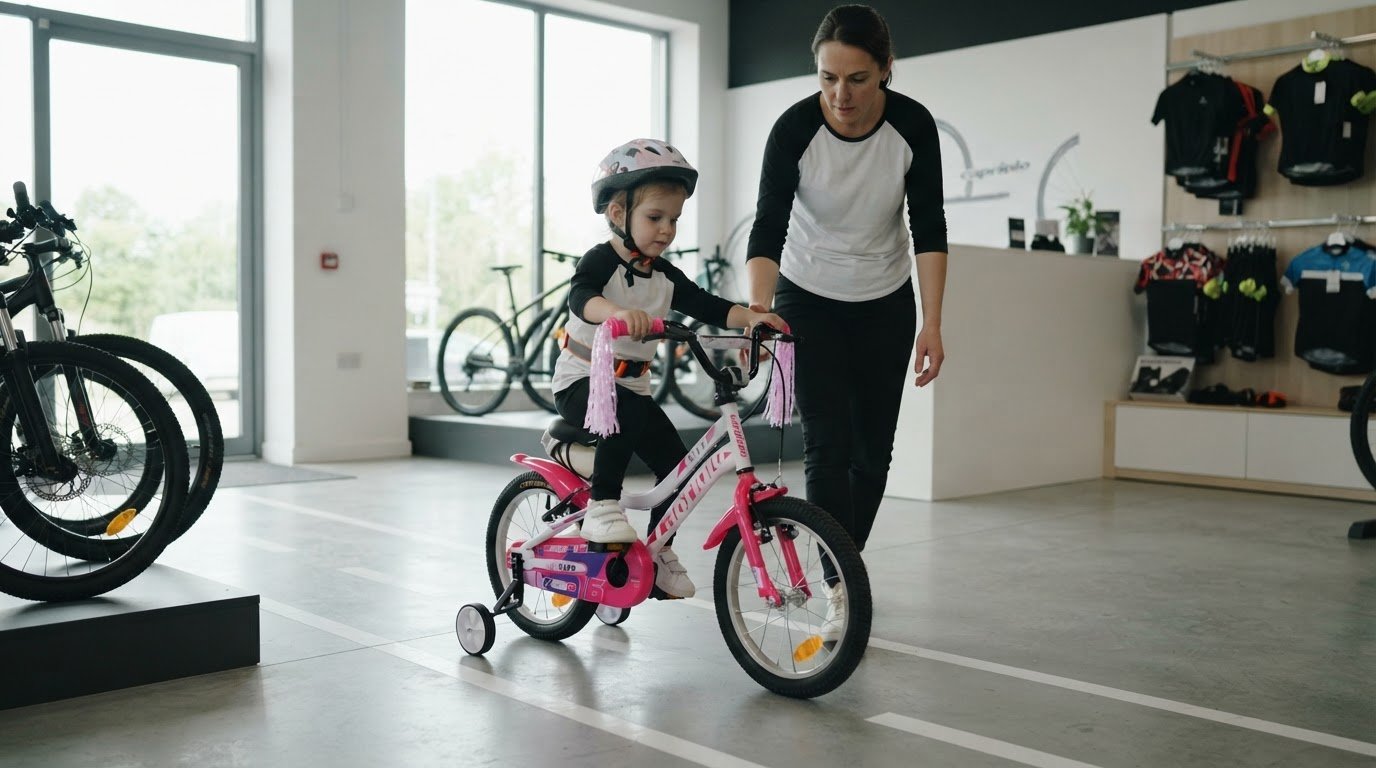
For a first pedal bike, consider how your child moves from scooting to gliding. A steady glide with feet lifted suggests they’re beginning to balance independently. Pedals introduce a new movement, so a simple layout can help keep their attention on starting, steering and stopping. Don’t rush the transition: the right time depends on the child’s confidence and ability to manage each task.
Some bikes can be converted from balance to pedal mode by adding or removing components. This can make the transition feel familiar: the child can first learn the frame and steering, then tackle pedalling as a separate step. Before choosing this type, consider whether its setup suits the child’s current stage and whether it can be adjusted without replacing the bike.
- Practise gliding: Let the child push off and lift their feet when ready.
- Build control: Encourage turns and smooth stops before adding another task.
- Introduce pedals: Begin when balancing and steering feel manageable together.
A lightweight balance bike may be easier for a child to move and steer, but weight alone doesn’t determine whether it’s suitable. Check that the child can hold the handlebars, reach the ground while seated and guide the bike through a turn. If they struggle to control it during a gentle turn, a lighter-feeling option or a better-fitting frame may make practice easier. Focus on one new skill at a time, so pedalling doesn’t overshadow balance and steering.

Brake and gear controls for young riders
For children cycling in Ireland, prioritise a well-fitting helmet, working brakes and practice following road signs and signals. A beginner’s lightweight bike should have a manageable frame, reachable brake levers and controls that don’t distract from steering.
Brake levers should be within comfortable reach, so a child can grip and squeeze them without shifting their hands awkwardly. During a supervised practice stop, see whether they can find each lever, slow down smoothly and keep control of the handlebars. If reaching or squeezing is difficult, the controls may not yet suit their hands.
Gears add another task, so they’re not essential for every first pedal bike. Children are usually ready for bike gears at around 6 to 8 years of age. This is a general guide: focus on whether the rider can steer, brake and pedal confidently before adding gear changes. A simpler setup can leave more attention for balance and stopping.
Gear counts show how much choice a bike provides, but more options aren’t automatically easier for a young rider. The Ridgeback Dimension 20 has seven gears, while the Apollo Chaos Junior Mountain Bike with 20-inch wheels has 6-speed gears. Each gives a child gear changes to learn, so consider whether the rider can understand the controls and use them without losing focus on the route.
- Check the brakes: Look for levers the child can reach and operate smoothly.
- Keep early rides simple: Prioritise steering and braking before introducing gears.
- Introduce shifting gradually: Practise gear changes in a quiet, controlled setting.
For a beginner, prioritise accessible brakes, straightforward controls and a frame the child can manage. Low weight helps only if the rider can also reach the controls and handle the bike confidently.
Common mistakes when buying a kids’ bike
Buying by appearance, price or age alone can mean overlooking what matters: manageable weight, good fit and straightforward controls. Compare the complete bike, then consider its frame, value and purchase arrangements.
Prices and value
A low price isn’t useful value if the bike is too heavy or difficult to control. The Ridgeback Dimension 20 weighs 8.15 kg, illustrating why weight deserves attention alongside the price tag. Compare the bike’s fit, components and intended use, rather than treating the brand name or a discount as proof of suitability.
Warranty terms also affect value. Read the written coverage for the specific bike, including what it covers and any conditions. Don’t assume every brand or model offers the same protection.
Frame materials and bike weight
Frame material alone doesn’t establish a bike’s total weight or durability. An aluminium frame is listed for one 26-inch junior mountain bike, while a steel frame is listed for a junior hybrid; those examples don’t prove one material is always better. Carbon-frame comparisons also depend on the complete design and intended use.
Compare complete-bike weights where available. Listed examples range from 6.1 kg to 8.15 kg, so the figures show meaningful differences between individual models. A lighter build can make lifting and handling easier, but the child still needs a suitable fit and manageable controls.
Buying and delivery costs
In Ireland, specialist bicycle retailers sell kids’ bikes online and in stores. Delivery costs depend on the seller’s arrangements and the destination, so include the quoted charge when comparing the total purchase cost. There is no single delivery figure across retailers.
Don’t choose by brand name alone: compare the specific model’s weight, frame and intended use. Read the model’s warranty terms and delivery information before buying. This gives you a clearer picture of the full cost than the advertised price alone.
Cyclecentre.com: Kids bikes
Cyclecentre.com offers kids’ bikes for families choosing a first pedal bike or replacing one that no longer suits the rider. Use the guidance here to narrow your choice by wheel size, riding stage, weight and controls, then explore the kids’ bike range for options that may suit your child.
When you’re ready to move from comparing features to choosing a bike, explore Cyclecentre.com’s kids’ bike range. Knowing the rider’s size and experience can make the decision more straightforward. The range also includes electric bikes for different riding needs.
For help choosing a kids’ bike, contact Cyclecentre.com.
Make their next ride their own
The right bike can invite a child to explore, practise and enjoy time outdoors. When considering lightweight kids’ bikes, think about where your child wants to ride and what would encourage them to get out again. A bike should support those adventures, not feel like a task to manage.
Cyclecentre.com offers kids’ bikes, alongside Bike to work, Cycle to work and Electric Mountain Bikes. If you’re ready to take the next step, share what your child needs and get help considering the options.
Ask Cyclecentre.com for bike advice, and help your child look forward to their next ride.
Frequently Asked Questions
What are the best lightweight kids’ bikes available in Ireland?
The right choice depends on your child’s riding needs and the specific bike’s weight and components. Cycle Centre stocks kids’ bikes from Cube, Cuda, Romet, Polar and Capriolo. Compare individual models rather than assuming every bike from a particular brand is lightweight. A child who regularly carries or manoeuvres their bike may benefit especially from a manageable overall weight.
What wheel size should I choose for a child’s height and age?
Use age and wheel size as starting points, then check the manufacturer’s guidance against your child’s measurements. The sizing examples in this guide include 14-inch wheels for children aged 3 and over, and 16-inch wheels for children aged 4 and over. Model guidance can differ: use a listed height range where available, and assess whether your child can handle the chosen bike comfortably.
How do popular lightweight kids’ bikes compare by weight, price and components?
Compare each complete bike’s weight, listed price and supplied components together. For example, the Frog 38 weighs 6.1 kg, the Early Rider Seeker 16 weighs 6.34 kg, and the Prevelo Zulu One weighs 7.6 kg. The Carrera Vengeance Junior Mountain Bike has 16-speed Shimano Altus gears. A lower weight alone doesn’t show whether a bike’s components suit the rider.
What do lightweight children’s bikes cost in Ireland?
Prices vary by model and specification. Treat the listed price as applying to that particular bike, not as a typical price for all children’s bikes. Compare the model’s price with its components and intended use, and consider the full purchase cost, including any delivery charge shown at checkout.
How can I check that a child’s bike fits correctly?
Have your child try the bike while wearing their usual cycling shoes. Check that they can reach the ground comfortably when seated, hold the handlebars without stretching and reach the brake levers naturally. Ask them to steer and stop gently in a clear area. If either action feels awkward, try another size or model before deciding.