

The best kids’ bike for Christmas isn’t necessarily the one with the biggest wheels or the colour on their wish list. Choosing the best kids’ bike for Christmas starts with your child’s height and how comfortably they can manage the bike: 20-inch wheels generally suit riders around 120-135 cm tall, while age is only a rough guide.
It’s natural to be drawn to a bike that looks exciting, but a good fit matters more than whether it’s marketed for girls or boys. Your child should sit comfortably, reach the controls and feel in command while riding.
This guide will help you choose a suitable wheel size, understand what to look for in a first bike and compare options for different ages and riding needs. You’ll also find practical advice on fit, brakes and other features to help you make a thoughtful choice for Christmas.
Key Takeaways
- Use your child’s height and inside-leg measurement to narrow down a suitable bike size; age is only a rough guide.
- For a first bike, consider whether a balance bike or a pedal bike best suits your child’s confidence and riding experience.
- Look beyond appearance: check that the brakes are reachable, the saddle can be adjusted and the chain is guarded.
- Compare wheel sizes and frame styles by fit and intended use, rather than assuming a girls’ or boys’ label determines the right choice.
How should you choose the right kids’ bike size?
For Christmas 2026, choose a bike that fits your child now, rather than one to grow into. Height, reach and confidence are more useful than age alone when narrowing down the right size.
Sizing by Height and Reach
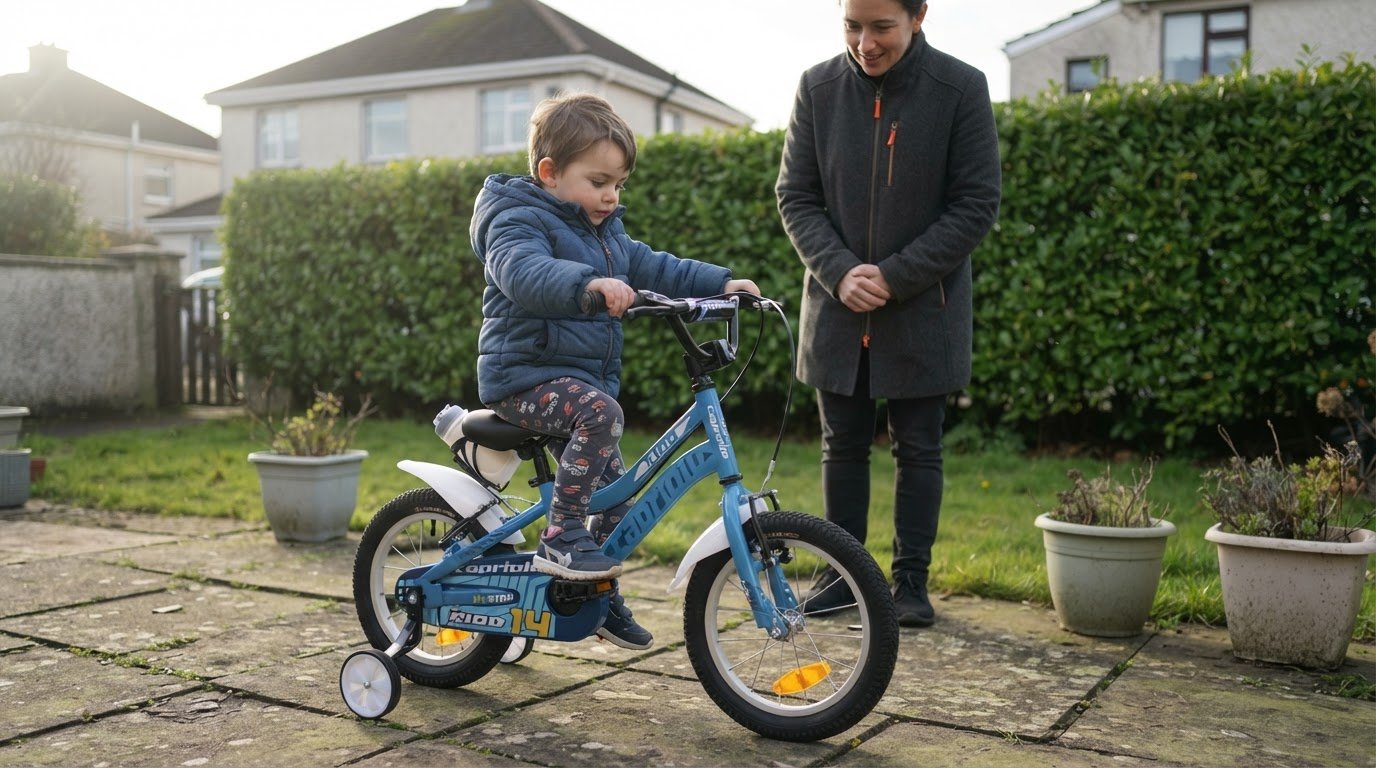
Height helps identify a starting wheel size, but reach shows whether your child can control the bike. Have them sit on the saddle and reach the handlebars and brake levers comfortably. Their feet should feel secure when stopping, and they should be able to steer without stretching. A suitable bike supports confidence; one that feels heavy or awkward can make riding harder. For younger children, a balance bike builds familiarity before pedal bikes enter the picture. According to the HSE Health Service Executive, balance bikes are available in 10-inch or 12-inch sizes, suitable for children aged 2 to 5.
Sizing by Age and Wheel Size
Age offers a useful starting point, but children grow at different rates, so compare it with height and reach. A rough guide is 6 to 8 years for a 20-inch bike and 8 to 12 years for a 24-inch bike. Sampled 20-inch children’s bikes generally suit riders around 120-135 cm tall. These ranges help shortlist options, rather than settle the choice: a child should still feel balanced and able to manage the bike.
| Option | Typical guide | Best sizing check |
|---|---|---|
| Balance bike | Ages 2 to 5 | Comfortable stopping and steering |
| 20-inch wheels | Ages 6 to 8; around 120-135 cm | Reach and control |
| 24-inch wheels | Ages 8 to 12 | Confident handling and fit |
Use the age and wheel-size guide to narrow your options, then let your child’s fit and control decide.
Riding style matters too: a hybrid suits varied everyday routes, while a simpler bike may suit a new rider. Check that the brake levers are easy to reach and operate. On geared pedal bikes, child-friendly controls and shorter cranks can make pedalling and shifting easier to manage.
For road cycling in Ireland, children should always wear a helmet and reflective gear, according to the HSE. A helmet, lights and a lock are practical accessories to consider. Bike prices vary by size and specification, so compare the fit and features with your budget before choosing.
Chain guards, brakes and adjustable saddles
A child’s comfort depends on more than wheel size. Check the chain guard, brake reach and saddle adjustment together, as each affects how easily they can start, stop and ride. These details matter for a first pedal bike and when moving up to a larger model.
Start with the saddle. Set it so your child can sit steadily and place their feet securely when stopping. Check that it can be adjusted as they grow, following the maker’s adjustment marks. A saddle set too high can make mounting and stopping awkward, even if the frame otherwise seems suitable.
Next, check the chain guard. It covers part of the moving chain, helping keep clothing and fingers away during ordinary riding. Make sure it is secure and does not rub against the chain. A loose or damaged guard can distract a young rider, particularly while they are learning to pedal smoothly.
Brake levers should be easy for small hands to reach and squeeze. Ask your child to hold the handlebars and operate each lever without stretching or changing their grip. If the controls feel stiff or awkward, stopping confidently can be harder. Gears add another task, so simple controls may suit a learner better than a complicated setup.
Consider the riding surface before choosing features. A mountain bike with suspension is intended for rougher trails, but extra equipment can affect handling. For everyday routes, a straightforward, lightweight bike may be easier to manage. Aluminium is one frame material you may see; assess the whole bike rather than choosing by material alone.
For a child approaching 6 years, check each control in person and watch them mount, pedal and stop. If a worn lever, saddle or chain guard needs attention, bike components and spare parts can help keep a suitable bike in working order.

12-Inch, 14-inch, 16-inch, 18-inch, 20-inch, 24-inch and 26-inch wheels
Wheel size helps narrow the choice, but frame fit and riding position matter too. Compare each size with your child’s height, comfort and control.
12-Inch, 14-inch and 16-inch Wheels
These smaller wheels suit early cycling stages, but a child’s fit should guide the choice. The Apollo Fairytale 12-inch bike is designed for children 98-111 cm tall, with an age guide of 3-6 years. A 14-inch option offers a step up, while 16-inch wheels can suit a child ready for a larger pedal bike. Check a child’s inside-leg measurement and overall fit when choosing a bike.
18-Inch and 20-inch Wheels
An 18-inch bike can bridge the move from smaller children’s bikes towards a 20-inch model. Compare the child’s seated position, handlebar reach and ability to control the wheels, rather than choosing the larger size for extra growing room. Some 20-inch bikes have short cranks, close-reach brake levers and six-speed controls. These features can help a young rider manage pedalling and shifting.
24-Inch and 26-inch Wheels
These larger wheels suit older or taller children, but the frame must still feel manageable. Some 24-inch bikes use seven-speed Easytrigger shifting, giving riders a different control setup from simpler children’s models. The Yomo 26 is recommended for children aged 10 years and older, with a minimum inside leg of 65 cm. Its 26-inch wheels make it important to assess reach and riding position carefully.
For a practical fit check, have your child sit on the bike, hold the handlebar and operate the brakes. See whether they can steer, stop and place their feet securely without stretching. The right wheel size supports comfort and confident control, but the label alone cannot show how the whole bike fits. Compare these checks across the available sizes before deciding.
Differences between girls’ and boys’ bike categories
Girls’ and boys’ bike categories can make Christmas shopping seem straightforward, but a label alone doesn’t tell you whether a bike fits. These categories may highlight colour or styling, but they don’t replace checking the frame, riding position and controls. Treat a blue or pink finish as a preference, not a sizing decision. Focus first on how your child handles the bike.
The riding stage matters more than the category name. A balance bike lets a beginner practise steering and balance without pedals, while a pedal bike adds pedalling and braking. Either can suit children of any gender. For a first pedal bike, see whether your child can start, steer and stop comfortably. Confidence and control are more useful guides than a “girls’” or “boys’” label.
Compare the practical details of each bike. Ask your child to sit on it, hold the handlebar and reach the brake levers without stretching. Check that the pedals turn smoothly and the saddle allows a comfortable riding position. If the frame shape makes mounting or getting off awkward, try another style, regardless of its category or colour.
Give accessories the same practical attention. A helmet should fit securely, and choosing a colour your child likes may make it more appealing to wear. Check that the lights and reflectors are easy to see on the bike, then consider whether a lock suits where it will be stored. None of these choices depends on a girls’ or boys’ category.
For Christmas, let the child choose between styles they like, then make the final decision based on fit, control and intended riding. Compare kids’ bike styles with those checks in mind, rather than relying on category labels.
Cyclecentre.com: Kids bikes
Cyclecentre.com is a natural next step once you’ve narrowed down the wheel size and riding style that may suit your child. Explore its kids’ bikes as you consider the fit, controls and type of riding you’ve identified as important. Use your child’s height and inside-leg measurement, along with their confidence and intended routes, to guide your choice. If you’re weighing a straightforward bike against one for more demanding terrain, focus on the riding your child will actually do. The right choice is a bike they can manage comfortably, not one selected solely for its colour or category. Contact Cyclecentre.com for help choosing.
Make Christmas a starting point for more family rides
Choosing the best kids’ bike for Christmas can be the start of a shared routine, not just a memorable morning. Think about where your child might ride, from local paths to family outings, and choose a bike suited to those plans. Their interests may change as their confidence grows, so look for a bike that encourages them to enjoy riding now.
Cyclecentre.com also offers Bike to Work and Cycle to Work options, alongside Electric Mountain Bikes for adults planning their own rides. These are separate cycling options, but they can help make cycling part of family life.
Ready to take the next step? Ask Cyclecentre.com for bike advice and move towards a Christmas gift that could inspire many happy rides.
Frequently Asked Questions
Are girls’ and boys’ bikes different?
Often, the main difference is styling or colour, rather than a rule about who can ride the bike. Your child can choose any design they like; assess the individual bike’s fit and controls instead. If they prefer a frame marketed for another gender, compare how comfortably they can mount, steer and brake before deciding.
What is the difference between 20, 24 and 26-inch bikes?
The wheel diameter increases from 20 inches to 24 inches, then 26 inches, and the bike’s overall fit changes with it. A 20-inch bike is generally a smaller option than a 24-inch model, while 26-inch bikes suit children ready for a larger bike. Compare frame reach and handling as well as wheel size; the diameter alone doesn’t show whether the whole bike suits its rider.
Which bike size is right for a child’s height and age?
Use height and inside-leg measurement to narrow down options, then treat age as a guide rather than a verdict. For example, a rough guide pairs 20-inch wheels with ages 6 to 8, and 24-inch wheels with ages 8 to 12. Children grow differently, so compare the suggested size with how the bike fits their body and riding position.
What are the best 12-inch, 14-inch, 16-inch, 20-inch and 24-inch kids’ bikes?
There isn’t one best model for every child; let fit and intended riding guide the choice. Cyclecentre.com’s kids’ bike brands include Capriolo, Romet, Cube, Cuda and Polar. For other wheel sizes, start by matching the bike to your child rather than assuming one brand or style is best.
What features should I compare when choosing a kids’ bike, such as weight, gears and brakes?
Compare the complete bike, not a single specification. A children’s bike should ideally weigh no more than 30% to 40% of the child’s body weight, so weight can affect how manageable it feels. Also consider whether the child can use the brakes comfortably and whether gears suit their riding experience. A simpler setup may be easier for a beginner to operate.
Are balance bikes or pedal bikes better for a child’s first bike?
Either can be a suitable first bike, depending on what your child is ready to manage. A balance bike lets a beginner practise balancing and steering without pedals. A pedal bike adds pedalling and braking to those skills. If your child is still getting comfortable on two wheels, starting with balance practice can make the transition to pedals more gradual.