
Did you know that many entry-level children’s bicycles weigh nearly as much as the little person trying to pedal them? It is a common mistake that can turn a joyful milestone into a frustrating struggle for both parent and child. When searching for the best kids bikes by age, most people look at the recommended years on the box. However, focusing solely on a child’s birth date often leads to choosing a frame that is too cumbersome or a wheel size that doesn’t match their physical reach.
We understand the confusion that comes with balancing wheel diameters against frame geometry, especially when you’re worried about your child outgrowing an expensive purchase in a single season. You want a bike that builds their confidence and lasts long enough to be passed down through the family. This guide will show you how to select a high-quality model that fits perfectly today whilst retaining its value for tomorrow. We’ll break down the transition from balance bikes to junior performance models, explain the technical metrics of correct sizing, and reveal how you can save significantly using the Irish Cycle to Work scheme. By the end, you’ll have the expert knowledge to make a purchase that feels like a long-term investment in your child’s outdoor adventures.
Key Takeaways
- Understand why inseam measurements and developmental milestones are more reliable metrics than birth dates when identifying the best kids bikes by age.
- Learn why prioritising a lightweight frame and rigid forks over heavy suspension systems significantly improves a child’s control and confidence.
- Discover the “Heel-on-Pedal” rule and essential safety checks to ensure a perfect fit that protects your child whilst they explore new terrain.
- Maximise your budget by utilising the Irish Cycle to Work scheme and choosing premium brands like Giant or Cube for superior resale value.
- Recognise the importance of professional workshop assembly to guarantee that every component is safely adjusted before the first ride.
Beyond the Birthday: Why Age is Only a Guide for Kids’ Bikes
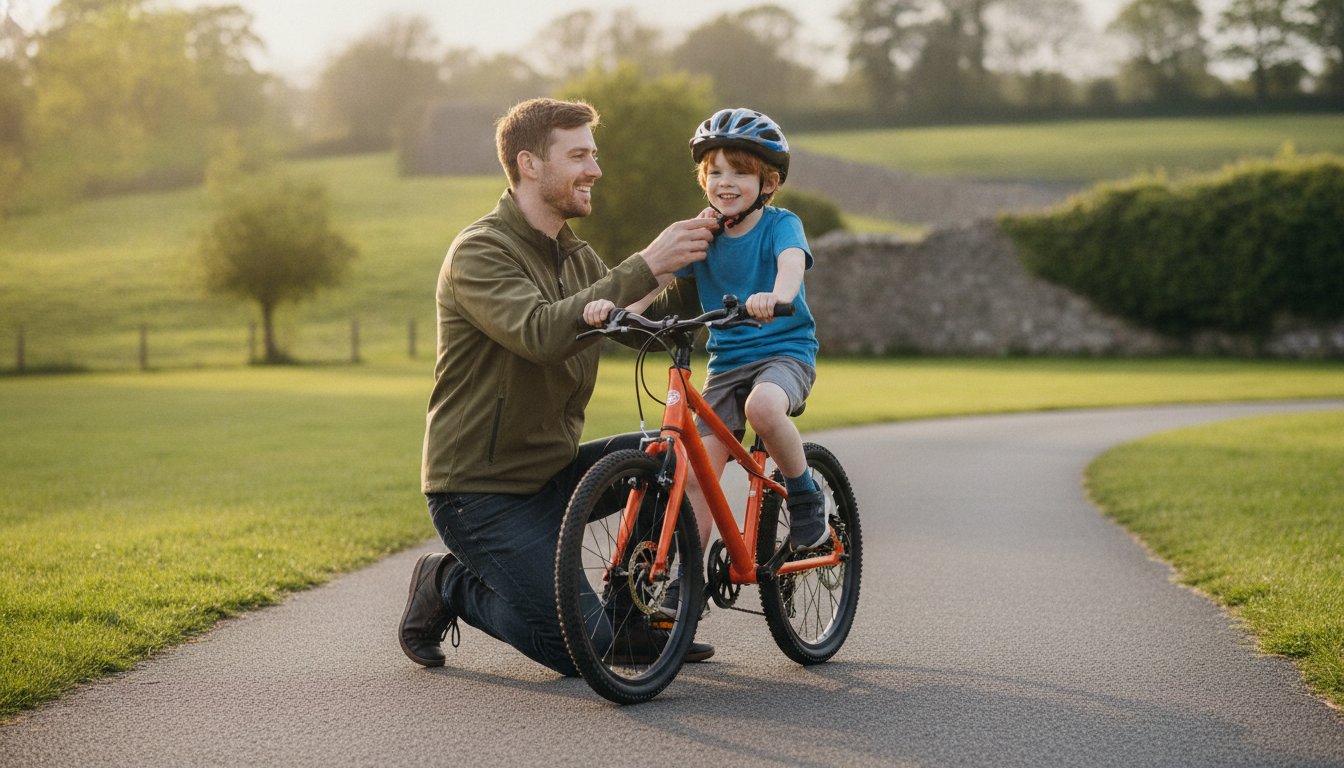
Selecting a bicycle based solely on the number of candles on a birthday cake is one of the most common mistakes parents make. While many retailers categorise their stock this way, finding the Best kids bikes by Age requires looking past the box label. Children grow at vastly different rates; a tall four-year-old may have the physical reach for a larger wheel size, whereas a smaller six-year-old might find that same bike impossible to handle. If a bike is too heavy or the frame is too long, the child spends their energy fighting the machine rather than enjoying the ride. A correctly sized bike doesn’t just feel better; it accelerates the learning process by allowing the rider to focus on balance and steering without fear.
The “growth spurt trap” is a recurring hurdle for many families. It is tempting to buy a size up so the child “grows into it,” but this often backfires. A bike that is too large is cumbersome and dangerous. When a child cannot comfortably reach the ground or the brake levers, their confidence vanishes. We’ve seen many young riders give up on cycling because their first experience was on a bike that felt like a heavy anchor. Investing in a bike that fits perfectly today ensures they build the skills and enthusiasm needed to transition to larger models later.
Understanding the Wheel Size System
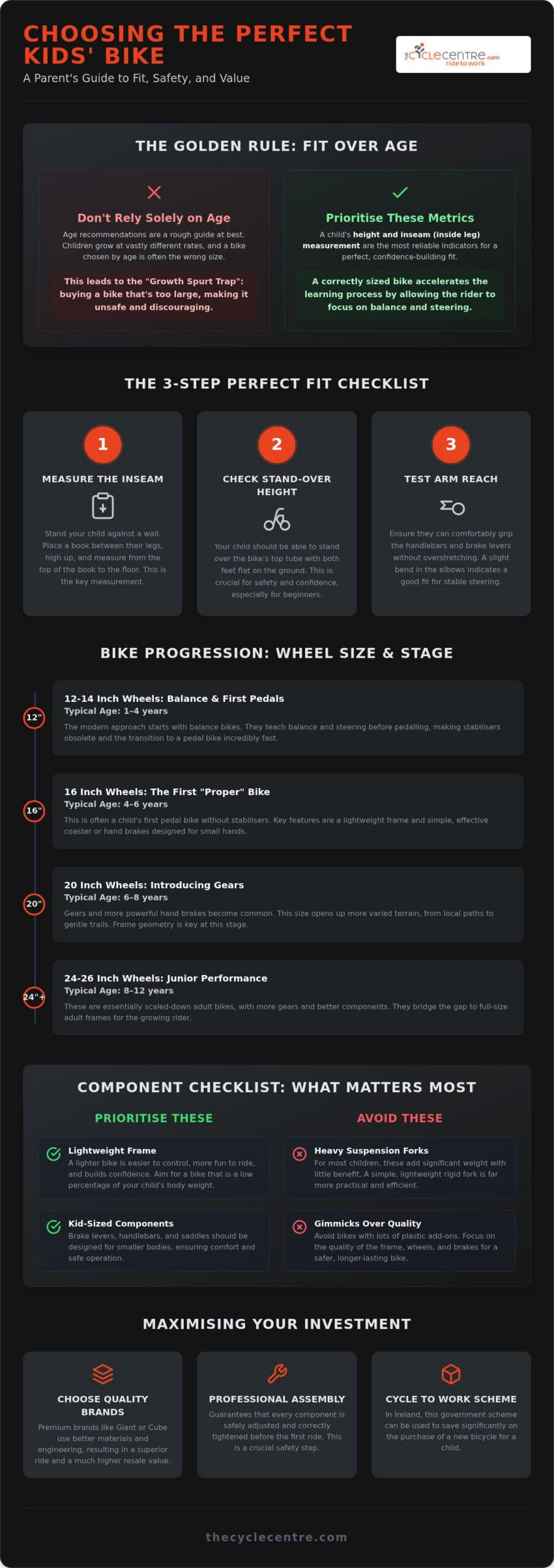
Unlike adult bicycles, which are sized by the frame, children’s bikes are measured by wheel diameter. This system helps maintain the overall proportions of the bike as the rider grows. The standard progression typically follows this path:
- 12-inch and 14-inch: Generally for the youngest riders starting their journey.
- 16-inch: Often the first “proper” pedal bike for many.
- 20-inch: The stage where gears and hand brakes become more common.
- 24-inch and 26-inch: Junior performance models that bridge the gap to adult frames.
It’s vital to remember that wheel size isn’t the only variable. Different manufacturers, such as Cube or Giant, design their frames with unique geometries. A 20-inch Cube might have a lower stand-over height than a 20-inch Giant, making it accessible to a slightly shorter child. Always check the specific frame measurements rather than assuming all wheels of the same diameter are equal.
Why Height and Inside Leg Matter Most
To find the Best kids bikes by Age, you must prioritise the inseam measurement. You can do this easily at home with a book and a wall. Have your child stand against the wall in their usual cycling shoes, place a book between their legs as if it were a saddle, and measure from the top of the book to the floor. This measurement is the “inside leg” and it is the most accurate way to determine if a child can safely stand over the frame.
For those starting on Balance bikes or their first pedal bike, they should be able to plant both feet flat on the ground whilst seated. As they become more proficient, being able to touch the ground with their tiptoes is usually sufficient. Don’t forget arm reach; if the handlebars are too far away, the child will struggle to steer accurately, leading to a wobblier, less stable ride.
From First Scoot to Junior Commute: The Best Bikes for Every Stage
The journey from a toddler’s first wobbly scoot to a pre-teen’s confident commute is marked by distinct developmental milestones. Understanding these stages allows you to select the Best kids bikes by Age that align with your child’s physical ability and coordination. Rather than viewing a bicycle as a static toy, think of it as a tool that evolves alongside their motor skills. Each transition, whether it is ditching the stabilisers or mastering the first gear shift, represents a significant step in their cycling autonomy.
Ages 1–4: Balance Bikes and the End of Stabilisers
Stabilisers are rapidly becoming a relic of the past. The modern approach to teaching cycling prioritises balance and steering before pedalling. Balance bikes allow children as young as 18 months to develop a natural feel for how a bicycle leans and turns. By the time they transition to a pedal bike, they usually skip the stabiliser stage entirely, often riding solo within minutes. When selecting a balance bike, look for pneumatic (air-filled) tyres rather than solid foam. Air-filled tyres provide significantly better grip and cushioning, especially when riding on Irish pavements or gravel paths.
A child is typically ready for pedals when they can “coast” with their feet up for several metres. At this stage, usually between ages four and seven, you will move into 14-inch or 16-inch wheel sizes. These bikes should remain simple. Single-speed drivetrains and easy-to-reach hand brakes allow the rider to focus on the new mechanics of pedalling without being overwhelmed by complex controls. Always ensure they follow essential safety guidelines, such as wearing a correctly fitted helmet, from the very first day.
Ages 7–12+: Moving to Gears and Junior Performance
As children reach the “Junior Explorer” stage (ages 7–9), their world expands. This is the era of the 20-inch wheel, where we introduce the first taste of gears. A simple Shimano 7-speed or 8-speed system is usually sufficient. It provides enough range to tackle local hills without the weight and confusion of a front derailleur. This is also where brand-specific geometry becomes critical. Unlike generic supermarket brands, manufacturers like Giant and Cube offer “scaled-down” adult geometry. This means the cranks, saddles, and brake levers are specifically proportioned for smaller hands and shorter legs, ensuring a much safer and more ergonomic fit.
For pre-teens (ages 9–12+), the transition to 24-inch and 26-inch wheels brings them closer to adult-style performance. These models often feature lightweight aluminium frames and high-quality components designed for longer family rides amongst nature or forest trails. If you are unsure which stage your child has reached, you can browse our full range of kids bikes to compare the latest models from world-class brands. Choosing a bike with a reputable pedigree at this stage ensures it remains a high-performance machine that can be reliably passed down to younger siblings.
Mountain, Road, or Hybrid? Selecting the Right Style for Your Child
Once you have determined the correct size, the next step is matching the bicycle to your child’s favourite environment. Are they planning to join you on the scenic Irish greenways, navigate the local pavement to school, or explore rugged forest trails? Whilst the Best kids bikes by Age often start as simple all-rounders, older children benefit from more specialised designs. Selecting the wrong style often leads to a bike that is unnecessarily heavy or difficult to control on specific surfaces. A purposeful choice ensures the bike supports their ambitions rather than hindering them.
Junior Mountain Bikes: Exploring the Irish Trails
For children who want to follow in the tyre tracks of mountain biking parents, a dedicated junior MTB is essential. Look for models featuring mechanical or hydraulic disc brakes, which provide reliable stopping power in wet Irish conditions. A wide-range cassette is another priority; it allows smaller legs to conquer steep inclines without getting stuck. For older teens interested in more power, you might even consider our Electric Mountain Bike Ireland guide to understand the latest assist technologies. These performance machines are built to handle the rigours of off-road exploration whilst maintaining a manageable weight for younger riders.
Many parents assume suspension is a “must-have” for off-road riding. However, for lighter riders, the suspension forks on budget bikes are often too stiff to actually move, adding weight without any benefit. Higher-quality junior MTBs use high-volume tyres to provide natural suspension. By running these tyres at a slightly lower pressure, the bike absorbs bumps effectively whilst remaining light enough for the child to lift over obstacles. This approach provides better traction and a more comfortable ride without the mechanical complexity of a heavy fork.
Lightweight Hybrids: The Best All-Rounders for School Runs
If the primary goal is a versatile bike for the daily school run or family weekend outings, a lightweight hybrid is usually the superior choice. These bikes feature a rigid fork and a more upright riding position. This simplicity equals reliability; there are fewer moving parts to maintain or break. Hybrids are often the Best kids bikes by Age for the 7 to 12 bracket because they don’t pigeonhole the rider. They are equally at home on a paved path as they are on a canal bank. A well-designed hybrid should include several key features for daily use:
- Integrated mudguard and rack mounts for carrying school bags and staying dry in the rain.
- Multi-surface tyres that roll quickly on tarmac but offer grip on light gravel paths.
- Narrower handlebars for better manoeuvrability amongst traffic or on narrow cycle lanes.
- Lightweight aluminium frames that are easy to carry into the house or onto a bike rack.
For the budding racer or adventure enthusiast, junior road and gravel bikes are also available. These feature dropped handlebars and narrower tyres designed for speed. However, for most young cyclists, the hybrid provides the perfect balance of comfort and capability. It is the practical solution for families who want one bike that can do it all, from the Monday morning commute to the Sunday afternoon adventure.
The Perfect Fit Checklist: Ensuring Comfort and Safety on Every Ride
Finding the Best kids bikes by Age is only half the battle. Once you’ve selected the right model, the physical setup determines whether your child feels confident or terrified. A bike that is poorly adjusted can lead to unnecessary falls and a lack of control, potentially dampening their enthusiasm for cycling. Before they head out on their first adventure, you must perform a thorough check of the bike’s proportions and mechanical integrity.
Start with the saddle height using the “Heel-on-Pedal” rule. While your child is sitting on the bike, have them place their heel on the pedal at its lowest point. In this position, their leg should be completely straight. This ensures that when they move the ball of their foot to the pedal for actual riding, there is a slight, healthy bend in the knee. For beginners who are still building confidence, it’s perfectly acceptable to keep the saddle slightly lower so they can plant their feet firmly on the ground when stopping. As they become more proficient, you can raise the saddle to improve pedalling efficiency.
Essential Safety Components: Brakes and Grips
Small hands often struggle with the reach required for standard brake levers. High-quality junior bikes feature adjustable reach levers, allowing you to bring the controls closer to the handlebar. If a child has to strain to reach the brakes, their stopping distance increases significantly. Safety is paramount, so we also recommend “safety grips” with large, flared ends. These prevent hands from slipping off the bars and provide a cushion if the child accidentally brushes against a wall or falls. In Ireland, it is also wise to ensure every junior bike is equipped with a bell and a full set of reflectors to maintain visibility amongst other path users.
Geometry and Weight: Why ‘Light is Right’
The most overlooked safety metric is the weight-to-child ratio. Consider the maths: a 12kg bike for a 24kg child is the equivalent of an adult riding a 40kg bicycle. It is an enormous burden that makes handling difficult and climbing hills exhausting. This is why we prioritise lightweight aluminium frames from brands like Cube and Giant. By avoiding unnecessary “heavy” features like cheap, non-functional suspension forks, these bikes remain nimble and easy to manage. A lighter bike is fundamentally a safer bike because the rider can move it, stop it, and balance it with far less physical effort.
Whilst many retailers offer boxed delivery, we believe professional assembly is non-negotiable. Our Shimano-accredited workshop ensures that every bolt is torqued correctly and every cable is perfectly tensioned. This professional oversight provides peace of mind that the bike is mechanically sound from day one. If you want to ensure your child’s new ride is perfectly prepared, you can book a Workshop Gold Service to have our experts perform a comprehensive safety check and fitting. Taking these extra steps ensures that their first experience is defined by freedom and fun rather than frustration.
Maximising Your Investment: Quality Brands and the Cycle to Work Scheme
Buying a child’s bicycle shouldn’t be viewed as a disposable purchase. When you choose from the Best kids bikes by Age, you are investing in a piece of equipment that retains its value long after the child has outgrown it. Premium brands like Giant and Cube use high-grade aluminium and reliable components that withstand years of enthusiastic use. This durability creates a significant “hand-me-down” factor. A well-maintained bike can serve three or four siblings or be sold on the second-hand market for a substantial portion of its original price. Cheap alternatives often end up in landfills after a single season; a quality bike remains a functional asset for the next generation of riders.
Using the Cycle to Work Scheme for Kids’ Bikes
Many parents are unaware that the Irish government’s tax-free schemes can be applied to bicycles used for the “school run.” If you use the bicycle for part of your commute or to transport children on your way to work, it may qualify under the scheme rules. This allows you to save up to 52% on the total cost through salary sacrifice, depending on your tax bracket. It is a highly efficient way to access high-end junior performance models that might otherwise feel out of reach. To begin, simply request a no-obligation quote from us to present to your employer. For a deeper look at the latest regulations and spending limits, read The Ultimate Guide to the Bike to Work scheme Ireland 2026.
Professional Support and Maintenance
Safety does not end at the point of sale. A child’s first service is just as critical as an adult’s, as gear cables stretch and bolts settle during the initial weeks of riding. Our Shimano-accredited workshop provides professional assembly and ongoing safety checks to ensure every component functions perfectly amongst the rigours of daily use. We don’t just sell goods; we facilitate safe, lifelong cycling habits. With national delivery across Ireland and expert fitting advice, we ensure your investment is protected from day one. Browse our full range of Kids’ Bikes and get a quote today to find the Best kids bikes by Age for your family’s next adventure.
Ready for the First Great Adventure
For youngsters who are fascinated by the intricate details of heavy machinery, Diecast Cartel provides access to a premium selection of 1:24 scale diecast trucks UK to help them start their own collection. These high-quality models provide a unique way to appreciate the engineering of large vehicles, perfectly complementing the sense of adventure they find on their bikes.
As a family-owned Irish business established in 1974, we take pride in ensuring every bike leaves our Shimano Accredited Workshop perfectly assembled and safety-checked. Our team is here to help you navigate the Cycle to Work scheme to maximise your value whilst securing a high-performance ride. Explore our range of Giant and Cube Kids’ Bikes and get a Cycle to Work quote to start your journey. With our expert fitting and national delivery, we are ready to help your child discover the freedom and joy that only two wheels can provide.
Frequently Asked Questions
What size bike does a 4-year-old need?
A 4-year-old typically requires a 12-inch or 14-inch wheel size. However, because children grow at vastly different rates, you should always prioritise their inseam measurement over their birth date. Finding the Best kids bikes by Age is much more effective when you use years as a starting point and physical proportions as the final decider for the frame geometry.
Is it better to buy a bike that is slightly too big so they can grow into it?
Buying a bike that is too large is a significant safety risk and often stalls a child’s progress. If a rider cannot comfortably reach the ground or the brake levers, they’ll lack the control needed to ride with confidence. This usually leads to a fear of cycling rather than a love for it. It’s always better to buy a bike that fits perfectly now to ensure they develop their skills safely.
Can I get a kids’ bike on the Cycle to Work scheme in Ireland?
You can use the Cycle to Work scheme for a junior bike in Ireland if it’s used for the “school run” as part of your qualifying commute. This allows you to save up to 52% on the cost through salary sacrifice, depending on your tax bracket. It’s a brilliant way to invest in a premium brand like Giant or Cube whilst reducing your taxable income through official channels.
Why are some kids’ bikes so much heavier than others?
Weight differences usually come down to frame materials and the inclusion of unnecessary components. Budget bikes often use heavy steel frames and non-functional suspension forks that add bulk without any performance benefit. Premium models use lightweight aluminium and scaled-down components. A lighter bike is much easier for a child to manoeuvre, making their early experiences far more enjoyable and less exhausting.
When should my child move from a balance bike to a pedal bike?
Your child is ready to move to a pedal bike once they can coast on their balance bike for several metres with their feet off the ground. This indicates they’ve mastered the balance and steering required for a bicycle. Most children make this transition between the ages of three and five, often skipping stabilisers entirely because they’ve already learned the most difficult part of the process.
Do I need to buy a bike with gears for a 6-year-old?
Most 6-year-olds are better off with a simple single-speed bike. Adding gears at this age can be overwhelming and adds unnecessary weight to the frame whilst they are still mastering basic handling. Simple drivetrains allow them to focus on their road position and braking. Gears usually become a helpful addition when they move up to 20-inch wheels around the age of seven or eight.
How do I measure my child’s height for a bike at home?
The most accurate way to measure your child is to find their inseam rather than their total height. Have them stand against a wall in their usual cycling shoes and place a book between their legs as if it were a saddle. Measure from the top of the book to the floor. This number is the most useful metric for determining the Best kids bikes by Age for their specific build.
What is the difference between a 20-inch and 24-inch kids’ bike?
The primary difference is the wheel diameter and the overall frame proportions. A 20-inch bike is designed for the “Junior Explorer” stage, often introducing the first set of gears for local hills. A 24-inch bike is a “Pre-Teen Performer” model that bridges the gap to adult bicycles, featuring more advanced components and a larger frame designed for longer family rides amongst nature.