
Labels matter less than fit: a child’s bike should suit their height and confidence, not simply be marketed for a boy or a girl. If you’re searching for boys’ bikes for sale in Ireland, start with the bike’s size and whether your child can handle it comfortably. A bike that looks right may still be difficult to control if it’s too large or too small.
It’s natural to wonder whether girls’ and boys’ bikes are built differently, especially when choosing a first bike or moving up to a new size. This guide explains what the labels mean, how your child’s height can help narrow the options, and why confidence matters as much as measurements. You’ll also find practical ways to assess fit and help a new rider feel comfortable, so you can choose a bike that’s manageable for everyday adventures.
Key Takeaways
- Choose by fit and riding confidence rather than assuming a “boys’” or “girls’” label determines how a bike will ride.
- Use your child’s height to narrow down wheel sizes, then treat age guidance as a starting point rather than the only measure.
- For a new rider, a well-fitting bike and a safe, open practice area can help build confidence gradually.
- When comparing bikes online, focus on the size and style that suit your child’s needs, not just the colour or category name.
How should you choose the right kids’ bike size?
Start with your child’s height, then consider how confidently they can balance, steer and brake. A wheel-size label is a useful guide, but age ranges overlap: 20-inch bikes are listed for ages 6 to 8, 24-inch bikes for ages 7 to 11, and 26-inch bikes for ages 10 to 14. For 20-inch models, a general height guide is around 120-135 cm.
Ask your child to sit on the bike and reach the handlebars comfortably. They should be able to operate the brakes and feel steady when stopping. Avoid choosing a larger bike just because they may grow into it: an awkward fit can make learning harder. If their confidence is still developing, prioritise easy handling over a more advanced bike category.
“Boys’ bike” usually describes how a model is marketed, not a separate fit rule. Children can choose styles such as mountain, hybrid or BMX bikes, with colour and graphics down to personal taste. A child who rides paths and roads, for example, may prefer a hybrid, while a BMX suits a different kind of riding. Compare a bike’s intended use and fit, not just its label.
Prices vary with the bike’s size, type and components, so compare like with like. A basic children’s bike and a larger model with different equipment are not direct equivalents. Examples of useful categories to compare include 20-inch hybrids, 24-inch mountain bikes and 26-inch junior bikes.
Second-hand boys’ bikes are another option in Ireland, but condition matters. Check the frame for damage, tyres for wear, wheels for wobble, and brakes and gears for smooth operation. Make sure the saddle and handlebars adjust securely.
For safety, check that the brakes work, wheels are secure and tyres are in good condition. Look for a chain guard where fitted. Delivery, assembly and returns depend on the retailer’s terms, so compare these separately when browsing online. For upkeep, wipe the bike down after muddy rides, check tyre pressure regularly and store it somewhere dry.
Choosing a bike by a child’s height and riding confidence
Use height to narrow the options, then let your child try the bike. Age ranges are a starting point, but children of the same age can differ in proportions and confidence. A child who can reach the ground and control the handlebars comfortably may manage a bike better than one chosen by age alone. Check that they can reach the brakes and steer without stretching.
For a rough age guide, 12-inch bikes are listed for ages 1.5 to 3.5, 14-inch for 2.5 to 4.5, 16-inch for 4 to 6, and 18-inch for 6 to 8. These ranges overlap, so use your child’s height and handling comfort to guide the final choice. For example, the Apollo Xpander Junior Mountain Bike is designed for riders 117-135 cm tall. That height range can help you shortlist, but a practical fit still matters.
Frame geometry affects how a child sits on and handles a bike. Look for a reach that lets them hold the handlebars with relaxed arms, and a frame they can mount and dismount without awkward movements. A lighter bike may be easier to manoeuvre, especially for a child still building balance. Match the category to the riding: a mountain bike for rougher paths, or a hybrid for mixed everyday routes.
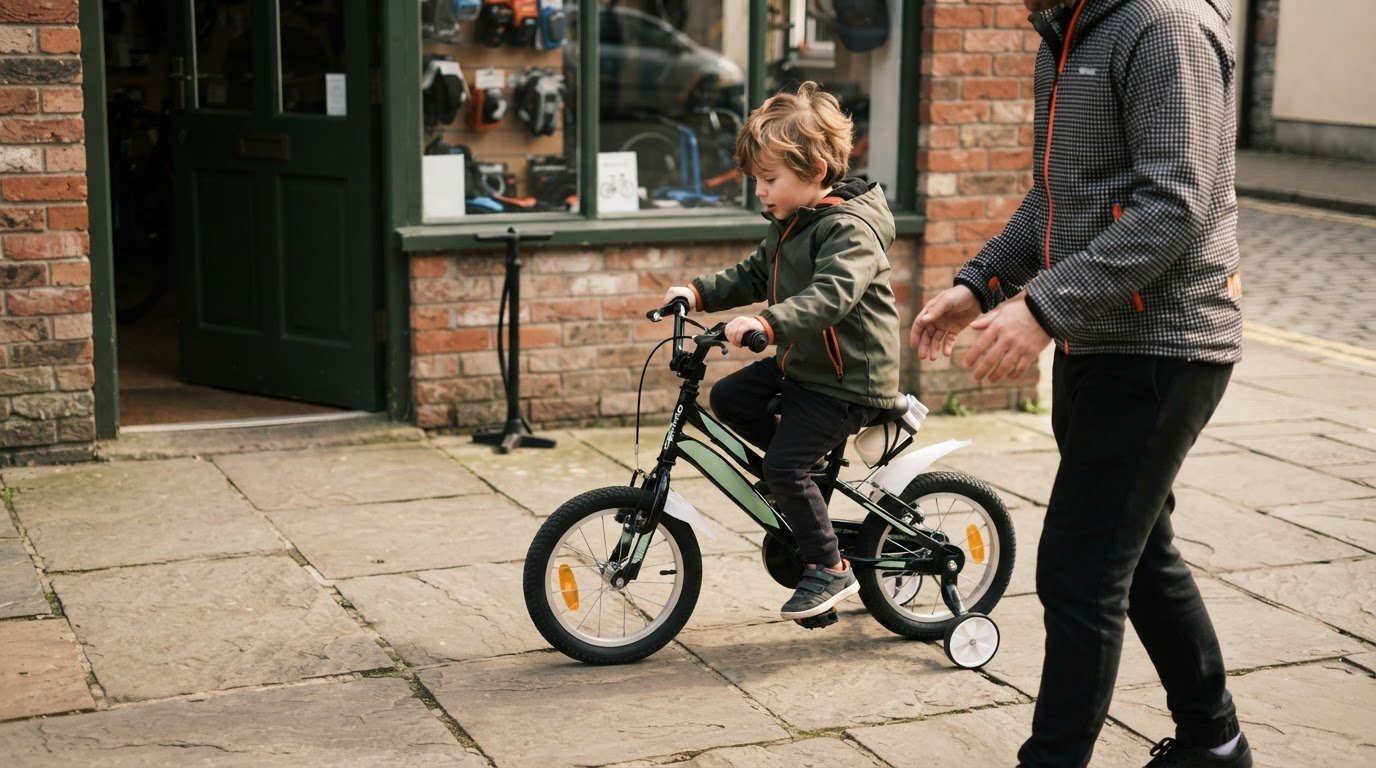
Confidence helps determine what to practise next. A new rider can start in a safe, open area, practising balance by striding and gliding with feet lifted before introducing pedals. Keep early sessions short and enjoyable. If your child already rides steadily, focus on comfortable braking, steering and starting rather than choosing a larger bike to allow for growth.
Think of the size chart as a shortlist, not a final verdict. A 16-inch bike may suit one child in the listed age range, while another may feel more secure on a different size. Let fit, control and riding stage guide the decision together.
Where can I buy boys’ bikes in Ireland?
In Ireland, you can buy children’s bikes from local bicycle shops, Irish online retailers and second-hand listings. Each option suits a different priority: seeing a bike in person, browsing online, or finding a pre-owned model. Decide what matters most, then narrow your search by your child’s size and intended riding.
A local bike shop lets your child sit on a suitable model before you decide. Use that visit to check whether they can reach the handlebars and operate the brakes comfortably. Bring their height and the wheel size you’re considering, such as 20-inch or 24-inch, to make the discussion more focused. A real-life fit can reveal awkward reach or handling that photographs don’t show.
Irish online retailers make it easier to compare children’s bike categories and listed sizes from home. Read each product description carefully: note the wheel size, intended use, frame details and what the listing says about assembly, delivery and returns. Search by a specific need, such as a junior mountain bike or a 16-inch model, rather than relying only on “boys’ bike”. That helps surface relevant options without making colour the deciding factor.
Second-hand listings are worth considering, particularly when a child is moving between sizes. Compare the photographs and description, then arrange to see the bike before buying where possible. Check the frame, wheels, tyres, brakes and gears in person. A low asking price doesn’t make a bike suitable if its size or condition isn’t right for the rider.
Before buying online or locally, keep a short comparison list:
- Fit: record the child’s height and the wheel sizes under consideration.
- Use: match the category to the usual route, such as paths or everyday journeys.
- Purchase details: review the retailer’s delivery, assembly and returns information.
These steps make it easier to compare Irish listings on practical details, rather than choosing by appearance alone.

Which Irish retailers sell boys’ bikes online?
Irish online options include specialist bicycle retailers and larger general retailers with children’s cycling ranges. Their websites let you browse by wheel size, bike category or age guidance. Start with the child’s height and riding experience, then use those details to narrow the listings. A “boys’ bike” label alone won’t tell you whether a model will fit.
Compare product pages by the information they provide. Look for the wheel size, intended riding style and any guidance on rider height. For example, a listing for a 20-inch bike may help narrow the choice, but the child’s fit and ability to control it remain important. Check product photographs alongside descriptions, since appearance alone cannot show whether a frame suits the rider.
Online listings make it easier to compare different bike categories. A junior mountain bike, a hybrid and a BMX are designed for different kinds of riding. Think about where your child will ride most often and use that to narrow the options. Colour and graphics can help your child choose a favourite, but fit and intended use should guide the decision.
Before ordering, read the retailer’s information about delivery, assembly and returns. Terms vary, so don’t assume the same arrangements apply to every listing. Check whether the product page explains how the bike arrives and what preparation it needs before riding. Keep the product name and size together as you compare options, so similar-looking models don’t get confused.
A practical online comparison can follow three steps:
- Filter: use the child’s height and a suitable wheel size to narrow the results.
- Compare: review bike category, fit guidance and the details shown for each model.
- Review: read the retailer’s delivery, assembly and returns information before placing an order.
For instance, a 24-inch listing may suit a different stage of growth from a 20-inch option. Treat each size as a prompt to assess fit, not a final decision. This method helps you compare Irish online listings with the child’s comfort and riding needs in mind.
Cyclecentre.com
Cyclecentre.com is a useful next step if you’re narrowing down a bike choice for a child. Keep their height, confidence and usual routes in mind as you compare options. These details help focus your search on a bike they can handle, rather than relying on labels, colour or age alone. If you’re also considering a bike for yourself, the range includes electric mountain bikes and road performance bicycles, as well as Cycle to Work options.
A child’s first bike and a replacement for a confident young rider can call for different considerations. Use the sizing and riding guidance above to identify the questions that matter for your family, then continue your search with those priorities in view. Contact Cyclecentre.com to discuss your cycling needs.
Make the next ride a confident choice
Choosing among boys’ bikes for sale in Ireland is a chance to focus on what will make riding enjoyable for your child. Look beyond the label and involve them in the final choice: a bike that feels comfortable and suits their interests can make getting out for a ride more appealing. Their favourite colour can help them feel part of the decision, while fit and control remain the practical priorities.
Cyclecentre.com offers children’s bikes, as well as Bike to Work and Cycle to Work options, and electric mountain bikes. If you’re comparing bikes for your family or considering your own cycling needs, the team can help you take the next step. Share the kind of riding you have in mind and what you’re trying to decide.
Contact Cyclecentre.com for help and take the next step towards more enjoyable rides together.
Frequently Asked Questions
Are girls’ and boys’ bikes different?
Usually, the label alone won’t tell you whether a bike suits a child. Models may differ in styling or frame design, but children’s proportions and comfort matter more than gender. If two children like the same colour and can both handle the same model comfortably, there’s no reason to choose based on a “boys’” or “girls’” label.
What is the difference between 20, 24 and 26-inch bikes?
The figures refer to wheel size, with larger wheels generally found on larger children’s bikes. Wheel size can affect how a bike feels to steer and handle, so the biggest option isn’t automatically best. If your child is between sizes, compare how comfortably they can control each bike. A secure, confident fit matters more than choosing a size for future growth.
What are the best boys’ bikes for sale in Ireland?
There isn’t one best choice for every child. The right bike depends on the rider’s fit, confidence and usual journeys. When comparing boys’ bikes for sale in Ireland, first decide whether the bike is mainly for paved routes, mixed paths or more playful riding. Then compare suitable models by fit and handling, and let your child’s preferences help settle the choice.
How much do boys’ bikes cost in Ireland?
Prices vary by bike type, size, components and condition, so there’s no single price for every children’s bike. New and second-hand models also need different comparisons: weigh a used bike’s condition against its asking price. For a fair comparison, look at bikes intended for similar riding and check what equipment each listing includes.
What bike size suits a boy by age and height?
Use height to narrow the options, then assess how your child sits and reaches the controls. Age is a useful guide, but children grow at different rates, so it shouldn’t determine the purchase on its own. If your child is close to changing size, try the bike in their usual shoes and clothing. How comfortably they mount, stop and steer can help distinguish similar options.
What are the best boys’ bikes for different ages and riding styles?
Match the bike category to where and how your child rides. A child who enjoys family outings on varied routes may need a different style from one who mainly rides in a local skate area. Consider how often the bike will be used, whether the rider is still learning, and how confidently they manage turns and stops. Their preferred riding style can help guide your shortlist.