


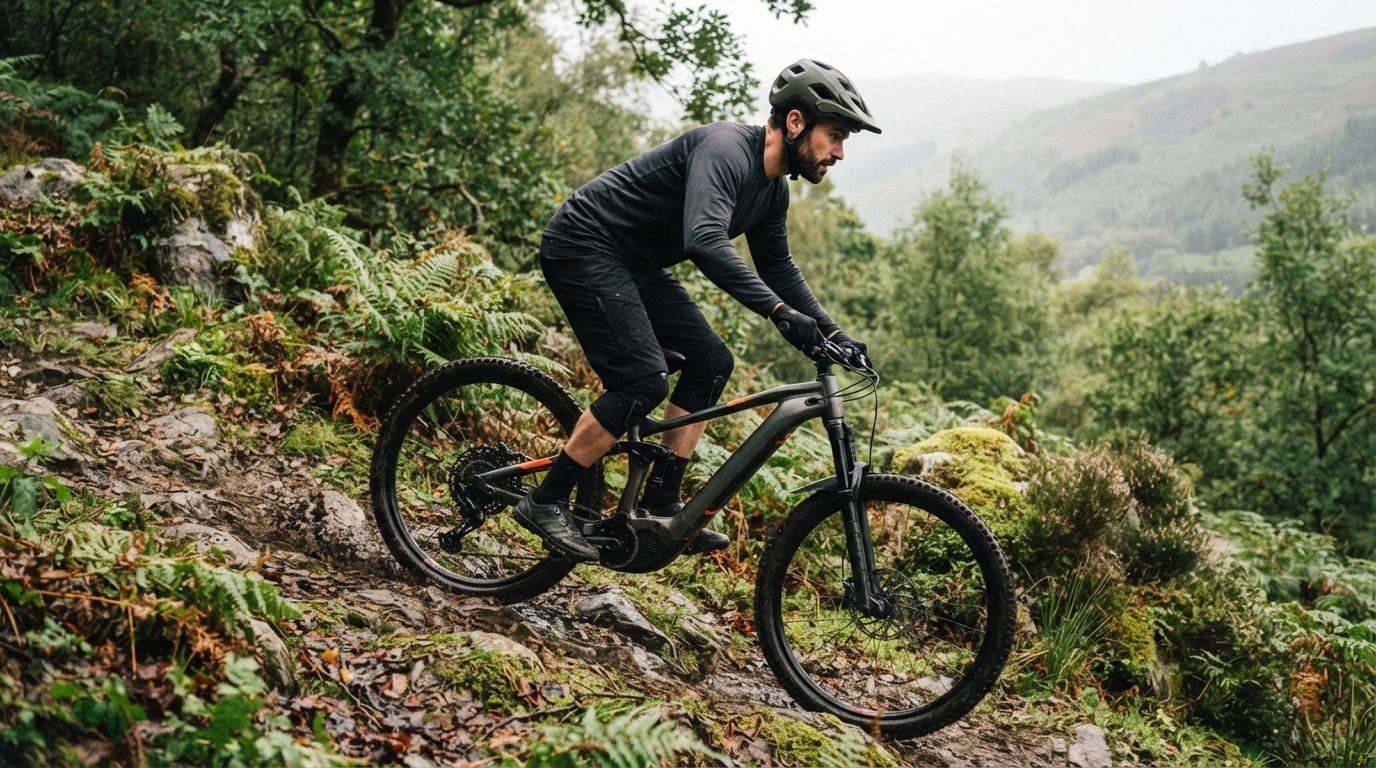
What if the key to a steep e-MTB climb isn’t more power, but using the assistance you already have with greater control? If the rear wheel spins on loose ground or the front wheel lifts when you need to steer, it’s easy to blame the climb or the bike. Learning how to improve e-mtb climbing technique starts with balancing your position, pedal input and motor support to keep the tyres gripping and your line steady.
Those moments can be frustrating, especially when you’re unsure whether to change gear, select a different assist mode or simply push harder. Smoother climbing often comes from small, deliberate adjustments rather than maximum support. With more control, you can carry momentum without letting the motor overwhelm your traction.
This practical guide explains how to position your body, choose a suitable cadence and gear, and manage assistance on steep or loose terrain. It also covers pacing, basic setup and signs that a persistent problem may need a mechanical check, so you can decide what to change and climb with greater confidence.
Key Takeaways
- Identify whether wheelspin, a lifting front wheel or fading momentum is disrupting your climb before changing your approach.
- Learn how to improve e-mtb climbing technique by adjusting your balance to suit the slope and surface, rather than holding a rigid posture.
- Match assistance and gearing to the climb, using steady pedal input to help keep the rear tyre gripping.
- Build confidence by practising line choice, posture and power control separately on a familiar, manageable trail.
- If climbing problems persist, check tyre condition and pressure using your bike and tyre guidance, then consider whether a mechanical check is needed.
How to improve e-MTB climbing technique: start by spotting what is going wrong
Climbing skill develops through small, deliberate adjustments, not one perfect riding position or a single assist setting. Before changing anything, identify what the bike is doing and where the climb starts to feel difficult. That gives you a clearer starting point for how to improve e-mtb climbing technique, without mistaking a tricky trail for a problem with your riding or bike.
Why does an e-MTB lose grip or lift its front wheel uphill?
A steep gradient shifts the bike’s balance, whilst loose gravel, damp soil or roots can make it harder for the tyres to hold their line. A sudden increase in pedal pressure or motor assistance may also unsettle traction. Rear-wheel spin feels like the tyre scrabbling beneath you. Front-wheel lift is easier to spot when the steering feels light or the wheel rises over the trail.
These are different signs, so avoid correcting both at once. On a suitable practice climb, change one variable, such as pedal smoothness, line or body position, and notice what happens. For a refresher on pedal-assist and power-on-demand systems, see these electric bicycle basics.
What should you notice before changing your technique?
Pause before the climb and read the ground ahead. Is the gradient steady, or does it steepen? Is the surface firm, loose or uneven? Note turns, roots and rocks that may require a change of line or pace. Then pinpoint when the difficulty begins: at the start, halfway up or at a particular feature. This helps you test your approach methodically.
- Wandering steering: Notice whether the front wheel drifts on a turn or when the trail gets rough.
- Stalled momentum: Check whether you lose progress on a steeper pitch or at an obstacle.
- Excess fatigue: Consider whether you’re pushing too hard from the outset or fighting the bike’s movement.
These clues don’t diagnose the cause on their own. A repeatable struggle on the same loose corner may point to technique or trail conditions, but tyre condition, pressure and other setup factors can also affect grip. Check these against the bike and tyre guidance rather than guessing. If the problem is new, or comes with an unfamiliar noise or inconsistent motor behaviour, stop and arrange an appropriate mechanical check instead of trying to ride through it. Symptoms alone can’t confirm a fault.
In short: Choose a controlled pace, protect traction with smooth input and keep your body balanced enough to steer. First work out when and where control changes, then test one adjustment at a time.
Set your e-MTB body position for traction, balance and steering
Your posture on a climb isn’t a fixed pose. It changes with the gradient, surface and line you need to ride. Begin in a centred position, with relaxed arms, a secure hold on the bars and steady contact through the pedals. Then make small adjustments to keep the bike balanced beneath you while allowing it to move over the trail.
Leaning too far back can make the front wheel feel light and reduce steering control. Moving too far forward may help keep that wheel down, but can take pressure away from the rear tyre and make it more likely to lose grip. Aim for a balanced feel rather than forcing your weight into one position. This is a useful foundation for how to improve e-mtb climbing technique, particularly as the trail changes beneath you.
How do you keep the front wheel planted without sacrificing rear grip?
Keep your chest low enough to stay in control, but avoid an exaggerated forward lean. On a steep pitch, shift your weight gradually until the front wheel tracks where you want it without making the rear feel loose. Sudden movements can unsettle both ends of the bike, particularly on loose ground. Choose a controlled line and keep pressure through the pedals steady so the steering remains predictable.
If the front wheel starts to wander, look where you’re heading and make a measured correction rather than yanking the bars. If the rear tyre slips, ease off abrupt pedal pressure and settle your position before trying again. Small, calm adjustments are easier to assess than a dramatic change made mid-climb.
How should your posture change on steep, loose or uneven climbs?
On steeper ground, stay centred and adjust only as much as needed to maintain front-wheel control. On loose ground, smooth out your weight shifts and avoid stamping on the pedals. The aim isn’t to freeze your body, but to move in a controlled way that doesn’t disturb the tyres’ contact with the trail.
Uneven features call for preparation. Look ahead, choose a line and adjust your posture before reaching a root, rock or step. Keep your arms relaxed enough to respond as the front wheel rolls over it, rather than bracing at the last moment. Practise on terrain that feels manageable and notice how a small change affects balance and steering.
Takeaway: Balance the bike beneath you, then make small posture changes as the trail changes. If you’re reviewing whether your current bike suits the riding you want to do, explore The Cycle Centre’s e-MTB range.
Coordinate e-MTB assist, cadence and gears for a smoother climb
Motor support can help you keep moving, but more assistance isn’t always the answer to a difficult climb. A sudden surge may make traction harder to manage, particularly on loose ground. Pair a suitable assist level with smooth pedal pressure and a gear that lets you keep turning the pedals without straining. The best combination depends on the bike, motor system, terrain and your own effort.
Which assist level should you use for different climbs?
Use this comparison as a starting point, not a set of fixed rules. Mode names and how they feel vary between e-MTB systems, so check your bike and motor manufacturer’s guidance. Experiment on a safe, familiar section and change one setting at a time.
| Climb | Starting point | What to notice |
|---|---|---|
| Gradual | Low assistance | Can you maintain a steady effort without labouring? |
| Technical | Low to moderate assistance | Does the support feel manageable over loose ground or obstacles? |
| Steep | Moderate assistance, increasing if needed | Can you keep moving without the power feeling abrupt? |
Battery strategy may also influence your choice over a longer ride. If a climb becomes more difficult, a gradual increase in support may feel easier to control than switching straight to the highest setting. Give yourself time to assess the change, and prioritise a steady, controlled effort over chasing a particular mode.
How do cadence and gear choice help maintain control?
Cadence means how quickly you turn the pedals. Rather than aiming for a universal number, look for a rhythm you can sustain without stamping down hard or letting the pedals slow almost to a stop. Smooth, consistent pressure gives the motor a steadier input and helps avoid sudden surges that can unsettle the rear tyre.
Think about gearing before the challenging section. Where the terrain and system allow, select a suitable gear before the load becomes excessive, rather than waiting until you’re grinding up the steepest part. If you need to shift under pressure, follow the bike manufacturer’s instructions. Ease your effort as appropriate and don’t force a change if the drivetrain resists.
For riders working out how to improve e-mtb climbing technique, treat assistance, cadence and gears as connected choices. If a gear feels too hard, shifting to an easier one may help you keep the pedals turning. If the motor response feels abrupt, try a lower support setting or smoother input on your next attempt.
Climbing principle: Choose the least assistance that allows a controlled, sustainable effort for that climb. Reassess as the gradient and surface change, rather than relying on maximum support from the start.
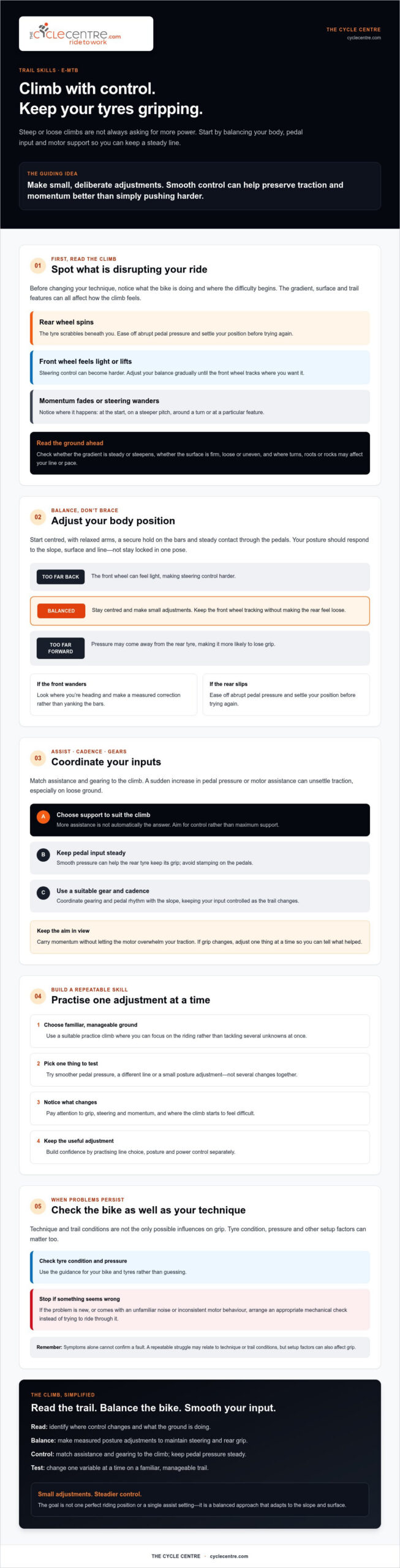
Practise a repeatable e-MTB climbing technique on the trail
A familiar, manageable climb makes it easier to practise without having to solve every trail challenge at once. Choose a place with clear sightlines and safe spots to stop, away from other trail users. Wear suitable protective equipment, including a helmet, and don’t practise beyond your current ability. The aim is steady progress, not forcing a difficult climb.
What simple drills help build climbing control?
Begin with a gentle incline and a steady-pedalling drill. Pick a clear line, keep your pedal pressure smooth and notice whether the bike holds its direction. Once that feels comfortable, practise controlled starts and stops on ground where you can do so safely, without blocking the trail or losing control of the bike.
- Choose one short section. Use a familiar climb with a safe place to pause before or after it. Check the surface and make sure the line is clear.
- Ride it at a manageable pace. Focus on following your chosen line. Don’t try to correct every small movement at once.
- Repeat with one change. Try smoother pedal input, a different line or a small posture adjustment. Keep other choices consistent so you can tell what helped.
- Practise a controlled start. Where the ground is suitable, begin from a stable position and build momentum gradually. Stop if the surface or surroundings make the drill unsafe.
- Reflect before another attempt. Name one thing that improved and one adjustment to test next. If nothing changed, return to the original approach and try a different variable.
Keep sessions short enough that fatigue doesn’t turn careful practice into rushed riding. As your control improves on the gentle section, apply the same process to a slightly steeper or more uneven part of the trail. This step-by-step approach makes how to improve e-mtb climbing technique easier to practise and assess.
How should you approach roots, turns and short steep pitches?
Look ahead and choose your line before reaching a root or turn. Keep your inputs measured through corners. Accelerating abruptly can disturb your balance and make the bike harder to guide. For a short, steep pitch, decide in advance whether you can ride it comfortably. Some obstacles are safer to walk. Use walk assist only as designed and follow the bike manufacturer’s instructions. If you’re unsure how your system operates, check its guidance before using it.
If you want to review whether your bike is suited to the trails you ride, explore the electric mountain bike range.
When technique is not enough: check your e-MTB setup and get support
Practice can help you refine how to improve e-mtb climbing technique, but recurring difficulties aren’t always caused by riding style. Before changing your approach again, check the basic setup and consider whether the bike is behaving as it normally does. A simple inspection may highlight something to address, but symptoms alone can’t confirm a mechanical fault.
Which basic setup checks can affect climbing confidence?
Start with the tyres, as their condition and pressure can influence grip and how confidently the bike tracks over the ground. Look for visible damage or unusual wear, and use the tyre and bike manufacturer’s guidance to check the appropriate pressure for your setup and riding conditions. Don’t rely on a guessed figure or copy a pressure that works for someone else’s bike.
Before a ride, confirm that the bike is in the intended riding mode and that assistance responds consistently as you pedal. If the mode or motor behaviour seems unfamiliar, consult the manufacturer’s instructions rather than making unverified changes. Avoid altering suspension settings without bike-specific guidance. Make one appropriate check at a time, then assess whether the original climbing issue remains.
When should a specialist inspect the motor or e-MTB?
Stop treating the issue as a technique problem if assistance repeatedly cuts out, the motor makes an unfamiliar noise or the bike develops new or inconsistent behaviour. Note when it happens, such as under load on a climb or when assistance engages. That information can help a qualified technician assess the bike. Don’t dismantle motor or electrical components unless the manufacturer specifically identifies that as a safe owner check.
The Cycle Centre provides specialist e-bike repairs for Bosch, Shimano, Yamaha and Bafang motor systems, and has a Shimano accredited workshop. If basic checks and riding practice haven’t explained a persistent problem, specialist support may help establish whether the bike needs attention. The aim is not to assume a fault, but to get a suitable assessment when something has changed or doesn’t feel right.
A sensible next step is to review your setup guidance or seek a qualified inspection if the symptoms persist. If you’re considering different equipment or specialist support, explore electric mountain bikes and specialist support.
Take your next climb one adjustment at a time
Climbing confidence comes from noticing what the bike is doing, then making measured changes. A centred, responsive position helps you balance steering and traction, while smooth pedalling, suitable gearing and considered assistance can keep power under control. Practise one skill at a time on familiar ground, and check your setup if the same issue keeps returning.
That’s the heart of how to improve e-mtb climbing technique: build control through observation and small, repeatable adjustments. If your bike makes an unfamiliar noise or its assistance behaves inconsistently, don’t assume it’s simply a riding issue. The Cycle Centre provides specialist e-bike repairs for Bosch, Shimano, Yamaha and Bafang motor systems, and has a Shimano accredited workshop. The Cycle Centre is an independent family-owned bicycle retailer, founded in 1974.
Whether you’re reviewing your equipment or looking for specialist support, explore The Cycle Centre’s electric mountain bikes and specialist support. Take the next climb at your own pace, and give each small improvement room to add up.
Frequently Asked Questions
Why is my e-MTB rear wheel spinning when I climb?
Rear-wheel spin often means the tyre has lost grip, but the cause can vary. Loose ground, an unsuitable line, abrupt pedal pressure or assistance that feels too strong for the surface may all contribute. Ease your input, look ahead and make one controlled change at a time. Check tyre condition and setup too. If the problem persists or comes with unusual behaviour, seek a qualified inspection rather than repeatedly experimenting on the trail.
Should I use the highest assist mode for a steep e-MTB climb?
No, maximum assistance isn’t automatically the most controlled choice. A useful setting depends on your motor system, the trail, your effort and the available traction. Start with a manageable level on suitable ground, then increase support only if needed. Keep your pedal input smooth and choose a considered line whatever mode you use. Check your bike and motor manufacturer’s instructions, as assist modes and their behaviour differ between systems.
How should I position my body when climbing on an e-MTB?
Begin in a balanced, centred position with relaxed arms and enough control to steer without bracing rigidly. Make small adjustments as the slope or surface changes, aiming to keep the front wheel tracking whilst maintaining rear-wheel grip. There’s no single posture for every climb: gradient, loose ground and obstacles all affect what feels stable. If you’re learning how to improve e-mtb climbing technique, practise these adjustments on a familiar, manageable section first.
What gear should I use when climbing on an electric mountain bike?
The right gear depends on your bike’s drivetrain, motor and the climb, so there’s no universal choice. Where the terrain and system allow, select a suitable gear before reaching a difficult section rather than forcing a shift under heavy load. Pair it with steady pedalling and an assist level that feels manageable. Follow your bike manufacturer’s guidance, and avoid relying on a fixed cadence or gear recommendation for every climb.
Can an e-MTB climb steep hills without the rider pedalling hard?
Motor assistance supports your pedalling, but it doesn’t remove the need to manage effort, balance and traction. How much help you feel depends on the motor system, bike setup, gradient and surface. Aim for a controlled pace and use assistance that suits the climb rather than expecting the motor to overcome every challenge. For guidance on how your specific system operates, consult the bike or motor manufacturer’s instructions.
How do I know whether poor climbing is a technique or bike problem?
Try a familiar trail and see whether a different line, balanced posture or smoother pedal input changes the difficulty. If assistance cuts out repeatedly, an unfamiliar noise appears or the bike’s behaviour changes suddenly, stop treating it as a skills issue and arrange a qualified assessment. A basic visual check can help, but it can’t diagnose a motor or electrical fault. The Cycle Centre provides specialist e-bike repairs for Bosch, Shimano, Yamaha and Bafang motor systems.
Does tyre pressure affect e-MTB climbing grip?
Yes, tyre pressure can affect how the tyre contacts the ground, which may influence climbing grip. There isn’t one correct pressure for every rider or bike: tyre choice, terrain, load and the manufacturer’s limits all matter. Check your bike and tyre guidance before making an adjustment, and avoid copying another rider’s setting without considering those differences. Also inspect the tyre’s condition, as pressure alone won’t address damage or wear.