


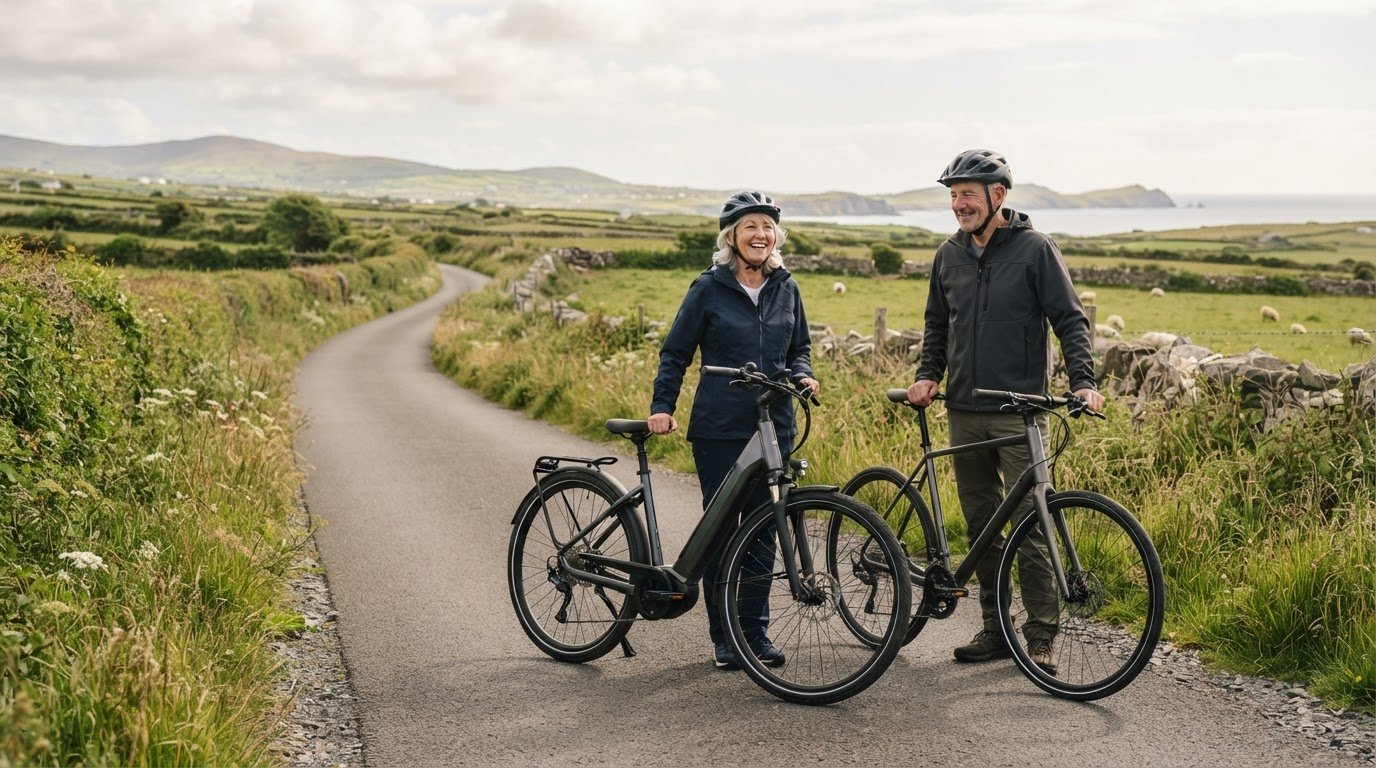
Low impact cycling for seniors is not about riding as slowly as possible. It is about choosing a bike, route and level of effort that feel manageable for you. Cycling can be adapted to different abilities, but age alone cannot determine whether it will feel comfortable or suitable.
It is understandable to have questions before getting back on a bike. Sore joints, balance, getting on and off, or concern about overdoing it can make a first ride feel daunting. If you are considering an electric bike, you may also wonder whether pedal assistance still involves useful effort. These are practical concerns to consider before deciding how to ride.
This guide explains what low-impact riding does and does not mean, and how small adjustments to your bike, set-up and pace may make a ride more manageable. You will also find ways to compare standard and electric bikes, prepare for a first or returning ride, and build confidence gradually.
Key Takeaways
- Low impact cycling for seniors means reducing jarring impact, not necessarily removing effort. Comfort and ability differ from person to person.
- Cycling may contribute to fitness and movement, but an enjoyable, manageable routine is more useful than forcing a demanding plan.
- Compare standard bikes and e-bikes by how each lets you manage effort. An e-bike still involves pedalling.
- For a first ride, check your comfort and bike, choose a familiar route, start gently and reflect afterwards.
- Bike choice and appropriate workshop support can help you take a practical next step towards riding with greater confidence.
What does low-impact cycling for seniors actually mean?
Low impact cycling for seniors is riding with a smooth, repetitive pedalling motion that generally involves less jarring impact than activities with repeated foot strikes, such as running. It can still require effort, and it will not feel comfortable or suitable for everyone. “Low impact” describes the movement, not a guaranteed level of ease, safety or comfort.
A slow ride over a rough surface may feel bumpier than a brisk spin on a smooth path. A gentle pace can still challenge your breathing or legs, depending on your fitness and the route. Speed alone does not determine impact or effort: the bike, surface, duration and your own ability all play a part.
Why cycling can feel gentler than some activities
On a bicycle, your feet move around the pedals rather than repeatedly striking the ground, and the saddle supports some of your body weight while you ride. This smooth, seated movement may feel more manageable for some people than activities with more jarring steps. It is not automatically pain-free, though. Cycling can still place demands on your knees, hips, back, hands and shoulders.
You can adjust your pace by pedalling more gently and stop when you reach a safe place if you need a rest. The bike and setting matter too. Bumps, hills, traffic or an awkward position may make a ride feel more demanding. A general overview of the health benefits of cycling provides broader context, but cannot determine what will feel right for you.
Low impact does not mean one-size-fits-all
Comfort depends on more than age. Mobility, balance, fitness, confidence and health history can all affect how riding feels. One person may find a short ride comfortable, whilst another may need a different set-up, extra support or a different form of activity. There is no single definition of an appropriate ride for every older adult.
Pay attention to your own response instead of trying to keep up with someone else. If you feel discomfort, pause and reassess rather than pushing through. Consider whether your position, pace, surface or effort could be contributing. A change may help, but persistent or concerning symptoms deserve individual attention, not guesswork.
If you have a health condition, have been advised to limit activity, or are unsure whether cycling is suitable for you, seek guidance from a healthcare professional who understands your circumstances. They can offer advice tailored to your health and mobility. The aim is not to prove cycling is right for everyone, but to decide whether it could work for you.
How cycling may support fitness, mobility and wellbeing as you age
A ride can offer more than a change of scene. Regular cycling may contribute to cardiovascular activity, engage the muscles used for pedalling and help keep the legs moving. The effort depends on the rider, route, duration and pace. Cycling is one possible way to be active, not a guaranteed route to better health.
Cycling may support fitness, movement and enjoyment, but it cannot promise a particular medical outcome or replace advice tailored to your health.
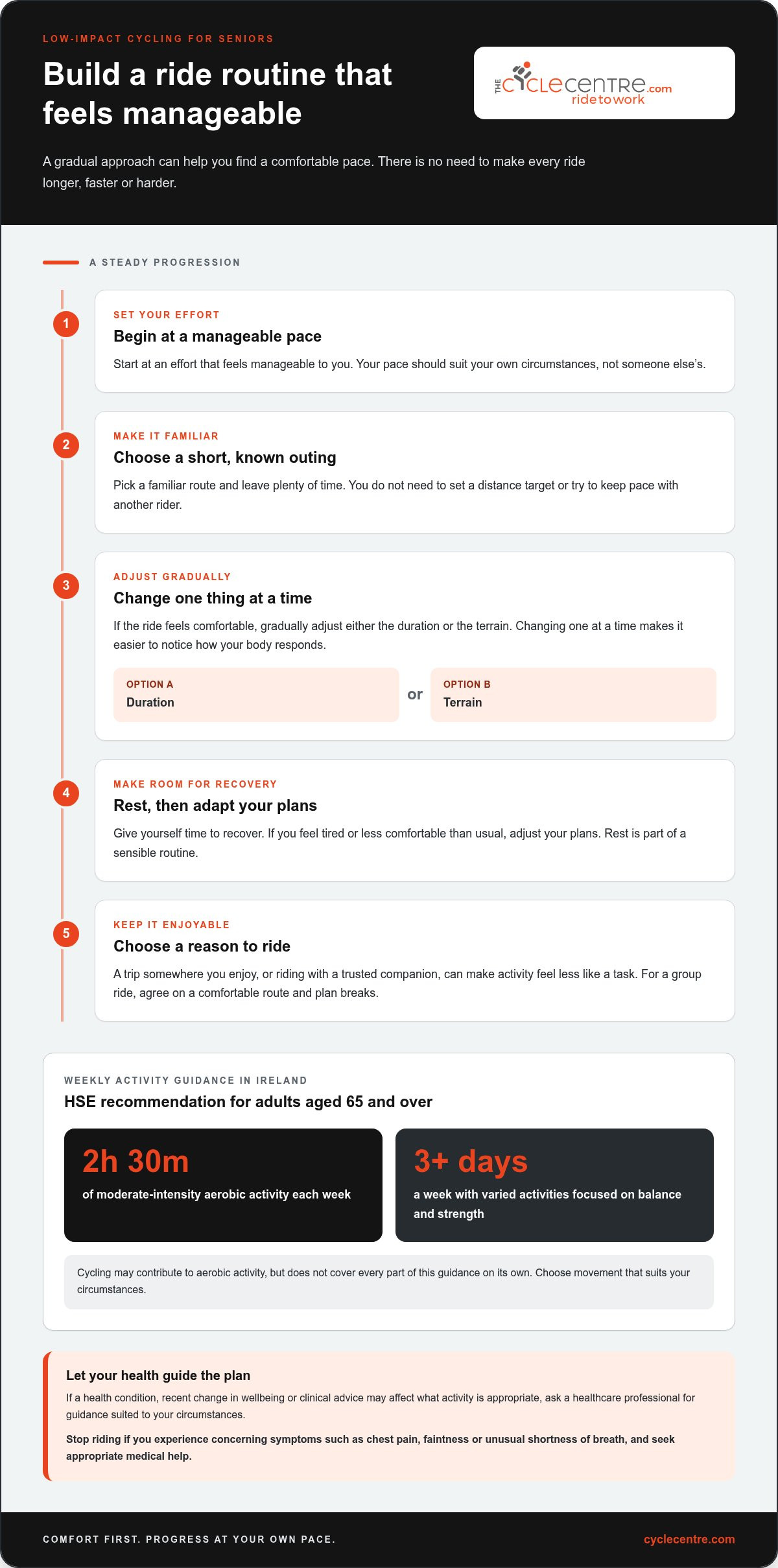
In Ireland, the HSE recommends that adults aged 65 and over aim for at least 2 hours and 30 minutes of moderate-intensity aerobic activity each week, alongside varied activities focused on balance and strength on three or more days a week. Cycling may contribute to aerobic activity, but does not cover every part of that guidance on its own. Choose movement that suits your circumstances and build a routine around what feels achievable.
Build activity without turning every ride into a workout
Start at an effort that feels manageable. Choose a short, familiar outing and leave plenty of time, rather than setting a distance target or trying to keep pace with someone else. If it feels comfortable, gradually adjust either the duration or the terrain. Changing one at a time makes it easier to notice how your body responds; there is no need for a big jump between rides.
Rest is part of a sensible routine, not a failure to stick with one. Give yourself time to recover and adapt your plans if you feel tired or less comfortable than usual. A routine is more likely to suit you if you can return to it without pressure to make every ride longer, faster or harder.
Enjoyment and company can help a routine last
Having a reason to ride can make activity feel less like a task. A relaxed trip to somewhere you enjoy or a ride with a trusted companion may add pleasure and reassurance. If you are considering a group ride, choose company and a pace that feel comfortable. Agree on a route and plan breaks rather than treating the outing as a test.
Sharing time outdoors can be rewarding in its own right, even when the ride is brief. If you are exploring a comfortable set-up, city and electric bike options can help you consider what kind of riding appeals to you.
When health conditions change the advice
A health condition, recent change in wellbeing or specific clinical advice may affect what activity is appropriate. Do not treat cycling as a way to diagnose or manage a condition without professional guidance. Ask a healthcare professional for advice suited to your health history and intended level of activity.
Stop riding if you experience concerning symptoms, such as chest pain, faintness or unusual shortness of breath, and seek appropriate medical help. Take symptoms seriously rather than trying to push through them.
Standard bike or e-bike: comparing low-impact cycling options
Both a standard bike and an electric bike can be used for low-impact cycling, but they offer different ways to manage a ride. On a standard bike, your pedalling supplies the effort. An e-bike provides assistance while you pedal, which may help you adjust the effort to suit the ride. You still need to pedal, and assistance will not make every journey effortless.
There is no single right choice for older riders. Start with the trips you hope to make, the terrain you expect to encounter and which bike feels comfortable and manageable. This comparison can help focus your decision:
| Option | What to consider |
|---|---|
| Standard bike | You provide the pedalling effort. Consider whether it feels manageable for the rides you have in mind. |
| Electric bike | Pedal assistance supports your effort. Think about whether assistance suits your intended routes and riding preferences. |
When an electric bike may be worth considering
An electric bike may be worth exploring if assistance could help you manage the effort involved in a ride. Consider the routes and terrain you expect to ride, and how you want pedalling to feel. Assistance does not remove the need to pedal, guarantee a comfortable ride or make a bike suitable for every person.
The Cycle Centre offers E-city and E-road bikes, as well as electric mountain bikes. These categories help narrow your search by intended use, but the category name alone cannot tell you whether a particular bike will feel right. Your comfort and confidence matter as much as the journey you have in mind.
What matters more than choosing a bike type
Before settling on a standard or electric bike, think about how you will use it and how it feels to handle. A comfortable riding position and a bike you can manage confidently are central to a practical choice. Consider your preferred pace, likely routes and surfaces, and whether you want pedal assistance.
If you are considering road riding, The Cycle Centre’s endurance road bikes guide offers further context on comfort and performance. Use information like this to shape your thinking, then focus on your intended use. A bike that works for someone else may not suit you.
For low impact cycling for seniors, the aim is not to choose the “easiest” bike in the abstract. Look for an option whose position, handling and level of effort make sense for the rides you want to enjoy. Explore bike options at The Cycle Centre to compare standard and electric choices.
How seniors can make a first or returning ride more comfortable
A little preparation can make setting off feel more straightforward. For low impact cycling for seniors, aim for a manageable ride rather than chasing distance or speed. Check how the bike feels, pick a familiar route and leave room to pause or turn back. If you are returning after a break, there is no need to resume at your previous level.
Before your first ride, check your comfort and bike, choose a familiar route and conditions, start gently, then review how you felt afterwards.
- Check comfort. Sit on the bike and notice whether you can reach the handlebars and controls without straining. Check that the saddle and riding position feel manageable.
- Check basic operation. Test the brakes and look over the tyres before setting off. Check that the bike responds as expected, and do not ride if something seems wrong.
- Choose a familiar route. Pick somewhere you know, with a distance and surface that feel achievable. Choose conditions you are comfortable riding in, and plan a place to stop if needed.
- Ride at an easy pace. Give yourself time to settle in and pause whenever you want. You can turn back early; the first ride is a chance to notice what works.
- Review afterwards. Think about comfort, effort and anything that felt awkward. Use what you learn to adjust your next outing.
Adjust fit and controls for confidence
Saddle position affects how comfortably you can pedal, while your reach to the handlebars can influence whether your back, shoulders or hands feel strained. Controls should feel accessible and familiar. A small adjustment may change how the bike feels, but no single saddle position or frame style suits every older rider.
If you feel awkward or strained, do not assume you simply need to get used to it. An assessment of the bike’s fit and adjustments may help identify what needs attention. The Cycle Centre’s specialist workshop supports road bikes and e-bikes, making it a practical option when a bike needs attention.
Build a routine at your own pace
Choose a starting duration and route that feel manageable. If that level feels comfortable during and after your ride, build gradually by changing the time or route, rather than increasing both at once. If it does not feel comfortable, scale back and reassess. Rest days are a valid part of building a routine, and there is no need to match another rider’s pace.
For an e-bike, take time to understand its controls and how pedal assistance works before heading out. If you are unsure about the rules for riding one in Ireland, consult this electric bike laws guide. To explore bikes suited to your intended rides, visit The Cycle Centre’s bike options.
Choosing support for low-impact cycling: bikes, adjustments and servicing
A comfortable ride depends on more than choosing between a standard bike and an e-bike. Position, handling and the kind of journey you have in mind all matter. For low impact cycling for seniors, a considered choice helps you focus on what feels manageable rather than assuming one bike type suits every older rider.
Think about where you would like to ride, how you prefer to sit and whether you feel confident handling the bike. City, road and electric bikes offer different starting points for exploring your preferences. If you already own a bike, consider whether it needs attention before you ride.
What practical support can make riding easier?
A bike that feels awkward to sit on or handle can undermine confidence, so consider your comfort and intended use. The Cycle Centre’s range includes city, road and electric bikes, alongside E-city bikes, road performance bicycles and E-road bikes. These categories help frame the choice around the sort of riding you have in mind, but your own comfort remains central.
For existing road bikes and e-bikes, The Cycle Centre’s specialist workshop provides service and repair support. Its motor expertise covers Bosch, Shimano, Yamaha and Bafang systems. The Cycle Centre has 50 years of experience, and its workshop is “Shiamno accredited”. These details can help you understand the workshop support available, without suggesting that servicing guarantees a particular riding experience.
A simple next step for finding your fit
You do not need to settle every detail before exploring your options. Start with the type of ride you want to enjoy, what feels comfortable, and whether you are considering a standard or electric bike. If you already have a bicycle, note what feels good and what you would like to change. Those observations can make your next step more focused.
Bike Smart Search provides a free, no-obligation bike quote, giving you a straightforward way to explore suitable options. Use it to describe what you are looking for and take time to consider what support would be useful. The aim is to make an informed choice at your own pace, not to rush into a purchase.
If you are ready to explore, Explore bikes and expert workshop support at The Cycle Centre. Whether you are returning to cycling or looking for a bike that better suits your needs, guidance can help turn uncertainty into a practical plan. Start with what matters most to you: comfort, confidence and the kind of rides you would like to take.
Take the next step at your own pace
There is no need to turn a return to cycling into a big commitment. Think about what you would like a ride to make possible, whether that is a gentle outing, a familiar errand or simply feeling more at ease on a bike. Let that preference guide your next step. Low impact cycling for seniors is most meaningful when it fits your needs and feels manageable in everyday life.
If you are weighing up a bike or workshop support, take time to explore your options. Bike Smart Search offers a free, no-obligation bike quote and a useful starting point if you are considering a bike for your intended rides.
Explore bikes and expert workshop support with The Cycle Centre. Start with the kind of ride you want and find a bike or workshop support to help you take that next step.
Frequently Asked Questions
Is cycling suitable for seniors with arthritis?
It may suit some people with arthritis, but comfort and suitability depend on the individual and their symptoms. Low impact cycling for seniors is not automatically pain-free or appropriate for every joint or health history. If you are considering riding, ask your GP or another healthcare professional for advice tailored to you. They can help you decide whether cycling is appropriate and whether personal adjustments or limits should guide your activity.
Can I start cycling again if I have not ridden for years?
You may be able to return to cycling after a long break, provided you feel ready and have no health-related restrictions. Before heading out, practise getting on and off, steering and braking somewhere quiet and controlled. If those basics feel unfamiliar, take time to regain confidence before riding in busier surroundings. A trusted companion can offer reassurance, provided they are happy to go at your pace.
Is an electric bike a good option for older riders?
An electric bike can be a useful option if pedal assistance suits the rides you want to take. You still pedal, and the effort depends on your riding and the assistance available. Give yourself time to become familiar with the controls before relying on the bike for a longer or less familiar trip. If you are unsure how it operates, get guidance before setting off independently.
How often should seniors go cycling?
There is no cycling schedule that fits everyone. Your starting point depends on your current activity, health, confidence and how you feel after a ride. Rather than committing to a demanding routine, try a manageable outing and allow time to recover before deciding when to ride again. If you are working towards broader activity goals, use the HSE guidance discussed in the article and adapt your plans to your circumstances.
What should I do if cycling causes discomfort?
Stop somewhere safe and do not try to ride through discomfort. Make a note of where you feel it, when it begins and whether it changes with your position or the terrain. This can help you describe the issue to a healthcare professional or bike specialist. If discomfort persists, recurs or concerns you, seek appropriate advice before riding again. Sudden or severe symptoms need prompt medical attention.
Do seniors need a special bike for comfortable cycling?
No, age alone does not mean you need a special type of bike. What matters is whether the bike suits your intended use and feels manageable. Check that you can reach the controls comfortably and handle the bike as you expect. If possible, compare how different bikes feel rather than choosing by label alone. A suitable fit is personal, so another rider’s favourite may not suit you.