


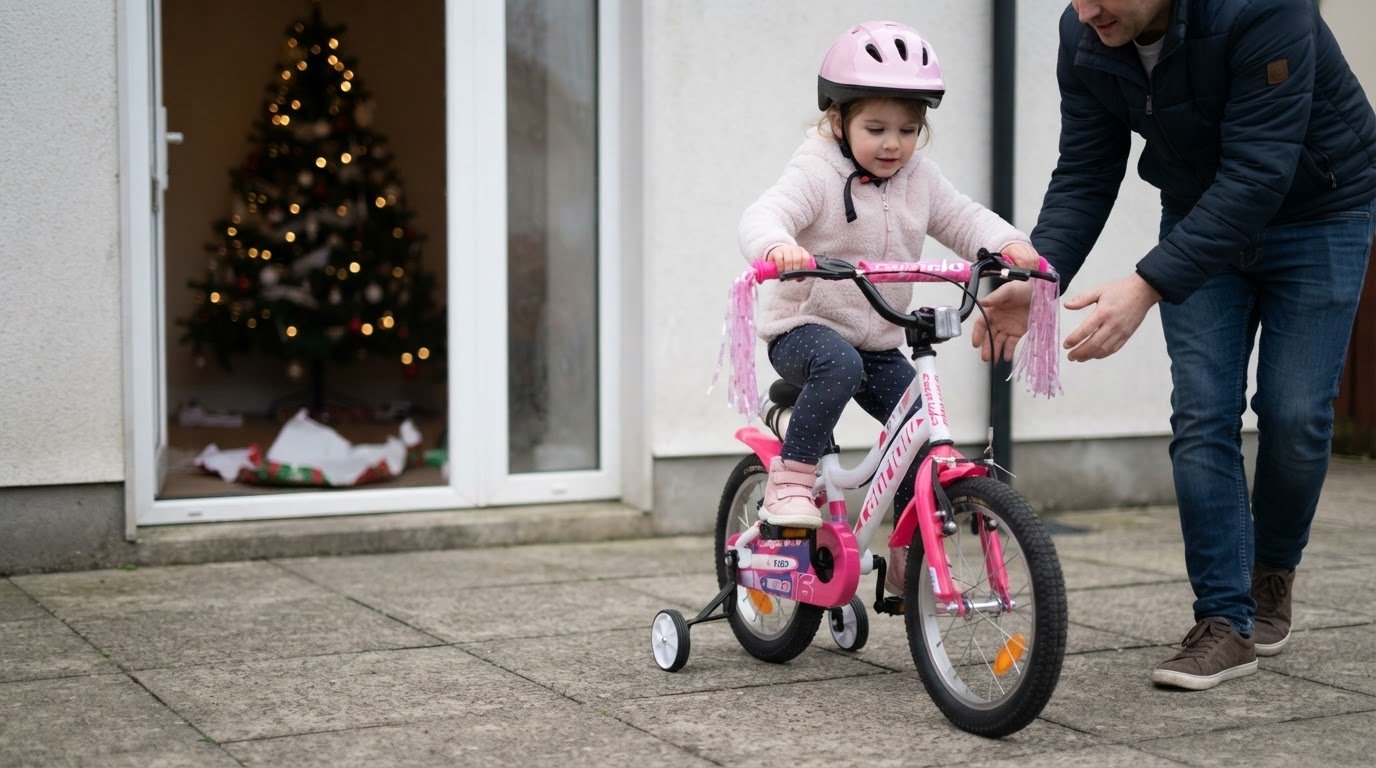
What if the best Christmas present for a child who isn’t yours is the one that fits their life, not the one with the biggest bow? The perfect Christmas gift for kids doesn’t have to be expensive. Thought, care and a little help from the child’s parent or guardian can make your choice feel personal without overstepping.
Choosing a gift for someone else can be tricky, especially if you’re unsure what they already own, what they enjoy or how much space their family has. A bike can be a memorable present, but consider the child’s interests and ask a parent or guardian for input before choosing one.
This guide covers how to choose a thoughtful present, what to consider when buying a children’s bike, and low-cost or recycled gift ideas if a new bike isn’t right. You’ll have a clearer way to find something the child can enjoy and the family will welcome.
Key Takeaways
- Ask the child’s parent or guardian about their interests and what would suit the family before choosing a present.
- Consider handmade, recycled or experience-based ideas when a new purchase isn’t the right fit.
- For a child with plenty of toys, look for something they can use repeatedly, such as a book or practical item.
- Match the gift to the child’s current skills, and keep small parts away from children who still mouth objects.
2. Low-cost and recycled gift ideas
A thoughtful present can matter more than its price. Handmade gifts show the time and care behind them, while reused materials can give familiar objects a fresh purpose. If you’re buying for a child who isn’t yours, ask their parent or guardian about suitable materials and family preferences first.
Jessica Cole’s daughter asked for a stuffed puppy about three times a week. Last year, Cole made one from her daughter’s old special blanket. It’s an example of turning a well-loved fabric into a personal gift rather than letting it go unused. A parent or guardian can help you find a suitable fabric or another item with happy memories.
Set a budget before settling on an idea. Start with an amount you can comfortably spend, then compare options within that limit. Consider these broad spending levels:
- No-spend: Make a memory jar from a clean reused jar, filling it with handwritten activity ideas such as a rainy-day story session or a walk together.
- Low-cost: Use spare card, wrapping paper or fabric for a homemade bookmark, decorated notebook or simple toy pouch.
- Modest spend: Add a small new item to a handmade present, such as pencils beside a recycled-paper sketchbook.
- More to spend: Choose one durable item the child genuinely wants, rather than several smaller presents they may soon forget.
These are planning categories, not fixed euro price bands. Set your own spending limit, then consider the child’s interests, materials you already have and whether the gift will be used. A carefully finished present can feel special without costing a lot.
For a recycled gift, begin with a useful material and a clear purpose. Turn a clean, sturdy tin into a pencil holder or sew a small bag from fabric saved from an old shirt. Make sure the finished item suits the child’s age and has no loose parts that could come away. If you’re thinking about a skincare product, ask the family about allergies first and use ingredients intended for skin or food.
Handprint and footprint crafts can be meaningful, but let the child decide whether to take part. If you’re using Plaster of Paris, an adult should mix it, ideally outside, and keep it off children’s hands while it sets because it gets warm. A drawing or handwritten note made with materials at home is a simpler alternative.
About 20 people responded when Jessica Cole asked Facebook friends about memorable gifts. The useful lesson is to focus on what the child will value, not the cost. A recycled keepsake, shared activity or requested item can each make a personal Christmas present.

4. What are good Christmas gift ideas for children who already have lots of toys?
When the shelves are full, another toy may not help. Consider a gift the child can use repeatedly, such as a book, a practical tool or an activity to share with family. Ask their parent or guardian what gets used at home. Their answer can narrow your options better than guessing from the toy box.
A practical gift can support an activity the child already enjoys. A keen young artist might use a sketchbook, pencils or a portfolio to display finished drawings. A child who likes helping in the kitchen might enjoy a child-sized apron or a recipe notebook. Choose something that suits an activity they already do, rather than introducing a gift that needs extra equipment or storage.
Books make a thoughtful alternative to another toy. A personalised children’s book can put the child at the centre of an adventure story or nursery rhyme built around their name. For a child who loves animals, choose a story featuring familiar creatures. For a budding explorer, look for a journey through places they enjoy imagining. A parent can help you avoid picking a book they already own.
An experience can create shared memories without taking up shelf space. You could plan a family walk with a stop for hot chocolate, an afternoon of baking together or tickets for an activity the child already enjoys. Ask the family first, then make the gift tangible with a handwritten invitation explaining the plan. This helps parents understand the timing and gives the child something to open.
Use this short process before buying:
- Ask about favourites. Find out what the child talks about, reads or makes time for.
- Check what gets used. A well-loved book or art activity can point towards a useful present.
- Choose one clear purpose. Pick something that extends an existing interest, rather than competing with toys they already have.
- Consider a surprise. An unexpected gift can be memorable, especially when it connects with a known interest.
A gift the child has wanted for a while may feel especially meaningful, particularly if it has been beyond the family’s budget. You don’t need to guess at a major purchase: ask the parent or guardian discreetly whether the child has mentioned a particular wish. The perfect Christmas gift for kids might be a long-awaited book, a practical item or an afternoon together. Let the child’s interests, family routines and available space guide your choice.
Gifts that children use repeatedly can become memorable, whether they’re toys, books or useful tools. Choose something familiar in form but thoughtful in fit: a book the child returns to, a tool for a favourite activity or a toy that keeps earning a place in play. The aim isn’t to fill another gap on a shelf, but to give something the child will use again and again.
4. How can you choose a Christmas gift that matches a child’s interests and developmental stage?
Notice what the child chooses during everyday play. A child who draws at the kitchen table might enjoy a sketchbook, washable paints or large crayons. Someone who loves stories might prefer a book about their favourite animals. Ask the parent or guardian what currently holds the child’s attention. They can tell you what the child already has and what fits the family’s routines.
Next, match the activity to the child’s developing skills. For children aged 3-5, a gift project can include simple steps that challenge emerging abilities. Think of a basic collage using large paper shapes, or a simple kit for decorating a plain card. A project should offer enough to practise without becoming frustrating. If a child loses interest quickly, choose an activity with a clear, achievable finish.
Take particular care with small parts. Beads, buttons and similar pieces can pose choking risks for children who still mouth objects, so save those projects for older children. For a younger child, choose larger materials, such as broad crayons or chunky paper shapes. Their parent or guardian can tell you whether small components suit the child’s current behaviour.
Use a simple decision process before choosing:
- Notice one interest. Is the child drawn to drawing, building, animals, music or outdoor play?
- Choose a matching activity. For a budding artist, consider a sketchbook; for an animal fan, choose an illustrated story.
- Think about the steps. Select a project the child can start and enjoy without needing constant adult help.
- Ask about practical fit. Check with the parent or guardian about storage, materials and the child’s current abilities.
If the child enjoys making things, offer a choice between two suitable projects. Choosing between a paper collage and a simple drawing activity gives them some ownership while keeping the options manageable. If they attend an activity one day a week, choose a project they can finish in one or two short sessions. A small, completed creation can be more satisfying than a complex kit left unfinished.
Keep the child’s willingness in mind, too. Only make handprint or footprint crafts if the child is happy to take part, and keep them occasional. If they dislike messy play, a drawing or decorated card may be a better fit. The perfect Christmas gift for kids reflects a real interest and what the child can comfortably do now. A parent’s insight can help you balance both.
A gift a child has wanted for a while may feel especially meaningful, particularly if it was financially out of reach for their family. The gift guide covers children aged two to 18, so keep the individual child’s interests and developmental stage central.
If a project involves melting beads or plastic, leave it to an adult and do it in a well-ventilated space. Offering the child a choice between two gift projects can also give them a sense of ownership while keeping the decision manageable.
Cyclecentre.com: Kids bikes
Cyclecentre.com offers kids’ bikes for a gift that can turn time outdoors with family into a new adventure. If the child already enjoys cycling, or their parent or guardian thinks a bike would suit them, it could be a longer-lasting choice than another toy. Their family can help you choose with the child’s interests and everyday needs in mind.
Start by talking with the parent or guardian so the gift suits the child and family. If a children’s bike feels right, explore Cyclecentre.com’s range of kids’ bikes.
Choose a present that opens a new possibility
A gift can be more than something to unwrap: it can mark the start of a new routine, a shared outing or an interest. If a child might enjoy cycling, include their parent or guardian in the decision. Their perspective helps connect the present with everyday life while preserving some Christmas morning excitement.
The perfect Christmas gift for kids isn’t one fixed choice. It’s a present that suits the child and feels welcome at home. If you’re considering a bike, think about whether it matches the child’s interests and family plans. A conversation before buying can make the choice more thoughtful without making it less special. A considered gift can give the child something meaningful to look forward to after the decorations come down.
To explore a children’s bike as a present, ask Cyclecentre.com for gift advice. Choose with care, then look forward to the adventures it could inspire.