


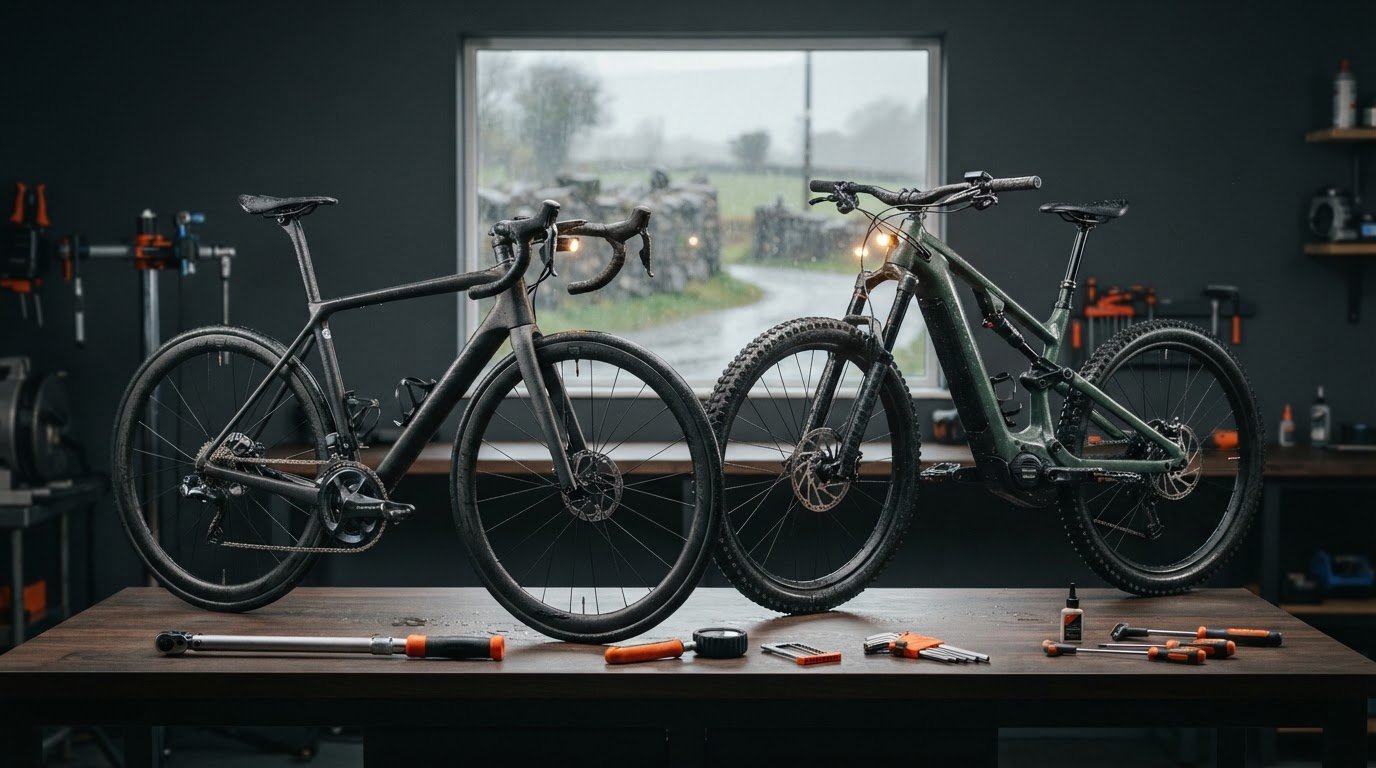
Winter riding puts extra demands on a bike’s safety-critical parts, so check the brakes, tyres and steering before thinking about comfort upgrades. Rain, road grit and shorter daylight hours can expose small faults just when dependable handling matters most. Use this winter bike service checklist to prioritise the checks that matter before regular winter rides.
A visual check at home can help you spot wear, but it won’t diagnose every fault. This guide covers straightforward checks you can carry out and the signs that call for a mechanic’s assessment, from brake and tyre condition to chain wear, shifting and lights. For more involved work, The Cycle Centre’s Shimano-accredited workshop provides servicing and specialist repairs, including for e-bike systems from Bosch, Shimano, Yamaha and Bafang. By the end, you’ll have a practical plan for preparing your bike for wet, darker rides.
Key Takeaways
- Work through tyres, brakes, steering and drivetrain in safety-first order.
- Spot visible wear at home, and recognise when a mechanic should assess a fault.
- Record symptoms and when they occur before a service. Note your e-bike system details if relevant.
- Use your findings to decide whether your bike needs workshop attention.
- The Cycle Centre offers Silver and Gold service packages for high-end road bikes and E-scooters, alongside specialist e-bike repairs.
Why a winter bike service checklist starts with safety
Rain, road grit and colder conditions can make existing wear more noticeable, while dirt can hide early signs of a problem. A winter bike service checklist gives you a structured way to inspect your bike’s safety, function and condition, then decide what needs attention before winter rides become routine.
Start with braking, tyres and steering. These affect your ability to slow down, grip the road and control the bike, so they take priority over comfort adjustments or cosmetic jobs. A checklist helps you spot concerns, but it can’t confirm the condition of components you can’t assess yourself or replace a technician’s inspection when something feels wrong.
Which winter riding conditions change your checks?
On wet roads, dependable brakes and tyres matter. Surface grime can also build up around the chain and other components. Look for dirt, wear or damage, and pay attention to changes in how the bike behaves. For a broader overview of cycling equipment, including common bike components, see Wikipedia’s outline of cycling.
Seasonal preparation is a general check before conditions change, not a substitute for dealing with a known fault. If your brakes are already weak, a tyre is damaged or the steering feels loose, don’t treat the issue as a routine winter tidy-up. Have it assessed before riding.
What should you check before the first winter ride?
Make a quick visual scan before setting off. Look for cuts, embedded debris or obvious damage on the tyres; check that the brakes respond; test the lights; and inspect the chain for dryness, dirt or damage. Also look over the handlebars, fork and frame for visible damage, and notice any looseness or unusual movement in the steering.
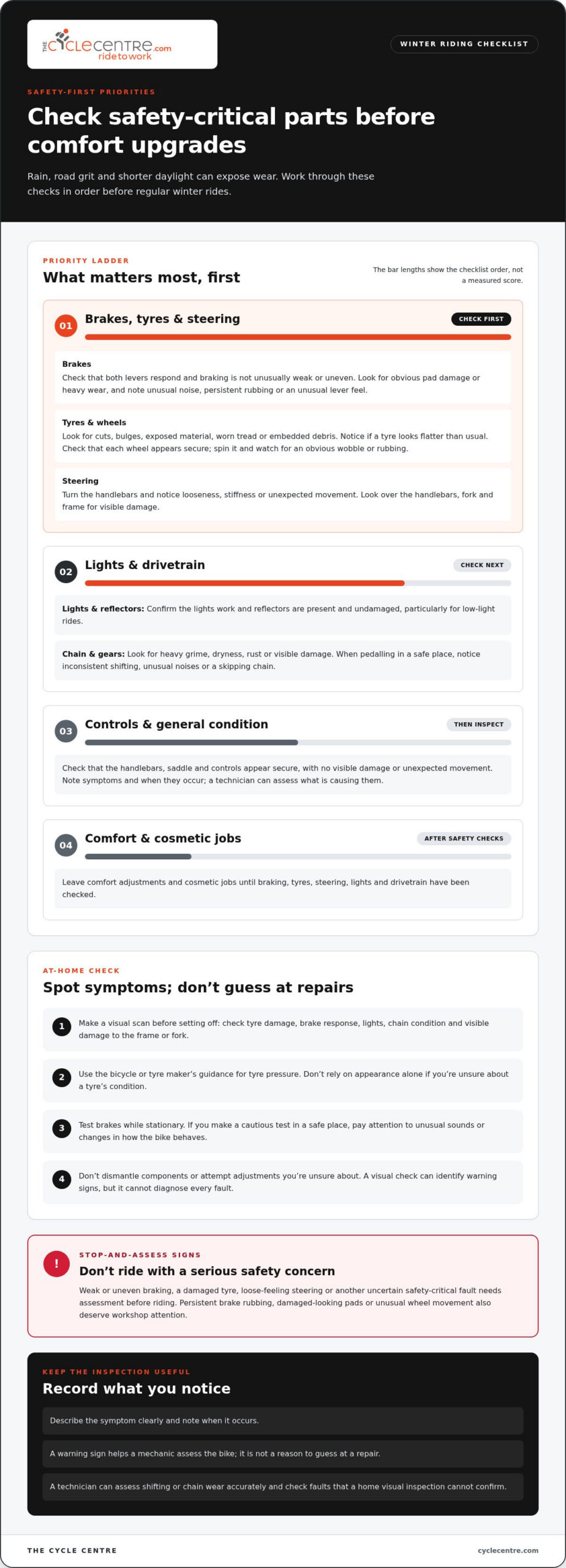
Check brakes, tyres and steering first, then lights and drivetrain, before considering comfort or cosmetic changes.
- Brakes: Check that both levers feel responsive and that braking is not unusually weak or uneven.
- Tyres: Look for cuts, bulges, exposed material or other visible damage.
- Steering: Notice any looseness, stiffness or unexpected movement as you turn the handlebars.
- Lights and chain: Confirm that the lights work and look for visible grime, rust or damage on the chain.
If you find a serious brake, tyre or steering concern, stop riding and arrange an assessment. A quick scan is useful, but it won’t diagnose a fault or establish whether a safety-critical component needs adjustment. Treat anything uncertain as a reason to have the bike checked, rather than riding and hoping it improves.
The winter bike service checklist: tyres, brakes, drivetrain and controls
Work through the checks in order, starting with the parts that affect grip and control. Look for what you can see or feel, but don’t dismantle components or attempt adjustments you’re unsure about. A warning sign is useful information for a mechanic, not a reason to guess at a repair.
Essential safety checks: inspect tyres, wheels, brakes and steering first, then check the drivetrain, controls, lights and general condition.
How to check tyres, wheels and brakes
Begin with the tyres. Look around each one for cuts, bulges, exposed material, worn tread or debris embedded in the rubber. Check whether a tyre looks flatter than usual, which may indicate pressure loss. Use the bicycle or tyre maker’s guidance for the correct pressure, and don’t rely on appearance alone if you’re unsure about a tyre’s condition.
Next, check that each wheel appears properly seated and secure. Spin it and watch for an obvious wobble or rubbing against the frame, fork or brake. A slight sound or movement can have different causes, so note what you notice rather than trying to correct it without the right knowledge.
Test the brakes while stationary. The levers should respond, and you can look at the pads for obvious damage or heavy wear. Listen for unusual noises during a cautious test in a safe place. Weak or uneven braking, damaged-looking pads, persistent rubbing or a lever that feels unusual deserves workshop attention. Brake systems may need precise adjustment, so don’t ride if their performance concerns you.
How to inspect the drivetrain, gears and controls
Look over the chain for heavy grime, dryness, rust or visible damage. When you pedal in a safe place, notice whether the gears change inconsistently, make unusual noises or skip. These signs can point to wear or adjustment needs. A technician can assess the cause and check chain wear accurately.
Check that the handlebars, saddle and controls appear secure, with no visible damage or unexpected movement. Finish by checking that the lights work and reflectors are present and undamaged, particularly if you’ll be riding in low light. Don’t attempt to tighten or adjust a part if you’re unsure how to do so safely.
- Tyres and wheels: Check for damage, wear, pressure loss, looseness, wobble or rubbing.
- Brakes: Notice lever response, visible pad condition, unusual sounds or weak braking.
- Drivetrain and controls: Look for chain grime or damage, erratic shifting, and loose-looking handlebars or saddle.
- Visibility and condition: Test lights and inspect reflectors, frame and fork for visible damage.
Use these observations to describe the issue clearly, and leave uncertain safety-critical adjustments to a mechanic. If your checks point to a deeper concern, a professional workshop assessment can help identify what needs attention.
DIY checks or a professional winter bike service: what is the difference?
Your winter bike service checklist helps you spot symptoms, but seeing a problem and diagnosing its cause are different things. A bike may still move even if its brakes need attention, a tyre is unsafe or a component is working loose. Being able to ride it is not proof that it’s ready for winter conditions.
Which checks can most riders do at home?
Most riders can look for visible wear or damage, clean off dirt, check tyre condition and notice changes in braking or shifting. These observations help you describe what’s happening without taking components apart. Follow the bicycle or component maker’s guidance for routine maintenance, and don’t attempt an unfamiliar safety-critical repair. If you’re unsure, stop and have a technician assess it.
When should a workshop inspect your bike?
Arrange a professional assessment for persistent brake noise, poor stopping response, damaged tyres or loose components. These signs can have several causes, and the right repair may require specialist tools, experience or adjustments that are difficult to judge at home. The same applies to unexplained e-bike motor or electrical issues. E-bike systems vary, so diagnosis requires knowledge of the relevant system.
The Cycle Centre’s Shimano-accredited workshop handles more complex servicing and repairs. It also provides specialist e-bike repairs for Bosch, Shimano, Yamaha and Bafang motor systems. Share what you’ve noticed so the technician can assess the underlying issue rather than relying on symptoms alone.
| Rider observation | Technician assessment | Reason to book |
|---|---|---|
| You notice persistent brake noise or reduced stopping response. | A technician can assess the brake system and identify what needs attention. | Braking is safety-critical, and noise alone may not reveal the cause. |
| You see a cut, bulge or other damage on a tyre. | A technician can inspect its condition and advise whether it’s safe to use. | Visible tyre damage shouldn’t be ignored or guessed at. |
| Gears shift inconsistently, or a component appears loose. | A technician can diagnose the problem and assess the relevant components. | Adjustment or repair may be needed to restore dependable operation. |
| An e-bike shows an unexplained motor or electrical issue. | A technician with relevant system knowledge can investigate the fault. | Electrical diagnosis is not the same as a basic visual check. |
Use your observations to decide what needs attention, not to talk yourself into riding through a fault. If the checklist points to work beyond a basic check, explore The Cycle Centre workshop.
How to prepare your bike for a winter service appointment
A few clear notes can help a technician understand what you’ve noticed and when it happens. Before your appointment, use the checklist to gather details rather than trying to diagnose the cause yourself.
- Record the symptom. Note sounds, changes in handling, braking or gear changes, and any warning or display messages on an e-bike.
- Describe when it occurs. Does it happen on every ride, only under braking, in a particular gear or intermittently? Include when you first noticed it.
- Identify the bike system. Note the bike type and, for an e-bike, the motor brand if you know it. Bring relevant charger or system details when discussing an electrical or motor issue.
- Add useful context. Mention any recent impact, change in how you use the bike or unusual storage conditions if these might be relevant.
What information helps a technician assess your bike?
Be specific but keep it simple. “A clicking sound under load” or “the gear change sometimes hesitates” gives a clearer starting point than “it feels wrong”. If a noise or performance change comes and goes, say so. Don’t try to recreate a concerning fault on the road just to demonstrate it. Your notes can explain the pattern safely.
For an e-bike, sharing the motor brand and any system information you have can help focus the discussion. You don’t need to identify the fault. Leave diagnosis of unexplained motor or electrical behaviour to someone with relevant system knowledge.
How to decide whether your bike needs a service now
Some concerns shouldn’t wait for a routine appointment. If braking is compromised, the frame or another structural part appears damaged, or the bike handles unstably, don’t ride it until it has been assessed. A recurring problem also deserves attention even if it temporarily disappears. An intermittent symptom is still useful evidence, not proof that the issue has resolved.
For other findings, consider how serious the symptom is and how the bike behaves when deciding on the next step. Keep your notes together, and bring relevant e-bike charger or system details if they relate to the issue. The Cycle Centre’s Shimano-accredited workshop provides specialist repairs for Bosch, Shimano, Yamaha and Bafang motor systems.
For more information on workshop support, explore workshop servicing.
Keep your winter bike dependable with specialist workshop support
A checklist is most useful when it helps you choose a sensible next step. If your checks show visible damage, a recurring fault or a change you can’t explain, share what you’ve noticed with a mechanic. If everything appears sound, continue simple visual and functional checks through winter. There’s no need to seek work for its own sake, but don’t ignore a concern that affects control or reliability.
The Cycle Centre workshop offers Silver and Gold service packages for high-end road bikes and E-scooters. These provide a professional servicing option when your findings suggest the bike needs more than a rider’s basic inspection. Describe the bike’s needs and the symptoms you’ve observed to give the workshop useful context.
What specialist support is relevant for e-bikes?
An e-bike still needs attention to its ordinary mechanical parts, such as brakes, tyres and drivetrain. Its motor and electrical system need separate consideration. If assistance behaves unexpectedly or an electrical issue appears, a visual check may not explain why. Avoid attempting to diagnose the motor fault yourself. Relevant system knowledge matters, particularly because e-bike systems differ.
The Cycle Centre provides specialist e-bike repairs for Bosch, Shimano, Yamaha and Bafang motor systems. When describing an issue, note the motor brand if you know it and explain what happens rather than guessing at the cause. These details can help frame the problem without assuming what diagnosis or repair will be needed.
Turn the checklist into a simple winter riding routine
Repeat a quick visual and functional check as winter riding continues, especially if the bike’s behaviour changes. Listen for new or recurring noises, notice whether handling feels different and pay attention to braking performance. A concern that appears intermittently is still worth recording and raising, even if the bike seems normal again afterwards.
Use your winter bike service checklist as a guide, not a substitute for assessment when something feels unsafe or unfamiliar. Note what you’ve found, when it happens and any relevant e-bike system details. Clear information helps the workshop understand your concern and consider the next step.
To discuss what your checks have uncovered, explore Cycle Centre workshop services.
Set yourself up for more dependable winter rides
A winter bike service checklist helps you put safety first: check tyres, brakes and steering before moving on to the drivetrain, controls and general condition. Your own checks can reveal warning signs, but persistent faults or unfamiliar safety-critical adjustments are best assessed by a technician. Note what you’ve observed and when it happens so you can explain the issue clearly.
If your findings point to workshop attention, The Cycle Centre’s Shimano-accredited workshop offers Silver and Gold service packages for high-end road bikes and E-scooters, as well as specialist e-bike repairs for Bosch, Shimano, Yamaha and Bafang motor systems. Choose a professional assessment based on your bike’s needs, not simply the season.
Explore Cycle Centre workshop servicing and take the next step towards dependable winter rides. A little preparation can help you enjoy the miles ahead.
Frequently Asked Questions
Is a professional bike service necessary before winter?
Not every bike needs the same level of attention, but a seasonal check can reveal wear that’s easy to miss. Start by looking over the tyres, brakes, wheels and controls. If you find damage, poor braking, loose parts or a concern you can’t assess confidently, arrange a workshop inspection. A checklist helps you make informed observations, but it can’t confirm the condition of every component or replace a technician’s assessment.
What should be included in a winter bike service checklist?
A winter bike service checklist should cover tyres and wheels, brakes, chain and gears, steering and controls, lights, and visible damage to the frame or components. Look for changes in condition or behaviour rather than attempting repairs you’re unsure how to make. If you ride an e-bike, note unusual motor behaviour or electrical symptoms too. A workshop can investigate concerns that a visual inspection alone can’t explain.
Can I service my bike myself for winter?
You can carry out basic checks and routine care at home, such as inspecting tyre condition, cleaning the bike and noticing changes in braking or shifting. Follow the bicycle and component makers’ guidance for maintenance procedures. Leave unfamiliar, safety-critical adjustments and persistent faults to a suitably equipped workshop. If a brake, wheel or steering issue affects control, don’t assume a quick home check proves the bike is safe to ride.
How often should I have my bike serviced during winter?
There’s no single service interval that suits every bike and rider. How often you ride, the conditions, component wear and developing faults all affect when attention may be needed. Carry out quick checks regularly, and arrange a workshop assessment if performance changes or wear becomes apparent. Follow the maintenance guidance from your bicycle and component makers rather than relying on a universal calendar schedule.
What happens if I ride with worn brakes or tyres in winter?
Worn or damaged brakes and tyres can affect control and confidence, particularly on wet roads or dirty surfaces. The effect depends on the specific fault, component and riding conditions. Inspect both regularly, and stop riding if damage or poor braking compromises safe control. Have the issue assessed before returning to regular use. Don’t wait for a seasonal service if you’ve already noticed a problem that could affect your ride.
Do e-bikes need a different winter bike service checklist?
E-bikes need the same checks on tyres, brakes, wheels, drivetrain and controls as other bikes, plus attention to any unusual motor or electrical behaviour. A standard visual inspection can’t fully assess those systems, so note symptoms and share the motor system details if you know them. The Cycle Centre provides specialist e-bike repairs for Bosch, Shimano, Yamaha and Bafang motor systems.
Should I clean my bike after riding in wet or dirty conditions?
Yes, removing accumulated grime helps you inspect the bike and care for moving components. Use a suitable cleaning method and follow the bicycle and component makers’ instructions. Avoid directing high-pressure water at bearings or electrical components, then dry the bike and pay attention to the drivetrain. If cleaning reveals damage, unusual wear or a fault, note what you’ve found and arrange an appropriate workshop assessment.