


If you think a “waterproof” jacket is enough to keep you dry on a Tuesday morning in Galway, you’ve likely already learned the damp, shivering truth. We’ve all experienced the frustration of gear that doesn’t breathe, leading to that uncomfortable chill halfway through a ride. Finding the right cycling apparel Ireland riders need requires more than just picking a style; it’s about building a technical system that handles four seasons in a single afternoon. You deserve a kit that prevents chafing and manages moisture from both the sky and your skin.
In this guide, we’ll show you how to select high-performance gear from expert-vetted brands like Giant and Cube. We will also explain how to maximise your tax savings through the 2026 Cycle to Work scheme, which now offers thresholds of up to €1,250 for standard bikes and €1,500 for e-bikes. From moisture-wicking jerseys to the latest helmet safety standards, you’ll discover exactly how to stay dry, safe, and comfortable on every Irish road.
Key Takeaways
- Master the art of technical layering to remain dry and warm, including why avoiding cotton is the first rule for any seasoned rider in the Irish climate.
- Discover how to select the best cycling apparel Ireland has to offer by identifying premium features like aerodynamic fabrics and advanced moisture management.
- Understand the specific kit requirements for different terrains, whether you are focusing on road performance, gravel adventures, or e-MTB trails.
- Learn about the latest safety innovations in cycling helmets, such as MIPS technology, to ensure your protection matches your performance level.
- Maximise your budget by using the Cycle to Work scheme to purchase essential safety gear and apparel tax-free alongside your new bicycle.
The Essentials of Cycling Apparel in Ireland: A Layering Philosophy
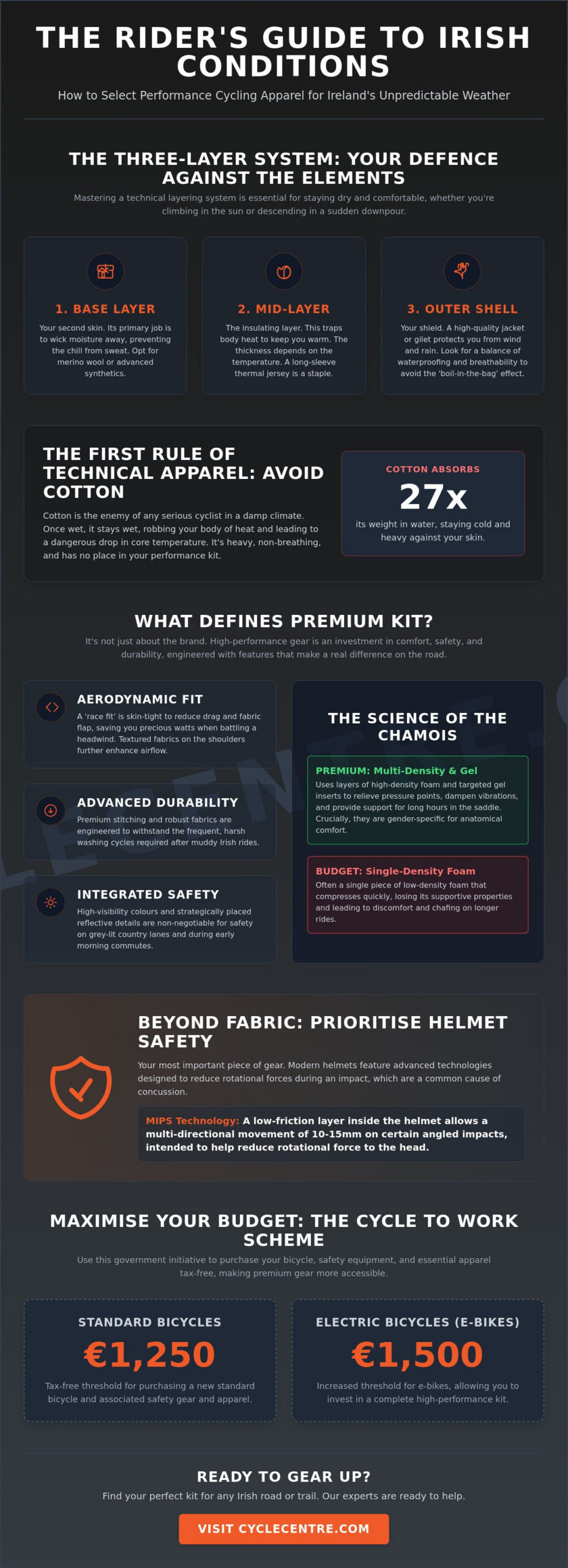
Understanding cycling apparel Ireland requires a shift in perspective. It isn’t just clothing; it’s a dynamic system designed to manage the “four seasons in one day” reality of our roads. Cotton is your worst enemy here. It absorbs up to 27 times its weight in water and stays cold against your skin, leading to a rapid drop in core temperature during a descent. Instead, modern kits use technical and performance materials to move sweat away from your body while blocking the Atlantic wind. This approach ensures you stay comfortable whether you’re climbing a sun-drenched hill in Wicklow or facing a sudden drizzle in Connemara.
The gold standard for any Irish cyclist is a three-layer approach. This system consists of a wicking base to manage moisture, an insulating mid-layer for heat retention, and a protective outer shell to repel rain. Safety is just as vital as comfort. While not legally mandatory for all riders as of 2026, the Road Safety Authority strongly advises high-visibility gear. Bright colours and reflective details are essential for ensuring you remain visible to motorists on narrow, grey-lit country lanes or during the early morning commute.
The Base Layer: Your Skin’s Best Friend
A high-quality base layer is the foundation of your comfort. These garments use moisture-wicking fabrics like merino wool or advanced synthetics to pull sweat away from your skin. Merino is a natural wonder for our climate because it stays warm even when damp and resists odours on long weekend rides. Don’t skip this layer in the summer. A sleeveless mesh base layer creates a micro-climate that helps regulate your temperature and prevents your jersey from sticking to your skin when the pace picks up.
Outer Shells: Breathability vs Waterproofing
When choosing a jacket, you’ll often see a “hydrostatic head” rating. This simply measures how much water pressure a fabric can withstand before it leaks. For Irish conditions, look for high ratings, but don’t ignore breathability. If a jacket doesn’t let moisture escape, you’ll experience the “boil-in-the-bag” effect, where you end up soaked from your own sweat. A packable gilet is often the secret weapon for local riders. It’s small enough to fit into a jersey pocket and provides instant wind protection when the weather turns unpredictable, which it often does.
Technical Features: What Separates Premium Kit from the Rest
Selecting premium gear isn’t merely about aesthetics; it’s about finding the cycling apparel Ireland riders need to withstand the unique rigours of the local environment. Professional-grade kit differs from mass-market alternatives through its structural integrity and material longevity. Durability is a primary concern. Premium stitching is specifically engineered to survive the frequent washing cycles required after a ride on muddy backroads or salt-sprayed coastal lanes. High-performance road jerseys also incorporate advanced aerodynamics, utilising textured fabrics on the shoulders to trip the air and reduce drag when you’re battling a coastal headwind.
Safety is seamlessly woven into the design of high-end garments. Reflective detailing is a non-negotiable feature for riders on national routes, offering essential visibility as light levels fade or rain clouds gather. Many cyclists utilise the Cycle to Work Scheme for Apparel to access these high-spec safety features whilst managing their budget. If you’re uncertain about which technical features suit your riding style, the knowledgeable staff at The Cycle Centre can guide you toward the ideal balance of performance and protection.
The Science of the Chamois
The “pad” or chamois is the foundation of your comfort during long hours in the saddle. Budget shorts often rely on single-density foam that collapses quickly under pressure. Conversely, premium bib shorts utilise multi-density foam or targeted gel inserts. These are tailored for specific terrains; thicker gel helps dampen vibrations during gravel adventures, whilst high-density foam offers the firm support required for road racing. Because of anatomical differences, gender-specific fits are vital to ensure that pressure relief is correctly positioned for every cyclist.
Ergonomic Fit and Cut
Choosing the right cut ensures your cycling apparel Ireland kit performs exactly as intended. A “race fit” is designed to be skin-tight, minimising fabric flap and improving efficiency. A “club fit” provides a slightly more relaxed silhouette, which is often preferred for social spins and long-distance touring. You’ll find that quality jerseys include a “dropped tail,” a longer rear section that keeps your lower back covered in an aggressive riding posture. Silicone grippers at the sleeves and hems are another sign of quality, preventing the garment from riding up during high-intensity climbs.
Choosing Your Kit: Road, Gravel, and E-MTB Apparel Compared
Choosing the right cycling apparel Ireland riders need depends heavily on where you intend to spend your time in the saddle. Whilst the core layering principles remain the same, the cut and features of your kit must match your specific discipline. Road cyclists generally prioritise aerodynamics and lightweight thermal management to maintain speed against the wind. In contrast, gravel and mountain bike enthusiasts require garments that withstand abrasions from overhanging branches and the inevitable splatter of Irish mud. Each discipline offers a unique set of challenges that your gear must solve to keep you riding comfortably for longer.
Road and Endurance Gear
For those sticking to the tarmac, performance systems from established brands like Giant and Cube offer an integrated approach to comfort. These kits are designed for a bent-over riding posture, ensuring that fabrics don’t bunch up at the waist or flap in the breeze. Wind-stopping fabrics are particularly vital for coastal Irish rides, where a biting Atlantic gale can quickly sap your energy. You might also consider garments with built-in support for your muscles. Compression refers to the use of tight, elasticated fabrics that apply gentle pressure to the limbs to support blood flow and reduce muscle oscillation during repetitive pedalling. This subtle technology helps stave off fatigue during long endurance sessions through the countryside.
Off-Road and Mountain Bike Apparel
This is where specialised cycling apparel Ireland enthusiasts use for off-road adventures differs from sleek road kits. Gravel riders often opt for “cargo bibs,” which feature mesh pockets on the thighs for easy access to snacks or tools during remote adventures. If you’ve moved to an E-MTB, your clothing needs change again. Because the motor assists with the heavy lifting, you’ll often find you aren’t working as hard physically on the climbs, which means you can get cold much faster at higher speeds. Loose-fit jerseys and shorts are the standard here, providing enough room to accommodate body armour underneath without restricting your movement.
Mud protection is another critical factor for our trails. MTB-specific waterproof shorts are a game-changer; they feature a reinforced, waterproof seat panel that prevents “tyre spray” from soaking through to your skin. Safety remains paramount regardless of the terrain. Although you aren’t currently legally obliged to wear a helmet in Ireland, the high speeds of modern electric bikes make high-quality head protection a critical consideration for every rider. It’s also worth familiarising yourself with the electric bike laws Ireland riders must follow in 2026, particularly if you’re riding a throttle-assisted or higher-powered model on public roads. For those navigating local trail networks, independent bike shops in Ireland provide invaluable advice on which gear best handles the specific grit and grime of our regional forests.
Beyond the Fabric: Cycling Helmets Ireland and Safety Gear
A complete performance kit involves more than just textiles. Whilst finding the right cycling apparel Ireland riders rely on is vital for comfort, your helmet is the single most important piece of safety equipment you’ll ever own. In 2026, head protection has evolved far beyond simple foam shells. We now see a focus on rotational impact technology, which addresses how most real-world cycling accidents actually happen. Integrating your helmet with your wider kit is also essential; for instance, a thin thermal skull cap can be worn underneath during a frosty morning in the Midlands without compromising the helmet’s fit or safety.
Modern safety standards are becoming more sophisticated. One of the most significant advancements is MIPS, or Multi-directional Impact Protection System. This technology features a low-friction layer inside the helmet that allows the outer shell to slide slightly during an impact. This movement is designed to redirect rotational energy away from the brain, potentially reducing the risk of concussion. To ensure this tech works, a proper fit is non-negotiable. Your helmet should sit level on your head, roughly two fingers’ width above your eyebrows, with the straps forming a clean ‘V’ shape just below your earlobes. You can explore our full range of high-performance cycling helmets and apparel to find the perfect match for your riding style.
Choosing the Right Helmet for Your Discipline
Your choice of headgear should reflect the terrain you tackle. Road helmets prioritise lightweight construction and massive ventilation ports to keep you cool during intense efforts. For those heading off-road, MTB helmets offer extended coverage at the rear of the head and integrated visors to shield your eyes from low-hanging branches and trail spray. Commuters facing dark Irish winter mornings should look for helmets with integrated LED lights. These provide a secondary point of visibility at eye level for motorists, which is a critical safety addition when navigating urban traffic.
When to Replace Your Helmet
Helmets are essentially single-use safety devices. If you have any form of impact, even a small drop onto a hard garage floor, the internal structure may be compromised. The Expanded Polystyrene (EPS) foam is designed to crush to absorb energy, and once it has done so, it cannot protect you again. Even if you’ve never had a spill, the materials naturally degrade over time. Exposure to UV rays, hair oils, and sweat causes the foam to become brittle and less effective at absorbing shocks. As a general safety standard, any helmet should be replaced every five years regardless of its outward appearance.
Maximising Value: The Cycle to Work Scheme for Apparel
Many riders mistakenly believe that the government’s tax incentives are reserved solely for the frame and wheels. In reality, the scheme is designed to ensure you’re safe and equipped for the road, which includes a wide range of technical clothing and protective gear. Investing in the high-quality cycling apparel Ireland riders need becomes significantly more affordable when you leverage these official schemes. By bundling your helmet, waterproof jacket, and even cycling shoes into a single application, you ensure you’re fully equipped from day one without a large upfront capital outlay.
The Cycle Centre acts as a dedicated facilitator for these applications, helping you navigate the administrative process with ease. Whether you’re a commuter looking for high-visibility essentials or a weekend enthusiast seeking performance bib shorts, we help you maximise your allowance. Under the 2026 regulations, the scheme can be utilised once every four tax years. This means if you last used the scheme in 2022, you’re now eligible to refresh your kit and take advantage of the latest fabric technologies and safety standards.
What Apparel Qualifies for Tax Savings?
The list of eligible equipment is extensive. It covers everything from safety helmets that meet current standards to reflective clothing and waterproof gear designed for the Irish climate. The financial logic is compelling; depending on your tax band, you can save up to 52% on the retail price of premium brands like Cube and Giant. This makes professional-grade kit accessible to everyone, rather than just competitive racers. For a deeper dive into the specific rules and thresholds, read our Ultimate Guide to the Bike to Work Scheme Ireland.
Why Sourcing from an Expert Retailer Matters
Sourcing your gear from a specialist ensures you get the right fit the first time. Items like bib shorts and helmets require precise sizing to function correctly; a “waterproof” jacket that’s too loose will catch the wind, whilst an incorrectly fitted helmet won’t provide the protection you need in an impact. Independent shops also provide access to world-class brands that simply aren’t available in big-box retail stores. When you’re also considering upgrades to your drivetrain or groupset, sourcing bike components in Ireland from the same expert retailer ensures compatibility and professional fitting alongside your apparel. Choosing an independent bike shop means you’re getting expert-vetted cycling apparel Ireland riders trust, backed by years of industry experience and a commitment to long-term value.
Gear Up for Your Next Irish Adventure
Equipping yourself for our unpredictable roads shouldn’t be a matter of guesswork. By mastering the layering principles we’ve discussed and selecting discipline-specific gear, you ensure every ride is defined by comfort rather than the weather. Choosing the right cycling apparel Ireland riders trust means you can face the Atlantic wind with confidence, knowing your kit is engineered for performance and safety. Whether you’re a road racer or an E-MTB enthusiast, technical gear is your best ally against the elements.
At The Cycle Centre, we’ve been providing expert independent advice since 1974. As a Shimano Accredited Workshop and proud stockists of world-class brands like Giant and Cube, we have the deep-rooted expertise to help you build the perfect kit. Don’t let the cost of premium gear hold you back; the Cycle to Work scheme makes high-performance protection more accessible than ever.
Request a no-obligation quote for your Cycle to Work gear today and discover the difference that professional-grade apparel makes. We look forward to seeing you out on the road.
Frequently Asked Questions
Does the Cycle to Work scheme in Ireland cover cycling apparel and helmets?
Yes, the Irish Cycle to Work scheme explicitly covers safety equipment and cycling apparel Ireland riders need alongside the bicycle. This includes essential items such as helmets, high-visibility vests, and waterproof jackets designed to keep you safe and dry. You can use your allowance of up to €1,250 for standard bikes or €1,500 for e-bikes to include these accessories, ensuring you’re fully prepared for the road without a large upfront cost.
What is the most important piece of cycling apparel for the Irish winter?
A high-quality technical base layer is arguably the most vital piece for the Irish winter. It manages moisture by wicking sweat away from your skin, which prevents the rapid cooling that occurs when you stop or descend. This layer acts as your first line of defence against the damp. Without this foundation, even the most expensive outer jacket will leave you feeling chilled as your sweat cools against your skin during a ride.
How should a cycling jersey fit? Should it be tight or loose?
A cycling jersey should fit snugly against your body without restricting your breathing or movement. Flapping fabric creates unnecessary wind resistance and can lead to chafing over long distances. For most riders in Ireland, a “club fit” offers a comfortable balance, whilst performance-oriented cyclists often prefer a tighter “race fit” for aerodynamic efficiency. It’s important that the sleeves and hem stay in place to maintain your body temperature correctly.
Are expensive cycling bib shorts worth the investment for beginners?
Investing in premium bib shorts is one of the best decisions a beginner can make. The higher price point usually reflects a superior chamois (pad) and better fabric compression, which significantly reduces saddle sores and muscle fatigue. Starting with quality gear ensures your early experiences are defined by the joy of riding rather than physical discomfort. It’s often the deciding factor in whether a new cyclist continues with the sport long-term.
How often should I replace my cycling helmet if I haven’t had a crash?
You should replace your cycling helmet every five years even if you haven’t been involved in a crash. The internal EPS foam naturally degrades over time due to exposure to UV rays, sweat, and hair oils, which makes the material brittle. This degradation reduces the helmet’s ability to absorb an impact effectively. Always retire a helmet immediately if it has suffered any impact, no matter how small, as the damage isn’t always visible.
What is the difference between a waterproof and a water-resistant cycling jacket?
A waterproof jacket features a dedicated membrane and taped seams to block heavy rain, whilst a water-resistant jacket relies on a DWR coating to repel light drizzle. For the unpredictable cycling apparel Ireland market, a fully waterproof shell is usually the safer choice for longer weekend spins. Water-resistant options are often better suited for short, high-intensity efforts where maximum breathability is required to prevent you from getting soaked from the inside out.
Can I use my Cycle to Work voucher for apparel only if I already have a bike?
Yes, you can use the scheme to purchase safety equipment and apparel even if you aren’t buying a bike at the same time. This is a practical way to upgrade your high-visibility gear or replace an ageing helmet. You must still adhere to the four-year eligibility rule for the scheme. It’s an excellent way to access premium kit whilst spreading the cost through your employer’s salary sacrifice arrangement.
Is MIPS technology necessary for a cycling helmet in Ireland?
Whilst not a legal requirement, MIPS technology is highly recommended for any rider concerned about safety. It provides an extra layer of protection against rotational forces, which are common in real-world cycling falls. Given the variable road surfaces and conditions often found on Irish routes, the added peace of mind is well worth the investment. Most modern helmets from brands like Giant and Cube now include this feature as standard.