

Buying a bike that is “a little too big” so your child can grow into it is often the fastest way to stall their cycling progress and dent their confidence. Whilst it is tempting to seek longevity in a purchase, a bike that doesn’t fit properly makes it difficult for a child to stop safely or maintain balance. We understand the frustration of trying to measure a wriggling toddler or deciphering why one 16-inch wheel feels different from another. This kids bike size guide Ireland is designed to remove that guesswork and ensure your young rider feels secure from their very first pedal stroke.
You want a bicycle that offers a sense of freedom without compromising on safety, especially as the government reviews potential mandatory helmet and hi-vis legislation in 2026. We promise to help you master the nuances of wheel diameters and stand-over heights so you can choose a frame that truly fits. In this guide, we provide a clear sizing chart, expert tips for accurate measuring, and an explanation of why lightweight, branded bikes offer better handling and superior value for your family.
Key Takeaways
- Avoid the common mistake of buying a bicycle for your child to “grow into,” as an oversized frame can significantly hinder their safety and confidence whilst riding.
- Learn how to accurately measure your child’s total height and inside leg using simple household tools to ensure a precise fit.
- Consult our 2026 kids bike size guide Ireland to match wheel diameters with your child’s measurements, from balance bikes to junior performance models.
- Discover the “Stand-Over” and “Saddle Height” rules to verify a safe fit at home, ensuring your child can stop and start with complete control.
- Understand why investing in quality brands like Giant or Cube provides better junior geometry and higher resale value in the Irish market.
Why Getting the Right Kids’ Bike Size Matters for Safety and Confidence
Selecting the first “real” bike for your child is a milestone. It’s the moment they move from being a passenger to a pilot. The joy of this transition depends entirely on how the bike fits their body. If the bike is too large, the child feels out of control. If it’s too heavy, they simply won’t have the strength to steer it effectively. A perfectly fitted bike quickly becomes their favourite way to explore the neighbourhood, turning a simple purchase into a lifelong passion for the outdoors. If you’re looking to create a beautiful space for them to practice their skills, you can learn more about YouGarden for ideas on patio plants. This kids bike size guide Ireland helps you avoid the common pitfalls that lead to dusty, unused bikes in the shed.
Safety is the most critical factor. Many parents believe that “buying big” is a savvy financial move, but it’s a dangerous strategy for young riders. A bike that is too large affects the weight-to-rider ratio significantly. If a bike weighs nearly as much as the child, they won’t have the strength to manoeuvre it around corners or maintain balance at low speeds. Whilst an adult’s performance bike might weigh only 15% of their body weight, some poorly designed children’s bikes can exceed 50%. Using a reliable kids bike size guide Ireland ensures you don’t compromise on safety for the sake of a few months of extra use.
The Danger of ‘Buying Big’ for Growing Children
The most immediate risk of an oversized bike is the lack of control over the controls. Small hands often struggle to reach brake levers on larger frames, making it impossible to stop quickly in an emergency. This lack of confidence can cause a child to develop poor cycling habits or experience a nasty fall. A bike that fits correctly allows the rider to build coordination and balance naturally without fear. In the Irish market, a correctly sized, premium junior bike also holds its value remarkably well, making it a smarter long-term investment than a cheap, oversized alternative.
Wheel Size vs Frame Size: The Core Difference
Understanding how bikes are measured is the first step toward a successful purchase. Adult bikes are typically categorised by the height of the frame, but junior cycles follow a different logic. Unlike adult bicycles, junior cycles are defined by their Bicycle wheel sizes. These measurements usually move in two-inch increments, including 12, 14, 16, 20, 24, and 26 inches. Frame geometry varies amongst different brands, meaning a 20-inch bike from one manufacturer might feel taller than another. Wheel diameter is the primary sizing metric for junior cycles, but the frame’s shape determines how that wheel size actually feels to the rider.
How to Measure Your Child for a Bicycle: A Step-by-Step Guide
Measuring a wriggling child is a challenge, but accuracy is the foundation of a successful purchase. You’ll need three simple tools: a tape measure, a flat wall, and a sturdy hardcover book. Whilst age is often used as a rough starting point, children of the same age can vary wildly in height and proportions. By taking precise measurements now, you can compare your data against our kids bike size guide Ireland to find the ideal match for your rider.
Start by recording your child’s total height. This provides the broad category for wheel size. Next, measure the inside leg to ensure they can stand over the frame safely. Finally, check their reach to make sure they can grasp the handlebars without straining. Recording these three data points allows you to look beyond generic labels and find a bike with a geometry that suits their specific build. Once you have these figures, you can view our range of kids bikes to see how different models accommodate your child’s measurements.
The ‘Book and Wall’ Method for Inside Leg Accuracy
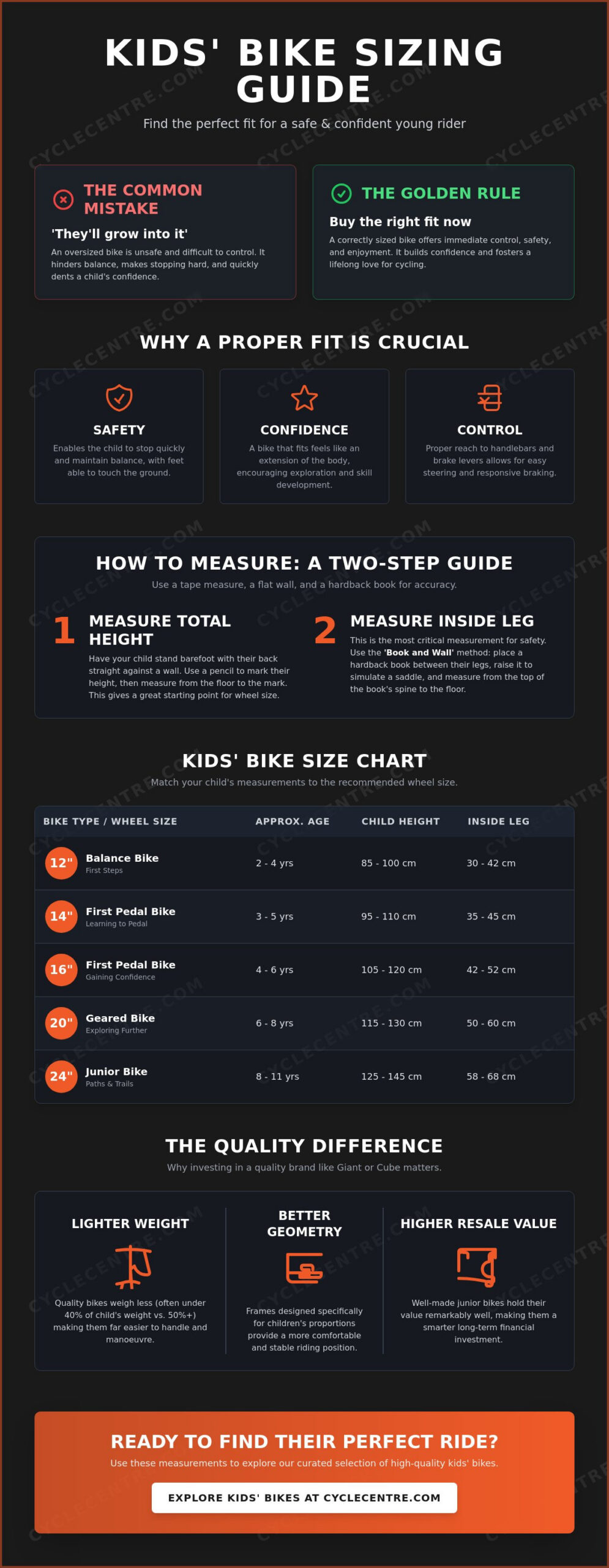
This is the most vital metric for any young cyclist. Have the child stand barefoot with their back against a flat wall. Slide the spine of a hardcover book between their legs until it firmly meets their crotch, simulating the pressure of a bicycle saddle. Use the tape measure to record the distance from the top of the book spine to the floor. This measurement determines the “stand-over height.” It is a cornerstone of bike safety for kids, ensuring they can straddle the bike with both feet flat on the ground during a sudden stop.
Measuring for Reach and Handlebar Control
Reach determines how far a child must lean forward to grasp the handlebars. If the reach is too long, their arms will be locked straight, which makes steering difficult and causes shoulder fatigue. You should also consider the “Ape Index” by measuring their arm span from fingertip to fingertip. If their arm span is significantly longer than their height, they may require a frame with a slightly longer reach. A proper fit ensures the child can operate brake levers comfortably without stretching, providing the confidence needed to navigate corners and obstacles safely. Accurate reach measurement prevents the child from feeling “stretched out” or cramped whilst riding.
The 2026 Kids’ Bike Size Chart: Wheel Sizes Explained
Once you have recorded your child’s measurements using the “Book and Wall” method, you can align those figures with the industry-standard wheel sizes. Unlike adult bicycles, which use frame height as the primary metric, junior bicycles are categorised by the diameter of the wheel. The following table serves as a definitive kids bike size guide Ireland for parents looking to match wheel diameter with physical height and inside leg measurements. These figures ensure your child can mount and dismount the bike with confidence whilst maintaining a safe riding posture.
| Wheel Size | Child’s Height (cm) | Inside Leg (cm) | Typical Age (Reference Only) |
|---|---|---|---|
| 12-inch | 85cm – 100cm | 35cm – 42cm | 2 – 4 Years |
| 14-inch | 95cm – 110cm | 40cm – 47cm | 3 – 5 Years |
| 16-inch | 110cm – 120cm | 45cm – 53cm | 4 – 6 Years |
| 20-inch | 120cm – 135cm | 50cm – 60cm | 6 – 9 Years |
| 24-inch | 135cm – 150cm | 60cm – 70cm | 9 – 11 Years |
| 26-inch | 150cm+ | 70cm+ | 11+ Years |
12″ To 16″ Wheels: The Foundation Years
For toddlers and young children, the focus remains on simplicity and weight reduction. A bike that is too heavy will be difficult for a small child to lean or turn, leading to frustration. At the 12-inch and 14-inch stage, many children transition from balance bikes to their first pedal cycles. Stabilisers can be a helpful tool, but they should be removed as soon as the child shows a natural ability to balance, usually when they can coast with their feet up for several seconds. The 16-inch bike is the ‘sweet spot’ for most 5-year-olds in Ireland.
20″ To 26″ Wheels: Junior Performance and Gears
As children grow, their riding becomes more adventurous. The introduction of 20-inch and 24-inch wheels often coincides with the first inclusion of Shimano gear systems, which are essential for tackling Irish hills and varied trails. On 24-inch models, you will often see the inclusion of front suspension, effectively creating “mini mountain bikes” for off-road exploration. Understanding how kids bikes Ireland sizing transitions into adult categories is essential for parents of teenagers. A 26-inch wheel bike often serves as the final step before a rider is tall enough for an adult Extra Small (XS) frame, providing a familiar wheel size but with geometry specifically tuned for younger, lighter riders.
Beyond the Chart: How to Test the Physical Fit at Home
A chart provides a reliable baseline, but the nuances of a child’s proportions mean that physical testing is the only way to guarantee a perfect fit. Every child’s confidence level is different. A nervous beginner requires a different saddle setup compared to a confident young rider who has already mastered their balance. By applying these practical tests, you can refine the data from our kids bike size guide Ireland to ensure the bicycle feels like a natural extension of your child’s body.
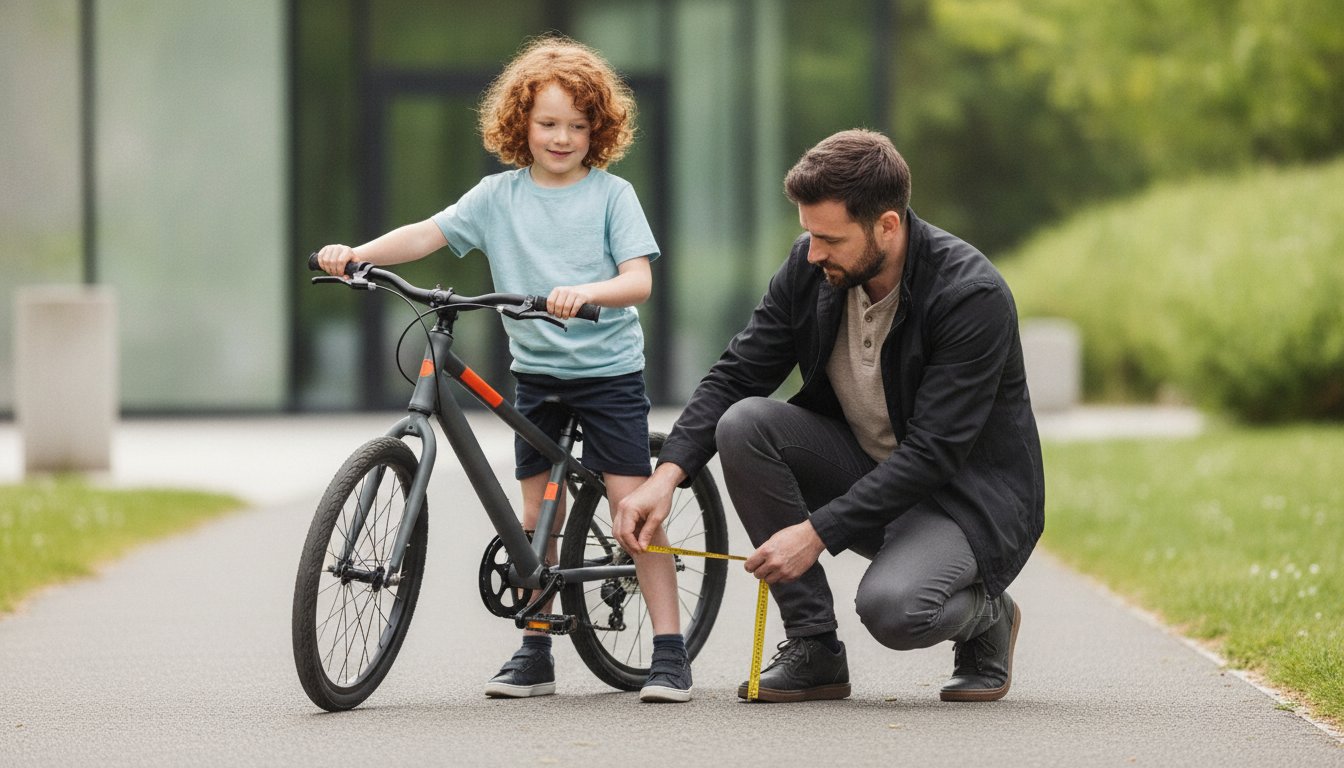
The Stand-Over Test is the first hurdle. Have your child straddle the top tube with both feet flat on the ground. For a standard pavement bike, there should be a clearance of approximately 2.5 to 5 centimetres between the tube and their crotch. If they are looking at mountain bikes for off-road trails, a larger gap is preferable to allow for sudden dismounts on uneven terrain. If the child’s crotch is resting on the frame, the bike is too large and potentially unsafe during an abrupt stop.
Saddle height is equally important but depends on experience. For a child just starting out, the saddle should be low enough to allow both feet to be flat on the ground. As they gain confidence, raise the saddle so only the balls of their feet touch the floor. This provides better leg extension and more efficient pedalling. You should also check the “Q-Factor,” which is the horizontal distance between the pedals. Children have narrower hips than adults. A bike with a narrow Q-factor prevents their legs from splaying outwards, which protects their developing joints and makes pedalling feel much more natural. To ensure your child starts their journey on the right foot, explore our collection of children’s bicycles today.
The Three-Point Contact Check
- Hands: Ensure they can reach the brake levers and shifters whilst maintaining a slight, comfortable bend in the elbow. Locked-out arms lead to poor steering control.
- Feet: Verify that the balls of the feet reach the ground comfortably when the child is seated, depending on their skill level.
- Seat: The saddle must be level. A tilted saddle causes the child to slide forward or back, putting unnecessary strain on their wrists or lower back.
Signs Your Child Has Outgrown Their Current Bike
Children grow in spurts, and a bike that fit perfectly six months ago may now be a safety hazard. Watch for their knees hitting the handlebars or their chest whilst pedalling, which indicates the frame is now too cramped. Check the seat post; if it is raised past the “minimum insertion” safety line, the bike is no longer structurally sound for their height. Finally, if the steering appears “twitchy” or the child seems to struggle with basic balance, it’s often because their centre of gravity has shifted too high for the current wheel size. Using a kids bike size guide Ireland helps you identify exactly when it’s time to move up to the next wheel diameter.
Why Quality Brands and Professional Servicing Matter
Choosing a bicycle from a reputable manufacturer is about more than just a recognisable logo on the frame. Whilst supermarket “toy” bikes might look appealing on the shelf, they are often constructed from heavy steel components that make them difficult for a child to handle. A quality bicycle is a precision tool designed to make cycling effortless and enjoyable. By using our kids bike size guide Ireland to find the right dimensions, and then pairing that data with a well-engineered brand, you ensure your child spends more time riding and less time struggling with a heavy, unresponsive machine.
Premium brands hold their value remarkably well in the Irish market. When your child eventually outgrows their current model, a well-maintained Giant or Cube bicycle often fetches a significant portion of its original price on the second-hand market. This makes the initial investment much more economical over the long term compared to cheaper alternatives that may rust or suffer from mechanical failure after a single season of Irish weather. It’s a sustainable approach to cycling that benefits both your wallet and the next young rider.
The Engineering Behind Giant and Cube Kids’ Bikes
The best junior bicycles are not merely shrunken versions of adult models. Brands like Giant and Cube invest heavily in junior-specific geometry. This includes proportional crank lengths that match a child’s hip width and narrower handlebars designed for smaller shoulders. These details prevent the joint strain often caused by “universal” sizing. Furthermore, these bikes feature easy-to-reach brake levers that are specifically tuned for smaller hands, ensuring that the safety tips you’ve learned in this kids bike size guide Ireland are backed up by responsive hardware. Lightweight aluminium frames are the standard here, providing a much better weight-to-rider ratio for climbing hills or navigating parks. As your young rider grows into adulthood, the same trusted brands offer a full range of electric options — our Giant vs Cube electric city bikes comparison guide is an excellent next step for families considering an e-bike upgrade.
Professional Safety Checks for Junior Riders
Every bicycle, regardless of the rider’s age, requires professional oversight to remain safe. A Pre-Delivery Inspection (PDI) by a qualified mechanic ensures that every bolt is torqued correctly and the brakes are perfectly aligned before the bike ever hits the road. For parents who are serious about performance, our high end road bike service Ireland workshop offers the same level of technical precision for junior bikes as it does for elite racing machines. Regular maintenance is essential for keeping gears smooth and preventing the grit of Irish roads from wearing down moving parts.
Whilst the bike to work scheme Ireland does not directly apply to children’s bicycles, many parents use the tax savings on their own commuter or performance bikes to offset the cost of a premium junior bicycle. This allows the whole family to enjoy high-quality equipment together. As your young rider progresses, you may also want to explore the right cycling apparel Ireland families need to stay comfortable and protected in all weather conditions. If you are still unsure about which model provides the best fit, visit The Cycle Centre for a professional fitting and expert advice from our seasoned team. We are here to help you move from a state of uncertainty to one of informed confidence.
Equip Your Young Rider for a Lifetime of Adventure
Finding the perfect bicycle for your child is an investment in their health, confidence, and independence. By moving beyond simple age charts and utilising the precise measurements in this kids bike size guide Ireland, you’ve taken the most important step toward ensuring their safety on the road. A bicycle that fits perfectly today is far more valuable than an oversized frame they might grow into tomorrow. Since 1974, our team has combined decades of fitting expertise with the technical standards of our Shimano Accredited Workshop to support families across the country.
Whether you need the refined junior geometry of Giant or the adventure-ready components of Cube, we’re here to help you make an informed choice with confidence. Browse our expert-selected range of Kids’ Bikes at The Cycle Centre to find a model that matches your child’s measurements and riding ambitions. We look forward to seeing your young rider develop their skills and discover the freedom that only two wheels can provide. When the time comes for the whole family to embrace cycling, parents who commute may also benefit from reading our comprehensive guide to choosing the right e-bike for commuting Ireland, which covers everything from battery safety to maximising your savings through the 2026 Cycle to Work scheme.
Frequently Asked Questions
What is the best age to start a child on a balance bike in Ireland?
Most children are ready to start on a balance bike between 18 months and 2 years of age. The key indicator is whether the child can walk with a steady, confident gait. These bikes are excellent for developing coordination early on, often allowing toddlers to bypass stabilisers entirely when they eventually move to a pedal bicycle.
Can I use the Bike to Work scheme to buy a kids’ bike?
No, the Cycle to Work scheme cannot be used to purchase children’s bicycles. Current Irish regulations explicitly exclude kids’ bikes, child seats, and trailers from the tax-free benefit. The scheme is reserved for adult bicycles used for commuting, with tax-free limits currently set at €1,250 for standard bikes and €1,500 for e-bikes. Parents who commute by bicycle themselves can explore how to maximise these savings with our detailed guide to e-bike commuting in Ireland.
Is wheel size the same as frame size for children?
Wheel size and frame size are different measurements, and junior cycles are almost exclusively categorised by their wheel diameter. Whilst adult bikes use frame height as a primary metric, this kids bike size guide Ireland focuses on wheel increments like 12, 16, or 20 inches. These wheel sizes dictate the overall geometry and proportions of the bicycle.
How much clearance should there be in the stand-over height?
There should be a clearance of approximately 2.5cm to 5cm between the top tube and the child’s crotch when they are standing over the bike. This gap is vital for safety, as it ensures the rider can dismount quickly and safely during a sudden stop. For off-road mountain bikes, a slightly larger gap is often preferred for better clearance on uneven trails.
Should I buy a bike with stabilisers or start with a balance bike?
Balance bikes are generally the preferred starting point for modern riders. They teach children how to lean and steer naturally, which are the most difficult skills to master. Stabilisers can often delay this development by keeping the bike upright artificially. Children who start on balance bikes typically transition to pedals much faster and with greater confidence.
What happens if my child is between two wheel sizes?
The best choice depends on your child’s confidence and skill level. If they are a beginner, it’s safer to choose the smaller size so they can easily reach the ground with their feet. If they are an experienced rider who can already balance and brake effectively, they may be able to manage the larger size, provided they can still stand over the frame safely.
Are expensive brands like Giant or Cube worth it for children?
Yes, premium brands are a worthwhile investment due to their lightweight materials and junior-specific components. Unlike generic models, these bikes use aluminium frames and scaled-down parts like shorter cranks and reach-adjustable brake levers. They also hold their resale value exceptionally well in Ireland, often making them more economical over time than cheaper, heavier alternatives.
How do I know if my child’s bike seat is at the correct height?
For a beginner, the saddle should be low enough that both feet can rest flat on the ground whilst the child is seated. As their confidence grows, you should raise the saddle so that only the balls of their feet touch the ground. This adjustment allows for a more efficient leg extension, which prevents knee strain and makes pedalling much easier over longer distances.