
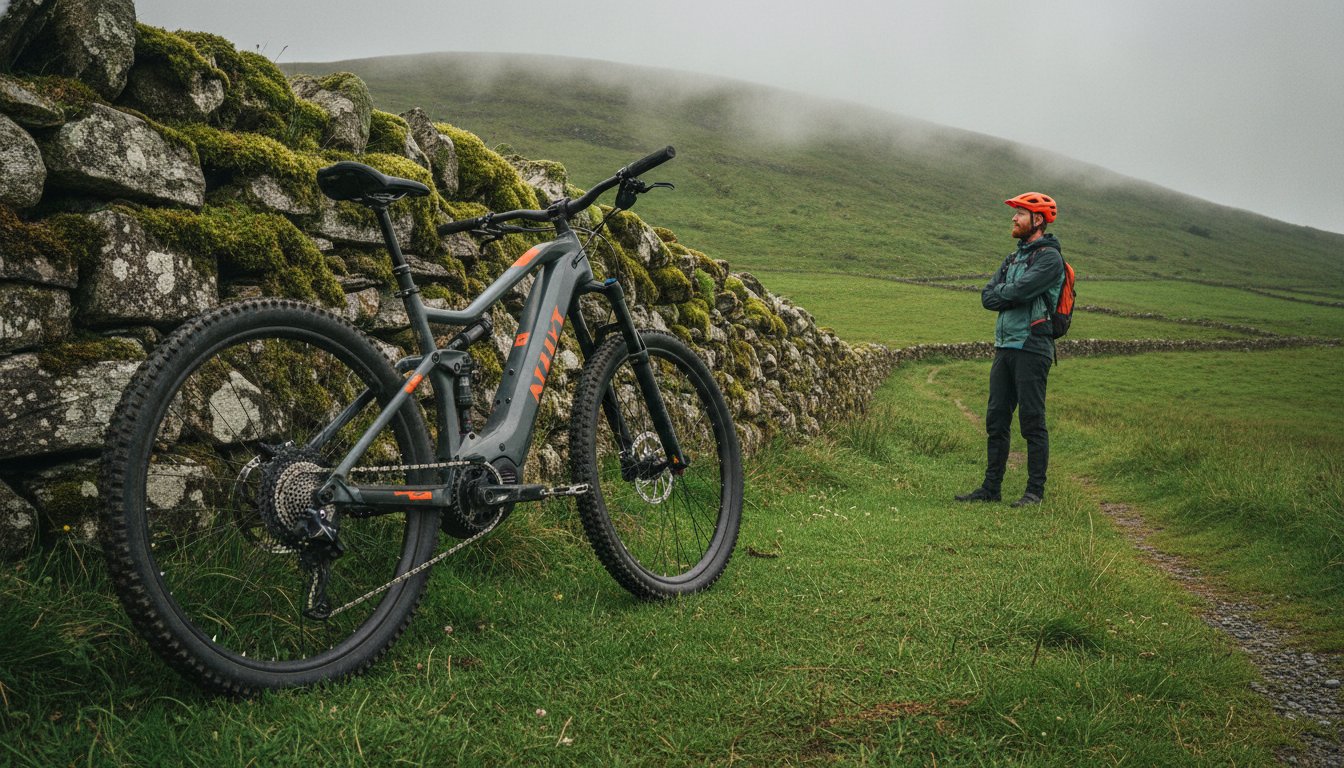
What if you could conquer the steepest local climbs without that nagging fear of your battery dying miles from home? It’s a common frustration for many newcomers. The desire for trail freedom is often dampened by confusion over complex motor systems and the daunting price tags of top-tier brands. If you’re wondering how to choose an electric mountain bike that fits your lifestyle, you’re not alone in feeling that the technical side of modern cycling has become a bit of a maze.
This guide simplifies the selection process by focusing on what actually matters for your favourite trail behaviour and budget. We’ll help you master the essential technical jargon and understand which suspension setup suits your local terrain. You’ll learn how to maximise your battery range for those all-day adventures and how to utilise tax-free schemes to significantly reduce your purchase cost. From understanding motor torque to navigating the Cycle to Work scheme, we provide the expert clarity you need to move from uncertainty to informed confidence. Let’s find your perfect ride.
Key Takeaways
- Understand why motor torque (Nm) is more critical than wattage for conquering steep ascents and how to distinguish between mid-drive and hub systems.
- Discover how to choose an electric mountain bike by matching suspension travel and frame geometry to your preferred trail behaviour.
- Learn about the necessity of E-rated components, such as reinforced chains and tyres, which are designed to handle the increased weight and power of electric systems.
- Utilise the Cycle to Work scheme to access significant tax savings, making premium electric mountain bikes more accessible for your budget.
Understanding the E-MTB Revolution: Why Go Electric?
The modern E-MTB is a sophisticated pedal-assist system engineered specifically for rugged terrain. Unlike a motorbike, the motor only engages when you turn the pedals, amplifying your effort rather than replacing it. It’s about enhancing the human experience on the trail. Many purists once labelled this “cheating”, but that myth has largely vanished in 2026. We now recognise that E-MTB riders often maintain a similar heart rate to traditional cyclists because they ride for longer and tackle more challenging inclines. The real revolution is the sheer freedom to explore. You can cover 30 kilometres of technical singletrack in the same time it used to take to do 10, all whilst maintaining enough energy to enjoy the technical descents.
The Core Benefits of Pedal Assistance
The beauty of modern electric bicycle technology lies in its subtlety. Torque sensors measure your physical input hundreds of times per second, providing a seamless boost that feels like having “super legs”. This makes technical climbs, once the most grueling part of a ride, arguably the most entertaining. You can clear obstacles and steep gradients that would normally force a “hike-a-bike” session. As of 2026, the legal standard for these bikes remains the “Pedelec” system, which requires the rider to pedal to receive assistance up to a set speed limit. Understanding this distinction is the first step in learning how to choose an electric mountain bike that is both legal and trail-ready.
Who is an Electric Mountain Bike For?
These bikes aren’t just for a niche group; they’ve become the go-to choice for various riding styles across the community. Whether you’re a seasoned veteran or a complete newcomer, the benefits are practical and immediate.
- The Weekend Warrior: If you only have two hours on a Saturday, an E-MTB lets you squeeze in three laps of the forest instead of one. It’s about maximising trail time whilst keeping the fun factor high.
- Recovery and Longevity: For those returning from injury or older riders wanting to keep pace with faster groups, the motor acts as a great equaliser. It removes the physical “ceiling” that might otherwise keep you off the dirt.
- The Versatile Commuter: Many riders now look at how to choose an electric mountain bike that pulls double duty. A robust E-MTB handles urban potholes and kerbs just as easily as it manages weekend forest tracks, providing a comfortable and reliable transport solution.
By removing the barrier of physical exhaustion on the climbs, E-MTBs have made technical mountain biking accessible to all ages and fitness levels. It isn’t about doing less work; it’s about doing more of what you love.
Deciphering Motor Power and Battery Range
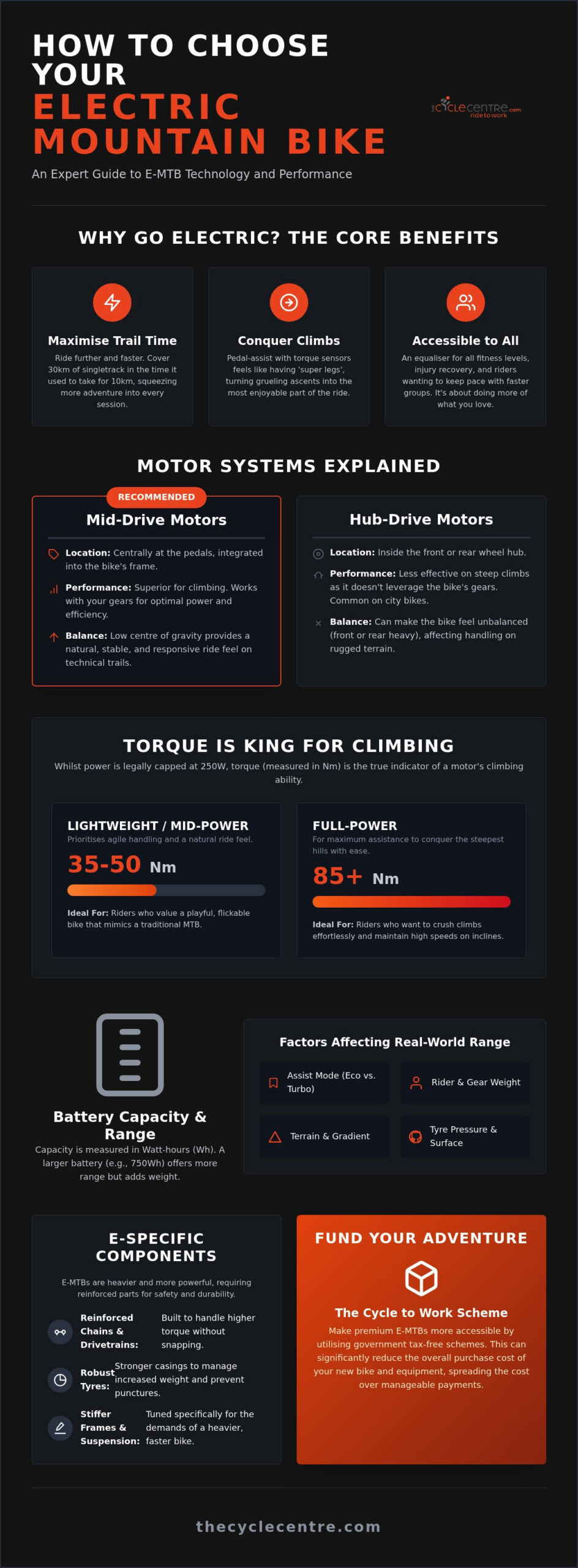
When you’re researching how to choose an electric mountain bike, the motor system is undoubtedly the most critical component. Most high-performance E-MTBs utilise mid-drive motors, which are positioned centrally at the pedals. This placement ensures a low centre of gravity and allows the motor to work in harmony with your gears, making it far superior to hub-based motors for technical off-road climbing. Whilst hub motors are common on entry-level city bikes, they often lack the sophisticated sensors and balance required for rugged trails.
Understanding the technical specifications is vital when researching REI’s guide to electric mountain bikes, especially the distinction between Watts and Newton Metres (Nm). In the UK and Ireland, motor power is legally capped at a continuous output of 250 Watts. However, the torque (Nm) is what truly dictates your climbing ability. Torque represents the motor’s turning force; a higher Nm rating allows you to restart on steep, muddy inclines where a lower-torque motor might struggle to get you moving. Battery capacity is measured in Watt-hours (Wh), effectively your “fuel tank” size. A 750Wh battery will naturally offer more range than a 500Wh unit, but it also adds significant weight to the frame.
Full-Power vs Mid-Power Motors
A major trend for 2026 is the choice between “Full-Power” and “Mid-Power” systems. Full-power bikes typically offer 85Nm of torque or more, using systems from Bosch, Shimano, or Yamaha. These are perfect for riders who want maximum assistance to crush steep hills with minimal effort. Conversely, mid-power or lightweight E-MTBs offer around 35-50Nm. These bikes prioritise a natural, agile handling feel that mimics a traditional mountain bike, making them a favourite amongst riders who value flickability over raw power.
Maximising Your Range on the Trail
Your “real-world” range depends on more than just battery size. Factors like rider weight, tyre pressure, and even the stickiness of the mud will impact how quickly you deplete your cells. Using “Eco” mode on flat sections and saving “Turbo” for the steepest ramps is the best way to manage energy on long days out. During the damp Irish winter, battery performance can drop in cold temperatures. We recommend storing your battery indoors and only fitting it to the bike just before you head out to the trails. If you’re unsure which motor suits your local terrain, our team can provide a no-obligation Cycle to Work quote to help you budget for the right level of power.
Hardtail vs Full-Suspension: Matching Geometry to Terrain
Selecting the right frame configuration is just as vital as picking the motor. Whilst the motor provides the push, the frame and suspension dictate how that energy interacts with the dirt. When you are deciding how to choose an electric mountain bike, you must consider whether your local trails consist of smooth forest paths or rocky, technical descents. The choice between a hardtail and a full-suspension model will fundamentally change your riding experience.
Frame geometry has evolved significantly by 2026. A “slack” head angle, where the front forks are angled further forward, is now standard for better stability on steep descents. Combined with either aluminium alloy or carbon fibre, these designs offer different ride qualities. Alloy is favoured for its sheer durability and lower cost; whilst carbon fibre provides a lighter, stiffer ride that can help offset the weight of the battery. For more detail on these technical nuances, you can consult this expert buying guide from industry leaders.
The Case for the Electric Hardtail
An electric hardtail features suspension only at the front. This simplicity offers a lower entry price and significantly reduced maintenance, as there are no rear pivots or shocks to service. These bikes are exceptionally efficient on forest fire roads, canal paths, and moderate trail centres. Brands like Cube and Giant offer fantastic hardtail options that provide a robust, reliable platform for those who don’t need the complexity of rear suspension. They are often the perfect choice for riders who want a versatile bike for both weekend adventures and occasional commuting.
Mastering the Trails with Full-Suspension
Full-suspension E-MTBs feature shocks at both the front and rear. This setup is about more than just comfort; it’s about traction. The rear suspension helps keep the rear tyre glued to the ground, which is essential when the motor is delivering high torque on a loose, technical climb. Without it, the rear wheel might spin out or bounce off obstacles. The amount of “travel”, or how much the suspension moves, defines the bike’s purpose:
- 120mm to 130mm: Ideal for cross-country and light trail riding.
- 140mm to 150mm: The “all-mountain” sweet spot, offering enough capability for technical descents whilst remaining agile.
- 160mm to 170mm: Built for “enduro” or downhill trails where stability and big-hit absorption are the priorities.
For most riders, a 140mm full-suspension bike offers the best balance of capability and weight, ensuring you can handle almost anything the trail throws at you whilst maintaining an efficient pedalling platform.
Sizing, Components, and the Practicalities of Choice
Selecting the right components is as vital as the motor itself. Because an E-MTB typically weighs between 22kg and 25kg, the stress on moving parts is significantly higher than on a traditional bicycle. When you are researching how to choose an electric mountain bike, you’ll notice many parts are now “E-rated”. This isn’t just marketing jargon. It means the tyres have stiffer sidewalls to prevent squirming under load, and the chains are reinforced to handle the motor’s sudden torque spikes. Using standard mountain bike parts on a high-power electric system often leads to premature failure and costly repairs.
Stopping Power and Drivetrains
Braking is where you’ll feel the bike’s mass most. We always recommend 4-piston hydraulic brakes with larger 200mm rotors. These provide the necessary bite to bring a heavy bike to a controlled stop on steep Irish descents. Shifting gears also requires a different approach. Modern drivetrains like Shimano LinkGlide or SRAM Transmission are designed to allow smooth shifting even whilst the motor is applying full power. To keep these high-performance parts in peak condition, regular maintenance is essential. Our Shimano accredited workshop provides expert support to ensure your drivetrain remains crisp and reliable through the seasons. If you are planning your purchase, you can apply for a tax-free quote to help you budget for a bike with these premium components.
Finding the Perfect Fit
Sizing an E-MTB differs slightly from a standard bike because the added weight makes a poor fit much more noticeable. You should focus on “reach”, the horizontal distance from the saddle to the handlebars when standing, rather than just the seat tube length. A reach that’s too long will make the bike feel like a barge, whilst one that’s too short will feel cramped and unstable. Stack and reach are the two most important measurements for ensuring you remain comfortable and efficient during a four-hour ride. We recommend using a Smart-bike Search tool to filter options by your height and riding preference before committing to a test ride.
Wheel size is another practical consideration for 2026. 29-inch wheels offer the best rolling speed over obstacles. However, many riders now prefer a “Mullet” setup, which uses a 29-inch wheel at the front for grip and a 27.5-inch wheel at the rear for better agility in tight corners. Finally, never overlook the importance of a dropper post. This allows you to lower your saddle at the flick of a switch, giving you the room to move your body over the bike during technical sections. It is perhaps the single most important component for building off-road confidence.
Funding Your Adventure: Cycle to Work and Expert Support
Investing in a high-quality E-MTB is a significant commitment, but it shouldn’t feel like a financial hurdle that keeps you off the trail. One of the most effective ways to manage the entry cost of premium brands is through the Bike to Work scheme Ireland. This government-backed incentive allows you to purchase a new bike and essential safety equipment whilst making substantial savings on your Income Tax, PRSI, and USC. It’s a logical solution for those looking at how to choose an electric mountain bike without compromising on motor quality or component durability.
Maximising Tax-Free Savings
The scheme isn’t just for the bike itself. You can include essential accessories such as cycling helmets, high-quality locks, and mudguards within your application. For 2026, the tax-free limit for electric bikes remains a key driver for making premium technology accessible to more riders. We recommend applying for a no-obligation quote early in the season. This allows you to see your real monthly costs and helps you organise your application before the most popular models are snapped up. By spreading the cost over 12 months through salary sacrifice, the financial pressure is greatly reduced. This often makes a top-tier full-suspension model more affordable than you might initially expect.
The Value of Local Expertise and Servicing
Buying your bike is merely the start of your off-road journey. Unlike a standard bicycle, an E-MTB requires specialist technical care to maintain its motor and battery health over several years. Choosing an independent retailer with a Shimano accredited workshop ensures your bike receives the attention it deserves from experts who understand Bosch, Yamaha, and Bafang systems. A generalist mechanic might be able to fix a puncture, but they won’t have the diagnostic tools or official training to handle complex motor repairs or software updates.
Our family-owned business has supported the cycling community since 1974. With over 50 years of industry experience, we’ve seen every major evolution of cycling technology and remained a constant, reliable presence. We offer dedicated Workshop Silver and Gold service packages designed specifically to keep your E-MTB running smoothly through the harshest winter conditions. When you’re deciding how to choose an electric mountain bike, remember that the aftercare is just as important as the initial specs. We invite you to visit our showroom to experience the latest Giant and Cube models in person. Our team is ready to help you find the perfect fit and ensure you’re fully supported for every kilometre of trail ahead.
Ready for Your Next Trail Adventure?
Mastering the technical nuances of torque and suspension travel is the first step toward true trail freedom. You now understand that finding the right balance between motor power and frame geometry ensures your bike performs exactly as you need it to on your local terrain. Whether you’re eyeing a robust hardtail for forest paths or a full-suspension rig for technical descents, you have the knowledge to move forward with confidence.
Deciding how to choose an electric mountain bike is a significant milestone that sets the stage for years of exploration. As an authorised Giant and Cube stockist with over 50 years of cycling expertise, we’re here to facilitate every stage of that journey. Our Shimano Accredited Gold Workshop provides the high-level technical support your motor system requires to stay in peak condition throughout the seasons. We don’t just sell bikes; we facilitate experiences that last a lifetime.
Browse our 2026 E-MTB range and get a Cycle to Work quote today to turn your off-road ambitions into reality. We look forward to helping you find your perfect ride and seeing you out on the trails soon.
Frequently Asked Questions
Do I need a special licence to ride an electric mountain bike in Ireland?
You don’t need a special licence, insurance, or road tax to ride a standard electric mountain bike in Ireland. To qualify as an “electrically assisted pedal cycle”, the motor must have a maximum continuous power output of 250 watts and the assistance must cut off at 25km/h. Riders must also be at least 14 years old. If the bike exceeds these limits, it’s classified as a moped and requires registration and a licence.
How long does an E-MTB battery actually last on a single charge?
Real-world battery range typically varies between 30 and 80 kilometres on a single charge. This depends heavily on your battery capacity, usually measured in Watt-hours, and how you use the motor. If you spend the day in “Turbo” mode on steep climbs, you’ll deplete the cells much faster than using “Eco” on flatter forest roads. Factors like rider weight, tyre pressure, and even the stickiness of the mud also play a significant role.
Can I ride my electric mountain bike in the rain or through streams?
You can certainly ride in the rain and through shallow puddles or streams. Modern E-MTB systems from Bosch and Shimano are designed with high levels of water resistance to handle typical Irish weather conditions. However, you should never submerge the motor or battery completely in deep water. After a wet ride, it’s best to dry the bike and clean the electrical contact points to prevent corrosion and ensure long-term reliability.
Is it difficult to maintain an E-MTB compared to a regular bike?
When you’re learning how to choose an electric mountain bike, it’s important to understand that maintenance isn’t just about the chain. Mechanical upkeep is similar to a traditional bike, but the electrical components require specialist attention. You’ll still need to clean your drivetrain and check brake pads regularly. Because of the added weight, these parts wear faster. It’s vital to have your motor checked by a Shimano accredited workshop annually to ensure your software stays up to date.
What happens if the motor or battery fails out of warranty?
If your system fails outside of the manufacturer’s warranty period, specialist repair is still an option. As experts in Bosch, Yamaha, and Bafang systems, we can often diagnose and fix specific motor issues without needing a full replacement. Whilst a complete motor or battery failure can be expensive, regular servicing helps prevent these major costs. We provide detailed quotes for any out-of-warranty work to help you decide on the best course of action for your bike.
Can I still ride the bike if the battery runs out during a trip?
Yes, you can still pedal the bike if the battery runs out, though it will be significantly harder work. Because an E-MTB is heavier than a standard mountain bike, you’ll definitely feel the extra mass on the climbs without motor assistance. Most modern mid-drive motors have very little internal resistance when turned off. This means the bike still feels like a normal bicycle on flat ground, just a much heavier one than you might be used to.
Which motor is better for steep hills: Bosch or Shimano?
Both Bosch and Shimano produce exceptional motors that excel on steep hills. When researching how to choose an electric mountain bike, look at the torque rating rather than just the brand name. A motor with 85Nm of torque will provide more “grunt” for restarting on a steep, muddy incline than a 50Nm lightweight system. Both brands offer different power delivery styles, so a test ride at our showroom is often the best way to choose.
How much can I actually save using the Cycle to Work scheme for an E-MTB?
Savings typically range between 32% and 52% of the total cost, depending on your personal tax bracket. Higher-rate taxpayers see the most significant reductions through the salary sacrifice arrangement. This scheme allows you to pay for the bike out of your gross salary, meaning you don’t pay Income Tax, PRSI, or USC on those payments. It’s an incredibly efficient way to fund a high-quality bike and essential safety accessories like helmets, locks, and mudguards.