


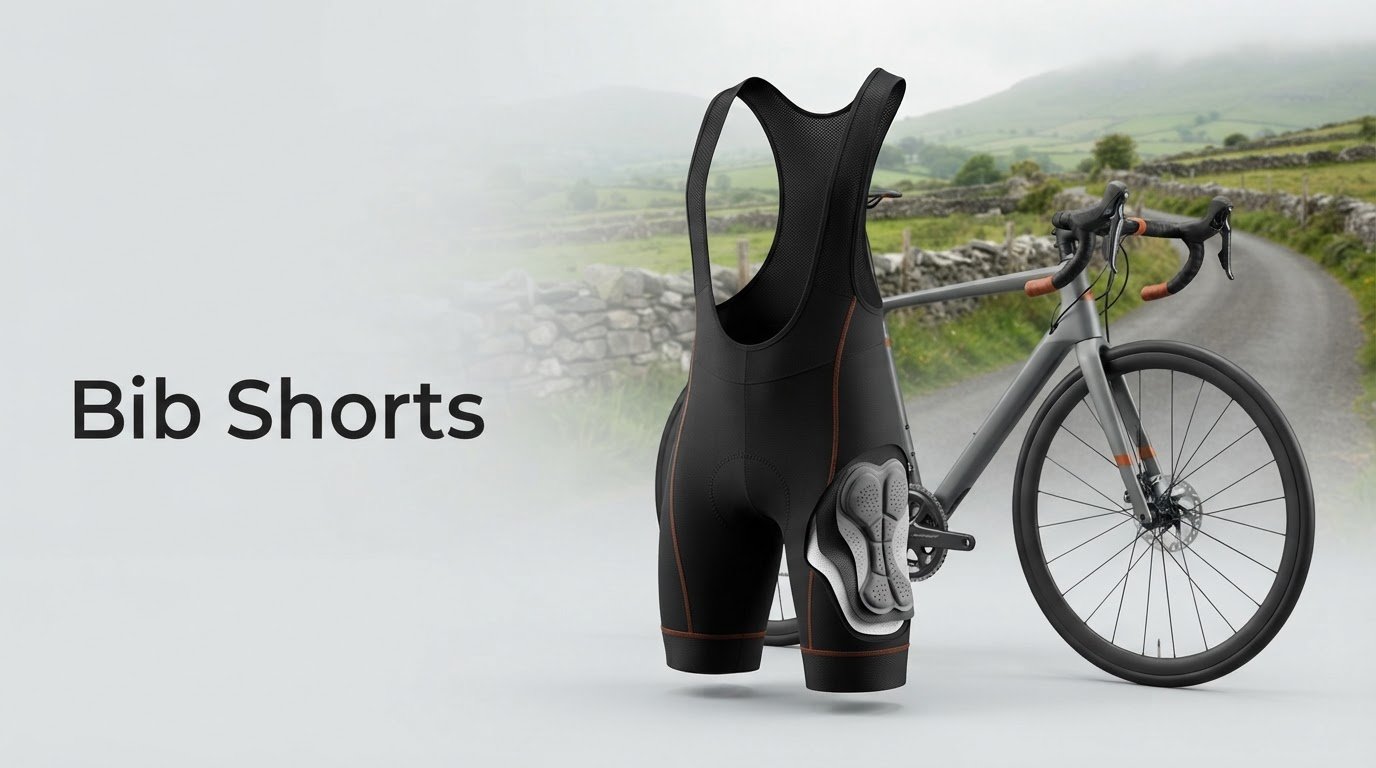
A thicker chamois isn’t automatically the answer to saddle discomfort on a long ride. The best padded cycling shorts for long rides are the ones where the pad, fit and fabric work together, keeping everything in place without pinching, rubbing or feeling bulky.
If discomfort becomes more noticeable as the kilometres add up, it can be difficult to tell whether the issue is the padding, the cut or how the shorts sit in your riding position. A premium-looking pair won’t necessarily suit every body or bike setup.
This guide explains how to compare chamois shape and construction, bib and waist styles, fabric and leg grippers. You’ll also find practical steps for checking fit, testing new shorts on a ride and caring for them. Use these checks to choose a pair based on how it performs on the bike, not just how soft the pad feels in your hand.
Key Takeaways
- The best padded cycling shorts for long rides balance pad shape, fit and fabric; extra thickness alone doesn’t guarantee comfort.
- A chamois can help reduce friction and pressure points, but it won’t correct shorts that shift or fit poorly.
- Choose bib or waist shorts based on how they feel in your riding position, and look for a close fit that doesn’t pinch or restrict movement.
- Before a longer outing, test the shorts on a familiar shorter ride and notice any rubbing, shifting or pad misalignment.
- Use your ride plans and riding position to guide your choice of cycling apparel, then follow care instructions to help keep your shorts in good condition.
Why padded cycling shorts matter on long rides
A pair of cycling shorts can make a ride feel more comfortable, but the pad isn’t a cure-all. Padded cycling shorts are close-fitting riding shorts with a shaped insert, often called a chamois, designed to cushion contact with the saddle and help reduce rubbing. For longer distances, that support matters because you spend more time in the same riding position and repeating the same movements.
Think of the shorts as one part of your overall setup, alongside your saddle, bike position and riding style. A pad may help ease friction and pressure at contact points, but it can’t make an unsuitable saddle fit properly or stop loose shorts from shifting. The best padded cycling shorts for long rides aren’t necessarily the thickest; the right choice depends on how the whole setup works for you.
What does cycling short padding actually do?
The chamois is a shaped insert sewn into the shorts. Its panels are designed to sit between the rider and saddle, cushioning contact areas whilst allowing the legs to move freely as you pedal. Cycling-specific padding is positioned for a riding posture and repeated movement, unlike padding in ordinary clothing, which isn’t necessarily shaped or placed for time in the saddle. Cycling shorts also use close-fitting materials and construction intended for riding, rather than simply adding a cushion to everyday garments.
Why can discomfort build over a longer ride?
Each pedal stroke brings a small amount of movement between your body, shorts and saddle. Over time, pressure in one area or fabric that rubs can become more noticeable. Moisture and changes in posture can also affect how the shorts feel as a ride progresses. A pad that seems comfortable when you’re standing in a changing room may sit differently once you’re leaning over the bars and pedalling.
A quick indoor try-on can reveal obvious fit problems, but it can’t fully predict comfort outdoors. A familiar shorter ride gives you a more realistic sense of whether the insert stays aligned and the fabric shifts as you move. Pay attention to the overall feel, not just how soft the pad seems when pressed by hand.
Comfort is personal. Saddle shape, riding position, ride length and the way your body meets the bike all influence what feels supportive. More padding can feel bulky or put pressure in the wrong place if its shape doesn’t suit you. Treat the pad as one feature to assess, not a substitute for a well-matched fit and riding setup. If discomfort persists, shorts alone may not address the cause.
How pad construction and fabric affect long-distance comfort
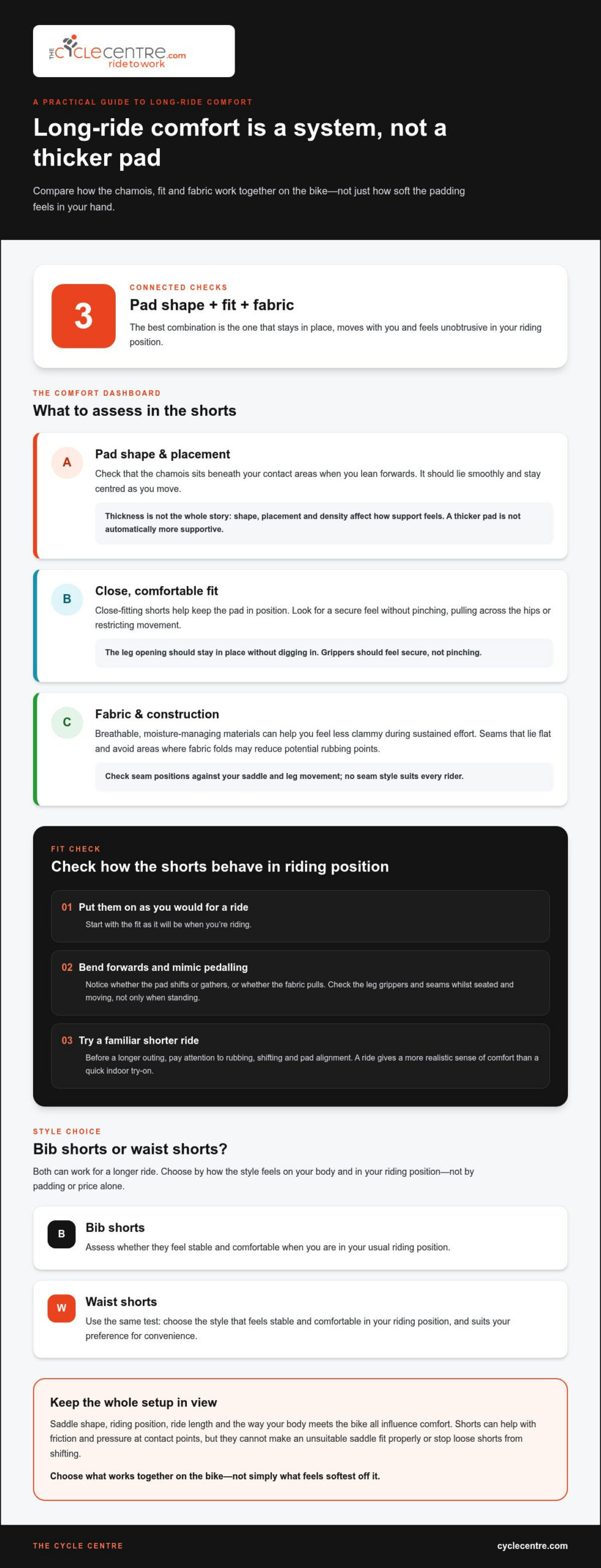
A pad is more than a block of foam, and its thickness doesn’t tell you everything about how it will feel on the bike. Shape, placement and density each affect its support, whilst the shorts’ fabric and construction influence how well they stay comfortable as you pedal. Compare these features as a combination rather than judging them one at a time.
Pad shape, thickness and density: what should riders compare?
Pad construction should suit your fit and riding position, not just look substantial off the bike. Shape and placement affect whether the padding sits beneath your contact areas as you lean forwards. Thickness describes how deep it is, whilst density refers to how firm or yielding the material feels. These characteristics are different: a thick pad isn’t automatically supportive, and a thinner one may suit you better if it fits your body and saddle.
Preferences vary with anatomy, saddle shape and posture. A more upright position changes how you meet the saddle compared with a low, forward-leaning road position. During a fit check, see whether the pad lies smoothly against you and stays centred when you move into your usual riding posture. There’s no single shape or density that works for everyone.
Fabric, seams and leg fit for extended wear
Close-fitting fabric helps keep the pad in position instead of allowing it to wrinkle or slide as your legs move. Breathable, moisture-managing materials can help you feel less clammy during sustained effort. The shorts should feel supportive, but you should still be able to pedal freely. Pulling, tightness across the hips or restricted movement can indicate that the fit isn’t right.
Look closely at the construction, too. Seams that lie flat and sit away from areas where fabric folds may reduce potential rubbing points. Check where the seams run in relation to your saddle and leg movement, rather than assuming a particular seam style will suit every rider. The leg opening should stay in place without digging in or making you focus on its pressure.
A simple fit check can reveal useful details before you ride. Put the shorts on as you would for a ride, then bend into your normal position and move your legs as if pedalling. Notice whether the pad shifts, gathers or pulls, and whether the leg grippers feel secure without pinching. Check both sides: a seam or gripper that feels fine whilst standing may become more noticeable when you’re seated and moving.
These details help narrow down the best padded cycling shorts for long rides for your needs. Rather than looking for the most padding, look for a pad that sits correctly, fabric that moves with you and a finish that feels unobtrusive. The Cycle Centre offers cycling apparel alongside road, gravel and adventure bikes, making its cycling apparel a useful place to explore kit for your riding.
Bib shorts or waist shorts: choosing the right style and fit
Both bib shorts and waist shorts can work for a longer ride. The better choice is the one that feels stable and comfortable in your riding position, not simply the style with the most padding or the highest price. Consider how each option sits on your body, what you’ll wear over it and how convenient it feels when you stop. A pair that looks impressive on the hanger still needs to feel right on the bike.
- Bib shorts: Shoulder straps help hold the shorts in place, and the design avoids a waistband across your middle. The trade-off is that straps add a layer under your top and can make bathroom breaks less convenient.
- Waist shorts: These are often simpler to pull on and adjust during stops. Check that the waistband stays comfortable in a forward-leaning position and doesn’t roll, dig in or press uncomfortably against your stomach.
When might bib shorts suit a long ride?
Bib shorts may suit riders who want the shorts to stay positioned as they pedal, especially if they dislike waistband pressure. Straps should lie comfortably over the shoulders without pulling or restricting movement. Think about layering, too: bib straps sit beneath your jersey or top, whilst waist shorts can feel more straightforward at stops. Neither style is right for everyone, so let your comfort and routine guide the choice.
How should padded cycling shorts fit?
Try each style in your usual cycling posture, not just standing upright. The fabric should sit close to the body, with no folds or pinching, and let you move freely through a full pedal stroke. Check that the pad lies flat and remains aligned when you lean towards the handlebars. Sizing can vary between garments, so use the individual fit guidance rather than assuming your usual size will always feel the same.
During a fit check, pay attention to the details that affect your ride:
- Does the waistband or shoulder straps stay comfortable when you bend forwards?
- Can you move your hips and legs freely without the fabric pulling?
- Does the pad remain in place as you change position?
- Do the leg openings feel secure without squeezing?
If a style feels restrictive in the shop, it’s unlikely to become more comfortable after hours in the saddle. Shorts that feel loose may shift as you pedal. Use movement as your guide: squat gently, lean into your riding posture and mimic a few pedal strokes. Look for a close, stable fit rather than excessive compression.
The best padded cycling shorts for long rides are the ones that suit your body, saddle and riding position. Price and padding thickness can’t make that decision for you. Compare how each style feels, then test your preferred pair on a familiar shorter ride before relying on it for a full day out.
How to test and care for padded cycling shorts before a long ride
A short, structured trial is a better way to assess new shorts than making a long ride their first outing. Start at home, then try them on a familiar route where you can adjust or finish early if the fit becomes distracting. Use what you notice to decide whether the shorts are ready for more time in the saddle.
A practical fit test before increasing ride distance
Check the shorts in the position you actually ride in. The pad should lie flat and sit beneath you when you’re on the saddle, rather than bunching or pulling out of place. Move through a few pedal strokes and notice whether the fabric stays put, the leg openings feel comfortable and anything pinches or rubs.
- Put them on as you would for a ride. Check that the fabric sits smoothly and the pad is positioned correctly before you get on the bike.
- Adopt your usual cycling position. Sit on the saddle, lean towards the handlebars and check that the pad remains aligned. Notice whether the waistband or straps feel comfortable in this posture.
- Pedal briefly. Look out for shifting, folds, rubbing, pressure or leg openings that feel restrictive. A small fit issue while moving may become more noticeable over time.
- Take a familiar shorter ride. Pay attention to how the shorts feel as you ride, and build up duration gradually if they remain comfortable. Don’t make a new pair’s first test a long-distance outing.
Afterwards, make a quick note of what you felt and when. Did the pad stay in place? Did rubbing appear only after you’d been riding for a while? This simple record can help you compare how different shorts perform, rather than relying on a brief try-on. Discomfort is useful feedback about the fit or setup, but it doesn’t by itself identify a medical cause. If pain persists, seek appropriate professional advice.
Washing and storing cycling shorts
Care for cycling shorts according to the garment label. Follow its washing temperature and drying instructions, and avoid adding treatments unless the care guidance says they’re suitable. After a ride, don’t leave damp shorts packed away; deal with them promptly and allow them to dry as directed. Care labels vary, so don’t assume every fabric or pad can be treated in the same way.
Use these checks when trying new apparel or returning to longer rides. The best padded cycling shorts for long rides are a sound choice only if they continue to feel stable and comfortable in use, not just during a quick fitting. Keep the fit test and care label in mind as you compare options, and explore cycling apparel to help prepare for your next ride.
Find cycling apparel that supports your next long ride
Choosing padded shorts is a personal fit decision, not a search for one feature that promises comfort. Bring together what you’ve considered so far: the pad’s shape and placement, how the shorts fit when you’re riding, and whether the style suits your body and routine. The right balance depends on the length and type of rides you plan, as well as how you sit on the bike.
Match apparel choices to your riding position
Your posture can change how the shorts feel against the saddle. A sustained, forward-leaning position on a road ride may make pad placement and a stable fit especially noticeable, whilst a more upright position can feel different at the contact points. These are useful things to consider, not fixed rules: personal comfort still matters most. For longer road rides, The Cycle Centre’s endurance road bikes guide offers related context about bike choice and riding position. A bike choice and a shorts choice remain separate decisions; neither guarantees comfort on its own.
As you compare options, picture a typical ride rather than an idealised one. Think about how long you’re usually in the saddle, whether you favour bib or waist shorts, and what feels comfortable when you adopt your normal position. The best padded cycling shorts for long rides should feel secure without distracting you from the ride.
A simple shortlist for choosing your next pair
Use a few practical priorities to narrow your choice. Don’t let price or a thick-looking pad outweigh how the shorts actually fit and feel. A short test ride can help you assess your shortlist in motion before taking a new pair on a longer outing.
- Comfortable fit: Look for fabric that sits close to your body without pinching, bunching or restricting movement.
- Stable pad placement: Check that the pad sits smoothly and stays aligned in your usual cycling position.
- Suitable fabric and construction: Notice how the material moves with you, and whether seams or leg openings feel distracting.
- Style that suits your routine: Compare bib and waist shorts for support, layering and convenience during breaks.
- Relevant ride test: Try your preferred option on a familiar shorter ride, then consider how it feels before increasing distance.
The Cycle Centre is an independent, family-owned Irish cycling retailer, with cycling apparel alongside road, gravel and adventure bikes. Explore the cycling apparel guide as you consider what suits your riding position and plans. Compare the details that matter to you, then choose apparel that helps you feel ready for the next ride.
Make your next ride a more comfortable one
Choosing the best padded cycling shorts for long rides is a process of learning what works for you. Use your next outing to notice how your kit feels as the route unfolds, then let that experience guide future choices. A small adjustment to fit or style can be more useful than assuming a particular feature will suit every rider.
Give yourself time to compare options and test them on rides that feel manageable. The Cycle Centre’s cycling apparel sits alongside performance road, gravel and adventure bikes, connecting clothing choices with the way you ride. Explore cycling apparel at The Cycle Centre as you prepare for your next outing.
With a considered fit and a little real-world testing, you can head out with greater confidence and focus on enjoying the miles ahead.
Frequently Asked Questions
How tight should padded cycling shorts be?
Padded cycling shorts should feel close and secure, without making it difficult to pedal, breathe comfortably or move your hips. Try sitting on your bike as well as standing: a waistband that seems fine upright may press differently when you lean forwards. If the fabric pulls sharply across the thighs or leaves you distracted by pressure, reassess the fit. Check the garment’s size guidance, since sizing can vary between makes and styles.
Should you wear underwear under padded cycling shorts?
Cycling shorts are generally intended to be worn next to the skin, as underwear can add seams or fabric that bunches as you pedal. If you’re unsure how that feels, try the shorts as intended on a short, familiar ride rather than making a long outing your first test. Afterwards, change out of damp kit and follow the garment’s care label. Comfort and skin sensitivity can differ, so pay attention to how your own setup feels.
Are bib shorts better than waist cycling shorts for long rides?
Neither style is best for every rider. Bib shorts may appeal if you prefer straps to hold the garment up without a waistband, whilst waist shorts can be simpler to put on and manage during stops. Think about your usual layers, too: straps sit beneath your top. The best padded cycling shorts for long rides are those that stay comfortable in your riding position and suit your routine, so compare both styles through movement.
Can padded cycling shorts prevent saddle sores?
No, padded cycling shorts can’t guarantee that saddle sores won’t develop. They may help reduce friction or pressure for some riders, but other factors, including hygiene, fit and time in the saddle, can also affect comfort. Keep an eye on how your skin feels during and after rides, and avoid treating a different pad as a guaranteed solution. If irritation persists or concerns you, seek appropriate professional advice.
How do I know if the chamois pad is in the right position?
Check the pad while seated on your bike in your usual riding posture. It should lie flat beneath the areas that contact the saddle, without twisting or gathering as you pedal. For example, if the insert shifts towards one side after you move around on the saddle, the shorts may not be sitting securely. A brief ride can reveal more than standing in front of a mirror, so test the fit on a familiar route.
How should I wash padded cycling shorts?
Follow the care label, as washing and drying instructions can differ between garments. After a ride, avoid leaving damp shorts packed in a bag; deal with them promptly and wash them according to the label. Don’t assume high heat or fabric treatments are suitable unless the garment instructions allow them. Check the label before choosing a drying method rather than relying on habits from caring for other cycling kit.
How long do padded cycling shorts last?
There’s no fixed lifespan that applies to every pair, because frequency of use, washing and construction all vary. Instead, assess their condition and how they perform: look for damaged seams, worn fabric, a change in fit or a pad that no longer stays comfortably in place. If you notice a difference, compare how the shorts feel on a familiar ride. Replace them when wear affects their fit, comfort or function.