


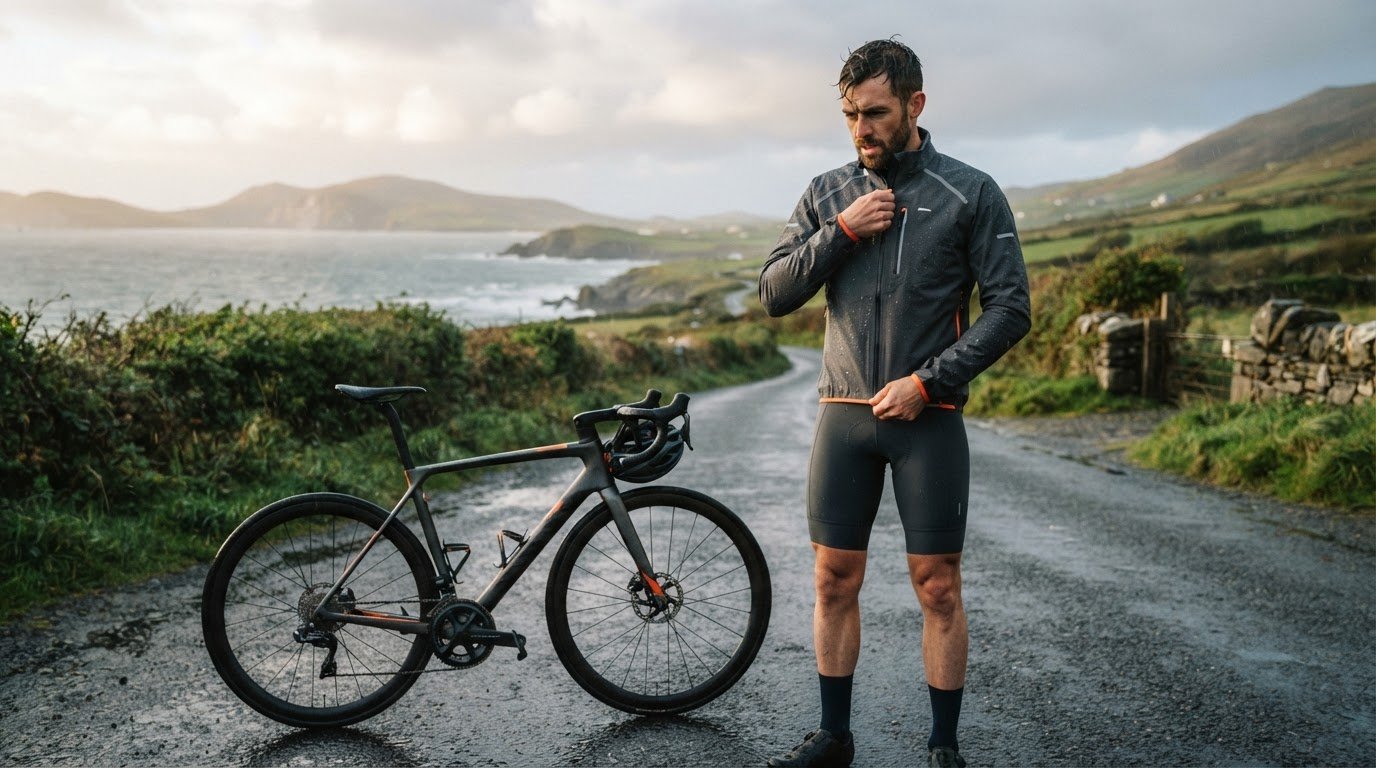
What if the jacket that keeps the rain out leaves you soaked from the inside? For Irish rides, staying comfortable means balancing waterproofing with breathability, fit and visibility, rather than simply choosing the heaviest shell. Finding the right waterproof cycling jacket in Ireland can feel tricky when showers change quickly and technical labels make every option sound essential.
If you’ve ever felt clammy on a climb or restricted reaching for the handlebars, you’re not alone. A jacket needs to suit how and where you ride, whether that’s a daily commute, a steady weekend spin or a harder effort on open roads. The right balance helps protect you from the weather without making every ride feel like a compromise.
This guide explains the difference between waterproof and water-resistant designs, what breathability and fit mean in practice, and how to weigh useful features such as visibility. You’ll learn what to prioritise for your riding conditions, so you can compare cycling apparel with confidence and avoid paying for features you’re unlikely to use.
Key Takeaways
- Match your jacket’s rain protection to the conditions and rides you face, from daily commutes to longer leisure spins.
- Compare waterproofing and breathability separately, and check how construction details affect protection from rain.
- Use fit, ventilation and visibility to narrow down waterproof cycling jacket Ireland options to what suits your riding.
- Choose layers before setting off, then adjust ventilation during your ride to help manage effort and temperature.
- Shortlist jackets by your needs and compare their specifications, rather than relying on broad claims or features you won’t use.
Why a Waterproof Cycling Jacket Matters for Riding in Ireland
A waterproof cycling jacket is purpose-designed outerwear that helps shield you from rain and wind while you ride. In Ireland, conditions can change during a commute or leisure spin, so choose a jacket that suits the rides you actually make. A waterproof cycling jacket Ireland riders choose should balance weather protection with movement and comfort, not simply promise the highest level of protection on its label.
Cycling-specific design matters because you lean forwards, reach for the handlebars and move your arms repeatedly. A jacket cut for this position can feel more comfortable than a general waterproof shell, which may pull across the shoulders, ride up at the back or restrict your reach. Consider your exposure and effort too. Extra protection may help on a long, wet ride, but a highly protective jacket can feel uncomfortable if it doesn’t let enough heat and moisture escape.
When does a cycling jacket make a difference?
On a short, low-effort trip, you may be outside for too little time for passing rain or wind to become a major comfort issue. A longer commute, an open-road spin or a leisurely ride away from shelter can make wet clothing and wind chill more noticeable. Even a light shower can feel different when you’re cycling into a headwind or travelling at a steady pace.
Not every ride calls for the same jacket. Consider how long you’ll be exposed, how hard you expect to ride and whether you can adjust your layers if the weather shifts. A jacket that suits a relaxed outing may feel less comfortable during a faster effort, when your body produces more heat.
Waterproof, water-resistant or windproof: what is the difference?
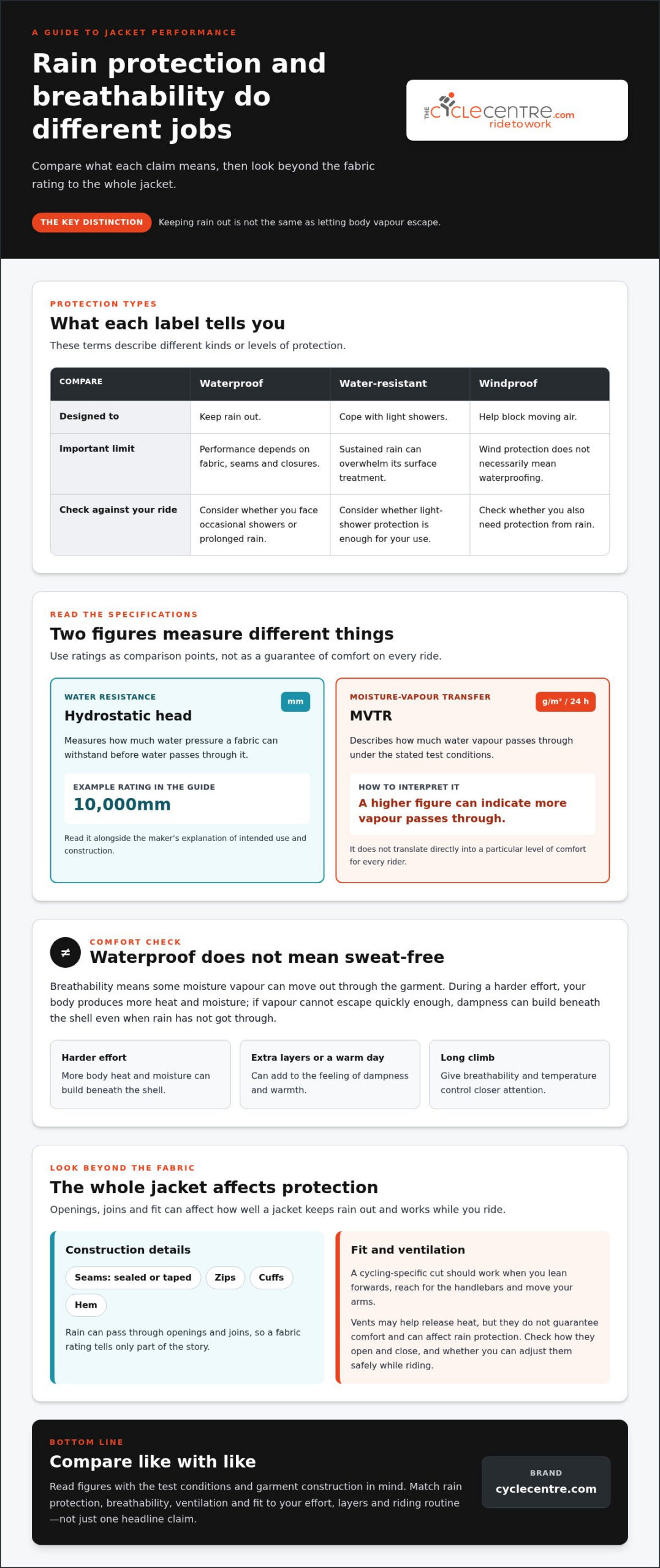
These terms describe different kinds or levels of protection. A waterproof jacket is designed to keep rain out, with performance affected by details such as fabric, seams and closures. A water-resistant garment may cope with light showers, but sustained rain can overwhelm its surface treatment. Windproof protection helps block moving air, but it doesn’t necessarily make a garment waterproof.
Look beyond a single label claim. Check the garment’s stated purpose and construction, then consider how you’ll use it. For a broad introduction to the fabrics behind these garments, Waterproof fabric explains how waterproof and breathable materials work and where they’re used. Before choosing, ask yourself:
- Will the jacket face occasional showers or prolonged rain?
- Will your rides be relaxed, or will you build up heat through harder efforts?
- Does the cut allow you to reach and turn comfortably in your usual riding position?
These questions put headline claims in context. Weather protection matters, but it works best alongside a comfortable fit and performance suited to your ride.
How Waterproofing and Breathability Work in a Cycling Jacket
Rain protection and breathability describe different jobs. A waterproof fabric is designed to resist water passing from the outside in. Breathability describes how readily water vapour from your body can move out through the garment. Breathability is a jacket’s ability to let some moisture vapour escape, not a promise that you’ll stay sweat-free. Your comfort depends on both, as well as your effort, the temperature and the layers underneath.
A fabric rating tells only part of the story. Water can pass through openings and joins, so look at the jacket as a whole. Seams may be sealed or taped, while zips, cuffs and the hem affect how well rain is kept out. The cut and construction matter too: a protective fabric won’t provide the same coverage if the jacket shifts as you ride or leaves openings exposed.
What do waterproof ratings and fabric claims tell you?
A hydrostatic-head rating measures how much water pressure a fabric can withstand before water passes through it. It’s usually shown in millimetres, such as 10,000mm. Treat that figure as a comparison point, not a guarantee of how a jacket will perform on every ride. Rating methods and claims can differ, so read them alongside the manufacturer’s explanation of the garment’s intended use and construction.
Breathability figures may also appear in product specifications, often as MVTR, or moisture vapour transmission rate, expressed in grams per square metre over 24 hours. A higher figure can indicate that more vapour passes through under the stated test conditions, but it doesn’t translate directly into a particular level of comfort for every rider. For a waterproof cycling jacket Ireland riders can use with confidence, compare figures on a like-for-like basis and consider the whole design, rather than choosing by one headline number.
Why can waterproof jackets feel clammy?
During a harder effort, your body produces more heat and moisture. If vapour can’t escape quickly enough, dampness can build beneath the shell, even if rain hasn’t got through. Extra layers, a warm day or a long climb can add to that feeling. Ventilation openings may help release heat, but they don’t guarantee comfort and can affect how much protection the jacket provides in rain.
Match the fabric performance and ventilation to the rides you typically do. For a steady commute, a design that balances rain protection with practical venting may suit your pace. For longer or harder rides, give breathability and temperature control closer attention. Check how vents open and close, and whether you can adjust them safely while riding. Even a highly rated shell can feel uncomfortable if it’s poorly suited to your effort or layers.
Use garment specifications to guide your choice, then consider how those details fit your riding routine. The Cycle Centre’s cycling apparel range is a useful starting point for exploring clothing suited to time in the saddle.
How to Compare Waterproof Cycling Jackets for Irish Rides
Start your comparison with how you ride, not the number of features on a product page. A waterproof cycling jacket in Ireland may need to handle a damp commute, a fast road spin or a slower outing where you’re exposed for longer. Waterproof protection doesn’t automatically mean poor comfort. Fit, breathability and ventilation all influence how a jacket feels as conditions and effort change.
Use this table to weigh the main features against your routine. No single combination suits everyone.
| Feature | What to compare | Why it matters |
|---|---|---|
| Protection | Waterproof claims and the garment’s intended use | Helps you judge whether it suits occasional showers or more sustained exposure. |
| Breathability | Fabric performance alongside construction | Can affect how comfortable the jacket feels as you build up heat. |
| Fit | Cut and coverage in your riding position | Supports comfortable movement and coverage without excess fabric. |
| Ventilation | Whether openings are provided and adjustable | May help release heat during harder efforts. |
| Visibility | Colour and any reflective details | Can help you stand out in dull conditions; it doesn’t replace bicycle lights. |
Which jacket features matter most for your riding style?
For commuting, practical access and visibility may deserve extra attention, particularly if you carry the jacket and put it on as conditions change. On road rides, consider coverage and freedom of movement over longer periods in a forward-leaning position. Slower recreational cycling may call for a more relaxed fit or different ventilation priorities. For more clothing advice, explore this cycling apparel guide.
Packability is useful if you plan to stow your jacket between showers, but it shouldn’t outweigh protection and comfort on rides where you expect to wear it throughout. Consider how easily you can reach pockets or other essentials, too. These practical details may matter more on a daily commute than on a short spin from home.
How should a cycling jacket fit over riding layers?
Test the fit in a riding position, not just standing upright. Reach forwards as if holding the handlebars, then check that your shoulders and arms move freely and the hem still covers you. Allow room for the layers you intend to wear, but avoid excess fabric that flaps in the wind or catches on your movement. A good fit feels secure, not restrictive.
Picture a typical ride from start to finish before choosing: what you’ll wear underneath, how hard you’ll ride and how long you may be exposed. This simple check helps separate useful features from attractive extras, so your jacket suits your routine rather than an idealised set of conditions.
How to Wear and Care for a Waterproof Cycling Jacket
A little preparation helps your jacket work as part of a comfortable clothing system, rather than leaving you too warm on a climb or underdressed when the rain picks up. Before setting off, consider the ride ahead, how hard you’ll be working and how easily you can adjust your layers if conditions change. This routine can help you get more from a waterproof cycling jacket in Ireland without assuming every day calls for the same setup.
- Consider the ride. Think about its duration, expected effort and how exposed you’ll be. A short commute and a longer leisure ride may call for different layers.
- Choose a base layer. Wear a comfortable next-to-skin layer that suits the conditions and helps manage moisture against your skin.
- Add warmth if needed. Choose a mid-layer according to temperature, effort and ride length. You may need less insulation for a hard effort than for a slower spin.
- Pack or wear your jacket. If you expect changing conditions, decide whether you’ll start in the jacket or carry it for later.
- Check your range of movement. In your riding position, make sure the layers sit comfortably and don’t restrict your arms or shoulders.
How should you layer beneath a waterproof cycling jacket?
Start with comfort next to the skin. A base layer sits beneath the jacket and can help manage moisture, while a mid-layer adds warmth when the temperature and your pace call for it. There’s no fixed number of layers that suits every ride. A brisk commute, a gentle outing and a longer ride can create different demands, so dress for both the conditions and the effort you expect. Choose layers you can adjust without making the jacket feel tight.
During the ride, pay attention to rising effort and temperature. If your jacket has adjustable ventilation, opening it may help release some built-up heat. Closing it again can help limit exposure as conditions change. Make adjustments when it’s safe to do so, and remember that vents are one part of temperature management, not a guarantee you won’t feel damp or warm underneath.
How do you keep a waterproof jacket performing well?
After a ride, check pockets and fastenings before cleaning, then read the care label. Technical fabrics and finishes can have different requirements, so don’t assume your jacket can be washed or dried like everyday clothing. Some detergents or heat settings may affect particular materials. Reproof the garment only if its manufacturer recommends it, and follow the stated method.
Care reminder: Follow the manufacturer’s instructions for washing and reproofing. The right care depends on the jacket’s materials and construction. This helps you avoid treating every waterproof garment alike. For clothing to consider alongside your layering routine, explore cycling apparel.
Find a Waterproof Cycling Jacket for Your Needs
Choosing well is less about finding a jacket with the longest list of features and more about matching its design to the rides you actually do. For a waterproof cycling jacket Ireland riders can use comfortably, weigh the weather you’re likely to face against ride length, effort and the clothing you already wear. Use the checklist below to turn those priorities into a practical shortlist.
A quick checklist before choosing
Start with your regular rides, not the occasional unusual one. A jacket for a short commute may have different priorities from one you’ll wear throughout longer spins. Check the manufacturer’s garment details and think about how the jacket will work with your existing kit.
- Intended rides: Note whether you’ll mainly commute, ride on the road or head out for slower leisure trips.
- Weather exposure: Consider whether you need protection for passing showers, longer periods in rain or windy conditions.
- Fit and movement: Allow for your usual riding layers and check that the jacket feels comfortable in your riding position.
- Ventilation: Look at whether the design offers adjustable ways to manage heat during your typical effort and ride duration.
- Visibility: Consider colour and any reflective details alongside the visibility gear you already use. Jacket details don’t replace bicycle lights.
- Care: Read the garment’s washing and maintenance instructions before making it part of your regular kit.
Next, compare specifications in context. A waterproof claim, a breathability figure or a feature description is useful only if you understand what it means for your riding. Check the manufacturer’s wording and intended use, then consider whether each feature solves a real need for you. This helps prevent a high headline rating from distracting you from fit, ventilation or everyday practicality.
Explore cycling apparel with The Cycle Centre
The Cycle Centre offers cycling apparel for riders looking for clothing suited to time on the bike. Use your shortlist to focus on the details that matter to you, rather than feeling you need every available feature.
There’s no single jacket that is right for every cyclist or every outing. A considered choice balances the protection you need with comfortable movement, useful ventilation and visibility that works with your existing gear. Explore The Cycle Centre’s cycling apparel range to find clothing that fits your riding needs.
Make Your Next Ride More Comfortable
Picture an ordinary ride, not an ideal day: what you’ll wear, how long you’ll be out and what would help you stay comfortable if conditions shift. This practical starting point makes it easier to choose a waterproof cycling jacket Ireland riders can match to their own routine, without being distracted by features they may rarely use.
A well-chosen piece of cycling clothing should support the way you ride and feel comfortable enough to reach for again. Take time to compare the details and focus on the priorities that matter most to you. The Cycle Centre’s cycling apparel range offers a place to explore clothing for your rides.
Explore The Cycle Centre’s cycling apparel range to find clothing suited to the journeys ahead.
Frequently Asked Questions
Are waterproof cycling jackets worth it for riding in Ireland?
Yes, particularly if rain could leave you uncomfortable during a commute or a longer ride. A waterproof cycling jacket Ireland cyclists choose can be useful for journeys with little shelter or where arriving in damp clothing would be inconvenient. For a brief trip in mild conditions, you may prefer a lighter layer. Consider how often you ride, how long you’re exposed and whether you can carry a jacket when the forecast looks unsettled.
Can a waterproof cycling jacket also be breathable?
Yes. Some jackets use fabrics designed to keep rain out while allowing some water vapour to escape. Breathability can help manage moisture, but it can’t guarantee you’ll stay dry inside, especially during a hard effort or in warm conditions. Construction, ventilation, layers and pace all influence comfort. If you tend to ride briskly, compare the manufacturer’s breathability information and look for practical ways to regulate heat.
How waterproof should a cycling jacket be?
Choose a level suited to the rain and exposure you expect, rather than treating one figure as ideal for everyone. A rating of at least 10,000mm is generally considered waterproof; 20,000mm or more may suit heavy, prolonged downpours. These figures are guides, and test methods or product claims can vary. Check the manufacturer’s explanation and consider seams and closures as well as the fabric rating before deciding.
What is the difference between waterproof and water-resistant cycling jackets?
A waterproof jacket is designed for more substantial rain protection, while a water-resistant one is generally intended for lighter showers or brief exposure. Water resistance may rely on a surface treatment that can become less effective in sustained rain. If you’re choosing between them, consider whether you’ll continue riding through a downpour or can take shelter and change. Check the garment’s stated use, not just the wording on its label.
Should a cycling jacket fit tightly or loosely?
It should fit securely without limiting your reach, breathing or arm movement. A close cut may suit riders who want less fabric moving in the wind, while a more relaxed fit can leave room for warmer clothing. Try the jacket with the layers you expect to wear and lean forwards as if holding your handlebars. Check that the sleeves stay comfortable and the hem provides coverage in that position.
Can you wear a waterproof cycling jacket in warm weather?
Yes, if rain protection is needed, but warmth and effort can make a waterproof layer feel uncomfortable. For a short shower or a cooler start, consider whether you can open adjustable vents or remove and stow the jacket as conditions change. A lighter garment may suit warm, showery conditions better than a heavily protective shell. Let the expected pace and temperature guide your choice, rather than wearing the jacket by default.
How do you wash a waterproof cycling jacket without damaging it?
Read and follow the care label before washing, as cleaning and drying instructions vary between garments. Empty the pockets and fasten closures first, then use only the cleaning method and products permitted by the manufacturer. Don’t assume ordinary detergent, fabric softener or a particular heat setting is suitable for technical fabric. Reproof the jacket only if its care instructions recommend it, and use the specified method.