


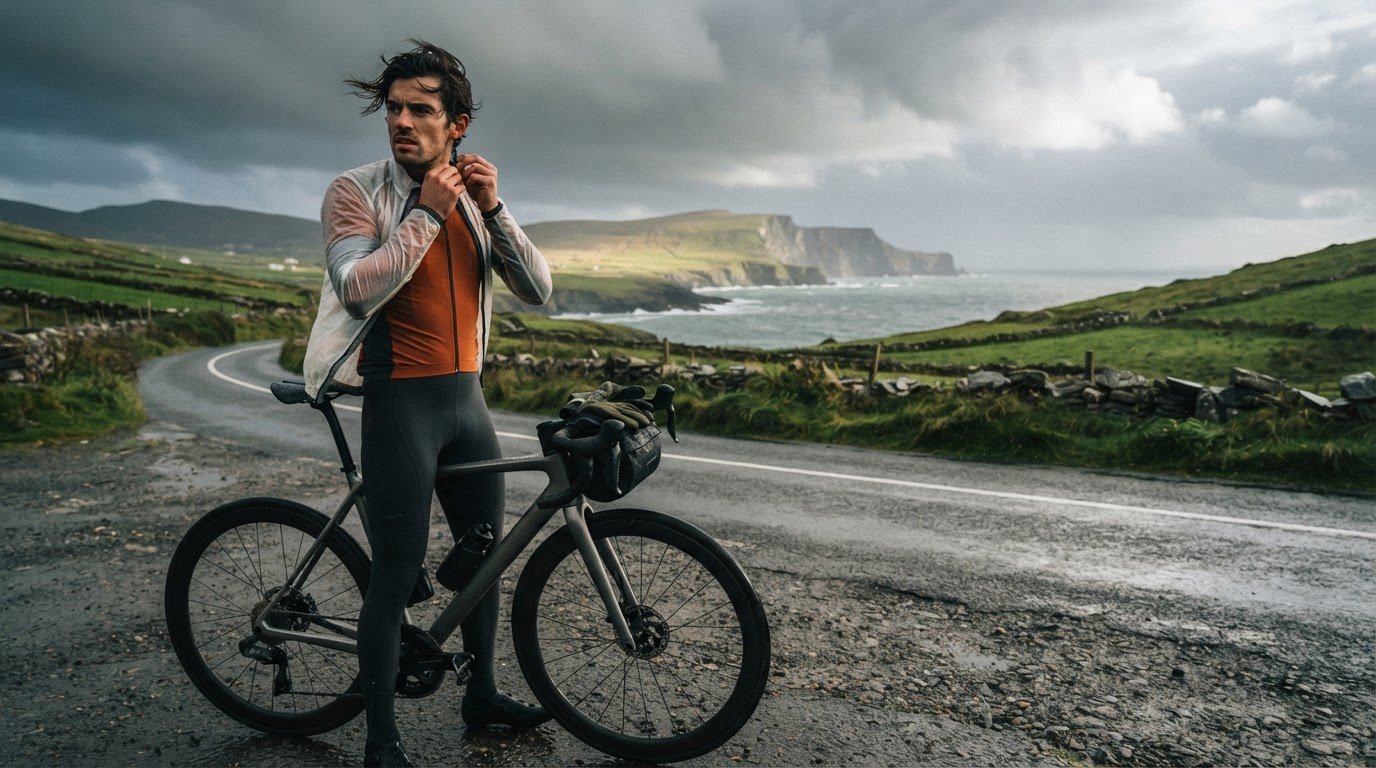
The perfect all-weather jacket may not exist. Relying on one can leave you damp with sweat or chilled when the wind picks up. Cycling clothing for Irish weather works best as a flexible system: layers you can add, remove or adjust as conditions change during your ride.
If you’ve set off in mild sunshine only to meet rain, gusts and a sudden drop in temperature, you’ll know why choosing kit can feel like guesswork. Too much insulation can make you overheat, while too little protection can leave you uncomfortable, especially when clothing stays damp.
Build your clothing system around your route, effort and forecast. This guide explains how base layers, insulating layers and outer shells work together, and how to balance weather protection with breathability and versatility. You’ll also find practical ways to choose fabrics and garments for commutes, road rides and off-road adventures across the seasons.
Key Takeaways
- Build a flexible layering system that you can adjust as rain, wind and temperature change during a ride.
- Combine a next-to-skin layer, a riding layer and a removable outer layer to manage comfort without overheating.
- Compare waterproofing, wind resistance and breathability to find the right balance for your route and conditions.
- Use the forecast, ride length, effort and exposure to guide your cycling clothing for Irish weather throughout the seasons.
- Check fit and intended use when choosing cycling apparel at The Cycle Centre.
Cycling Clothing for Irish Weather: Why Conditions Change Your Kit
A ride can begin in calm, mild conditions and meet a shower or headwind before you get home. Temperature alone doesn’t determine how comfortable you’ll feel. Your pace, time outside and exposure to wind all affect how quickly you warm up or cool down.
The most useful cycling clothing for Irish weather is a versatile system, not one garment expected to handle every situation. Look for a balance of protection and breathability, with options to adapt as the ride unfolds. Ireland’s oceanic climate helps explain why conditions can change; the Climate of Ireland overview provides wider context on rainfall, temperatures and maritime influences.
Weather-resistant clothing can help with wind and passing showers, while clothing designed for prolonged heavy rain offers more sustained rain protection. That difference matters. A light outer layer may suit a short spin in unsettled conditions, while a longer ride in persistent rain calls for greater protection. More coverage can also limit ventilation, so choose for the conditions you’re preparing for rather than assuming the most protective option will always feel most comfortable.
Why Irish riding conditions call for adaptable clothing
A shower can leave clothing damp, while wind can make a mild day feel cooler once you’re moving. Buildings, hedges and trees can shelter parts of a route, while open stretches leave you exposed. The same outfit may feel comfortable in one place and too warm or too exposed in another.
Effort adds another variable. A brisk climb or hard training effort generates warmth. Slowing down, stopping at a junction or riding into a headwind can change how quickly that warmth escapes. On a longer outing, conditions may differ from what you expected at the start. Clothing you can adjust helps you respond without having to predict every change.
Start with the ride, not a long shopping list
Begin with what you plan to do. For a commute, consider the conditions on the way there and back, how exposed the route is and whether you can carry or store an extra layer. A short leisure ride close to shelter may need a simpler set-up. Longer training rides mean more time in changing conditions, so think about comfort during both harder efforts and slower sections.
Before choosing what to wear, consider:
- Duration: How long will you be out, and could conditions change before you return?
- Effort: Will you ride steadily, work hard on climbs or include slower stops?
- Forecast: Is rain likely, and how much wind or temperature change should you plan for?
- Exposure: Does the route offer shelter, or will you spend long stretches in the open?
Your answers help you decide how much protection and flexibility you need. Start with layers suited to your usual riding, then add specialist pieces where your routes and conditions make them useful. This keeps your kit practical and avoids dressing for a worst-case forecast on every ride.
How a Cycling Clothing Layering System Keeps You Comfortable
Layering doesn’t mean every ride needs three separate garments. It’s a way to manage warmth and exposure by combining clothing with different jobs, then changing that combination as your pace or the weather shifts. In mild conditions, one garment may serve more than one purpose. On a cooler, wetter ride, separate layers can give you more control.
The next-to-skin layer manages comfort, the riding layer provides everyday coverage, and the outer layer adds protection when wind or rain calls for it. Thinking in these three functions helps you choose kit for a purpose instead of building a long list of items you may rarely use.
What each layer does on a ride
A base layer sits next to your skin and helps move moisture away during activity. It should fit comfortably under other clothing without restricting movement. Above it, a riding layer, such as a cycling jersey, provides coverage and contributes to temperature management. How warm it feels depends on the conditions, your effort and what you wear underneath.
An outer layer can help limit exposure to wind or rain when conditions demand it. You may not need to wear it throughout the ride, so consider how easily it can be removed and carried. Fit matters across the whole system: layers that bunch up or feel tight can distract you and make it harder to move freely on the bike.
How to adjust layers as conditions change
Think of your layers as a system. If you dress for the coldest moment, you may feel too warm once your effort rises. If you dress only for the first few minutes, a slower section or exposed stretch could leave you chilled. Met Éireann’s Climate of Ireland information offers useful background when considering the conditions behind your forecast.
Make adjustments before you’re uncomfortably hot or cold. If you need to add or remove a layer, stop somewhere safe and away from traffic rather than trying to change clothing while riding. A removable outer layer is useful when your route moves between sheltered and exposed sections, or your pace changes between harder efforts and easier recovery.
Moisture movement matters, but no fabric or garment can guarantee that you’ll stay completely dry or avoid overheating. Sweat, rain, wind and riding intensity all play a part. Choose a comfortable fit that allows movement and supports airflow, and carry an extra layer when the forecast or route makes a change likely.
To build a practical set-up around your riding, explore the cycling apparel at The Cycle Centre and consider which layer would make the biggest difference to your comfort first.
Waterproof, Wind-Resistant or Breathable? Compare Clothing Trade-offs
Choosing cycling clothing for Irish weather means deciding which conditions you most need to manage, not simply choosing the garment with the strongest protection. A jacket designed to resist sustained rain may feel less airy during a hard effort, while a lighter wind-resistant layer may feel more comfortable when showers are brief or unlikely. The best balance depends on the forecast, route and pace.
| Clothing priority | Rain protection | Wind protection | Breathability and intended use |
|---|---|---|---|
| Waterproof outer layer | Useful in persistent rain or longer wet exposure | Usually offers a barrier against wind as well | Can feel warmer during strenuous riding; suits conditions where rain protection is a priority |
| Wind-resistant layer | May cope with light showers, but isn’t a substitute for rain-focused protection | Helps reduce the chill of moving air | Often a practical choice for breezy, changeable conditions and variable effort |
| Light, breathable riding layer | Limited protection from sustained rain | Less protection on exposed stretches | Can suit dry conditions or harder efforts when managing heat and moisture is important |
These are general tendencies, not guarantees. Construction and fit vary, and a layer’s feel changes with your pace, what you wear underneath and how much air reaches the garment. Use the table as a starting point for matching clothing to a ride, not as a promise that every garment in a category will perform identically.
When waterproof protection is useful
More substantial rain protection is worth considering for a long ride with persistent rain in the forecast, or a route where you’ll be exposed for extended periods. A close, comfortable fit helps prevent excess fabric from flapping or bunching. Avoid a fit so snug that it restricts movement or leaves no room for other layers.
Comfort still depends on effort and ventilation. You may generate more heat during a steady climb than on an easy, exposed descent, even if the rain hasn’t changed. Rain-focused clothing can reduce water getting through from outside, but it can’t promise that you’ll stay completely dry. Perspiration and water entering at cuffs or openings can also affect comfort.
When wind resistance or breathability matters more
If the forecast points to a breezy ride with only a chance of light showers, a lighter wind-resistant layer may offer a useful balance. It can help on exposed roads without the greater coverage you might choose for prolonged rain. On a high-effort ride, airflow and moisture management may matter more than maximum rain protection, particularly if you can add coverage when conditions worsen.
Base your decision on three things: the rain forecast, how exposed your route is and whether you’re willing to carry a removable layer. For a short ride with shelter nearby, you may favour a lighter option. For longer outings or uncertain conditions, carrying extra protection gives you flexibility without wearing your warmest, most protective layer throughout.

Choose Cycling Clothing for Irish Weather by Season and Ride
A seasonal label is a useful starting point, not a complete clothing plan. A cool, still day can feel very different from a milder day with a strong headwind, and a short spin doesn’t call for the same preparation as hours outdoors. Choose cycling clothing for Irish weather by considering the conditions you’re likely to meet and how you’ll ride through them.
Use this quick decision process before getting dressed:
- Check the forecast. Look beyond the temperature to the chance of rain and the wind.
- Consider the duration. The longer you’ll be out, the more time there is for conditions or comfort to change.
- Think about effort. A steady commute, hard training session and relaxed leisure ride produce different amounts of body heat.
- Assess exposure. Open roads and routes with little shelter may call for more wind or rain protection than a sheltered route.
- Plan how to adjust. Decide whether you’ll wear an outer layer throughout or carry one for changing conditions.
Build a practical kit for different seasons
In cooler months, consider more coverage and a way to adjust warmth as your effort changes. Rather than dressing heavily from the start, plan which layer you could remove if you warm up. Milder conditions may call for lighter clothing, but wind or passing showers can still affect comfort. Consider a packable outer layer if the route is exposed or the forecast is unsettled.
Shoulder seasons can be particularly difficult to dress for because a ride may include cool starts, brighter spells and a shower. Flexible combinations help you respond without treating every day as either summer or winter. There’s no universal seasonal outfit: base your choices on the forecast, route and your own comfort, then adapt as you learn what works for your riding.
Match clothing to commuting, leisure and training
For a commute, factor in the journey in both directions, how you’ll feel on arrival and whether you can change after riding. A layer that feels right on the bike may be too warm once you’re indoors, so consider what you can remove and where you’ll put it. Journey length and exposure matter as much as the season.
On a leisure ride, plan for how long you expect to be outside and whether the route offers sheltered stops. For training, consider the effort: harder intervals or climbs may increase the need to manage heat and moisture, while slower sections can leave you more exposed to wind. Clothing that balances ventilation with suitable protection may work better than wearing the heaviest option throughout.
For broader guidance on choosing kit for different riding needs, explore this cycling apparel guide. To put your plan into practice, browse cycling apparel at The Cycle Centre and choose with your usual rides and comfort in mind.
Find Cycling Apparel at The Cycle Centre and Plan Your Next Ride
With the right clothing, a change in the forecast doesn’t have to mean abandoning a ride or dressing for the worst from the outset. Before choosing a new piece of cycling apparel, think about the rides you actually do and the conditions that tend to make them uncomfortable. A clear checklist helps you focus on useful kit rather than adding layers without a purpose.
A simple checklist before choosing cycling clothing
Use these questions to narrow down what you need:
- What’s the ride? Consider whether it’s a commute, a short leisure spin or a longer training outing.
- What conditions are likely? Check the forecast for rain and wind, and consider how exposed your route will be.
- How long and hard will you ride? Time outdoors and riding intensity can affect warmth, moisture and comfort in different ways.
- Which protection matters most? Decide whether rain, wind or managing heat is your main concern. Consider whether a removable layer would give you more flexibility.
- Does it fit on the bike? Try clothing in a riding position as well as standing still. Check that it feels comfortable through the shoulders and arms, doesn’t restrict movement and works with the other layers you plan to wear.
Fit is easy to overlook. Clothing that feels fine while standing upright may pull, bunch or feel restrictive once you lean towards the handlebars. Allow room for the layers you’ll wear underneath, and consider how easily you can remove or carry an outer layer if your effort increases or conditions improve.
For commuting, include the return journey and think about how you’ll feel on arrival. If you’re planning to use the Irish Bike to Work Scheme, factor the scheme into your bike purchase planning separately from your choice of apparel.
Explore cycling apparel with an experienced retailer
The Cycle Centre is an independent, family-owned bicycle retailer established in 1974, with cycling apparel among its offerings. Its range gives you a practical starting point for choosing clothing around your riding purpose, comfort and the conditions you face. You don’t need to solve every weather scenario at once. Start with the gap that affects your rides most, then build a versatile set-up around it.
Explore the cycling apparel at The Cycle Centre and consider which choices suit your usual routes and riding habits. Useful cycling clothing supports comfort by matching protection to the ride.
Make Your Next Ride More Comfortable
Let your own rides guide your clothing choices. After your next outing, note what felt too warm, where wind or rain affected your comfort, and whether you used every layer you carried. Those observations can help you fine-tune your kit over time, so you choose cycling clothing for Irish weather based on experience rather than guesswork.
You don’t need to perfect your set-up all at once. Start with the ride you make most often, identify the comfort issue you’d most like to solve, and choose apparel with that purpose in mind. The Cycle Centre is an independent, family-owned retailer with decades of cycling experience and cycling apparel among its offerings.
Explore cycling apparel at The Cycle Centre and take the next step towards kit that suits your rides. With a little planning and the right adjustments, changeable conditions needn’t keep you from enjoying the journey.
Frequently Asked Questions
Is waterproof cycling clothing necessary for riding in Ireland?
No, not for every ride. A waterproof outer layer is useful if you expect prolonged rain or will be far from shelter, but it may feel too warm for a short, hard spin in dry conditions. For cycling clothing for Irish weather, consider how long you’ll be exposed and whether you can carry extra protection. A forecast showing only a brief shower calls for a different choice from one showing hours of rain.
Can I wear ordinary outdoor clothing for cycling?
Yes, particularly for short or relaxed rides, provided your clothing lets you move freely and doesn’t catch on the bike. Check that trouser hems won’t reach the chain, and avoid loose fabric that could flap or snag. Some everyday garments can feel heavy or restrictive in a riding position, especially on longer journeys. Try your outfit on the bike before setting off and notice whether it stays comfortable as you pedal.
How should cycling clothing fit?
It should let you pedal, steer and reach the handlebars without pulling or restricting movement. Check the fit in your usual riding position, not only while standing upright. Sleeves and hems should stay comfortably in place, and a jacket should leave room for the layers you intend to wear underneath. Move through your normal riding posture to see how the garment sits on the bike before deciding.
What should I wear cycling in light rain?
For a brief shower, choose comfortable riding clothes and consider a light outer layer that’s easy to remove if you warm up. Think about the route, too: a short journey with places to shelter differs from an exposed ride where rain may persist. A cap or brim beneath a helmet may help keep rain off your face, provided it fits safely. After riding, change out of damp clothing rather than staying in it.
How do I wash cycling clothing without damaging it?
Follow the care label first, as washing instructions vary between garments and fabrics. Close fastenings, separate items by colour, and avoid washing kit with rough items such as clothes with hook fasteners that may catch on fabric. Don’t assume every garment should be tumble-dried or treated with fabric conditioner. If an item has a water-resistant finish, check its care instructions before washing so you don’t use a product or method that affects it.
Should I wear high-visibility clothing when cycling?
Bright or reflective details can make you easier to notice, particularly in dull weather, at dawn or near dusk. They’re useful additions, but they don’t replace working lights when visibility is poor or it’s dark. Keep reflective areas visible rather than covered by a bag or outer layer, and check that clothing doesn’t restrict your view or movement. Before each ride, make sure your lights are charged and positioned so they can be seen.
What spare clothing should I carry on a longer ride?
Pack for the conditions you could reasonably encounter, not every possible scenario. A removable outer layer can be useful if rain or wind picks up, while a dry pair of socks may be welcome after a wet stretch. For a remote route or a long day out, consider a spare base layer if you expect to become damp. Keep spare clothing in a bag that helps protect it from road spray and rain.