

The option that looks more like a “proper” bike may not teach the hardest skill first. If you’re weighing up a balance bike vs stabilisers, look beyond appearance and consider what your child is ready to practise.
Stabilisers help a child pedal while the bike stays upright, but they don’t teach balance in the same way as a balance bike. A balance bike lets a child practise balancing and gliding before adding pedals. Neither approach is a race. The best choice depends on your child’s confidence, interest and ability to control a well-fitting bike.
This guide compares the skills each option builds, what may still need practice and how to spot signs that your child is ready to move on. You’ll also find practical pointers on bike size and fit, so the learning bike feels manageable and your child can gain confidence at their own pace.
Key Takeaways
- Children learn at different rates, so choose an approach that suits your child rather than following a fixed timetable.
- With balance bike vs stabilisers, consider whether your child should focus first on balancing or practise pedalling with support.
- Look for comfort and control to help judge when your child may be ready to move on to pedals.
- Use the bike size guide to find a manageable fit that supports confidence and control.
- Keep practice relaxed: a suitable space and your child’s pace can make learning feel easier.
Balance bike vs stabilisers: what does each option teach?
There’s no single required route for learning to ride. Children develop skills and confidence at different rates, so start with the option that feels manageable for your child. In the balance bike vs stabilisers comparison, the main difference is which skills each option lets them practise first.
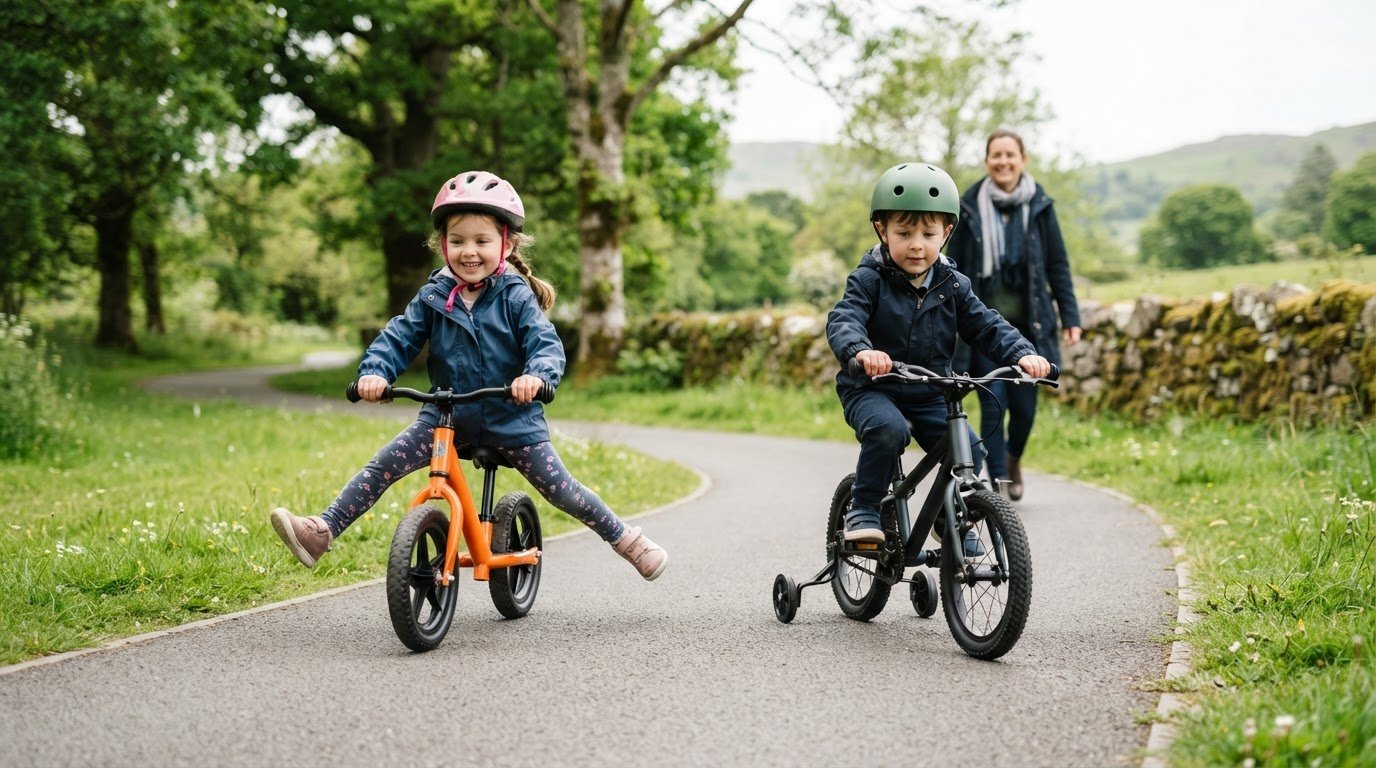
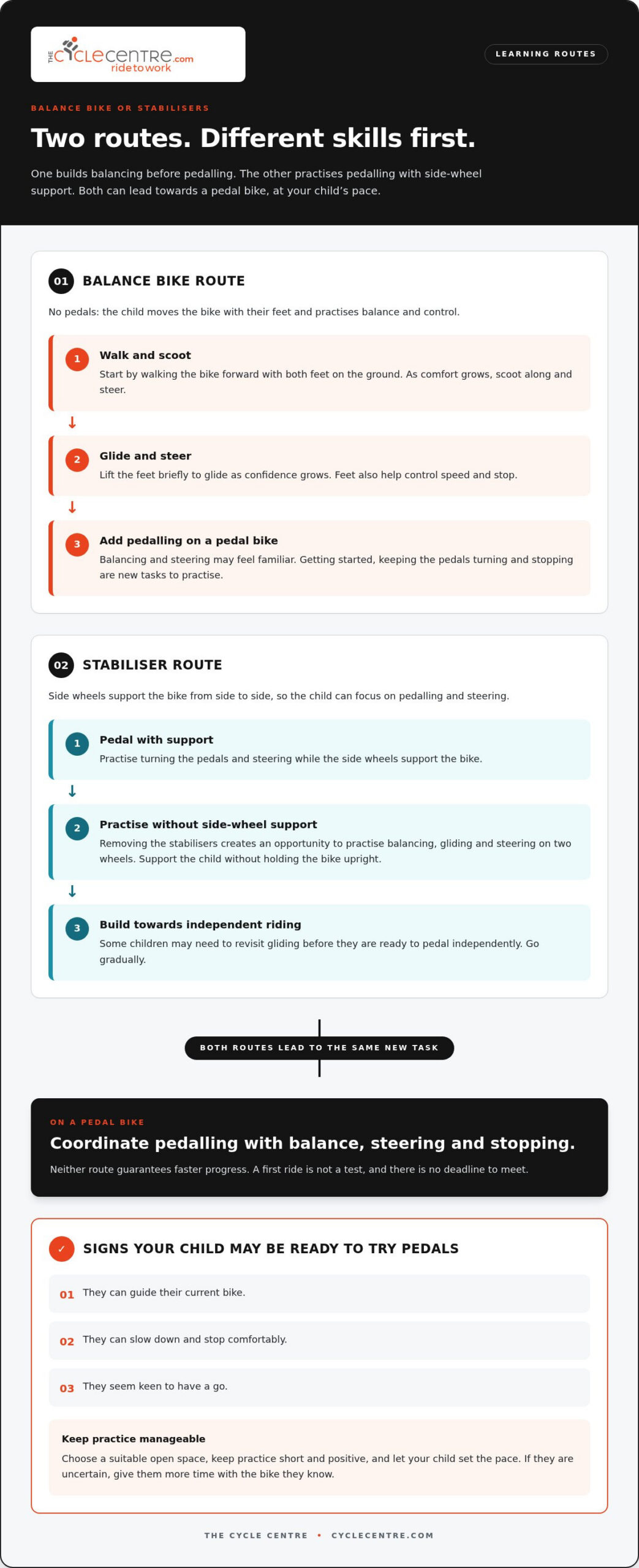
A balance bike has no pedals. The child moves it along and controls it with their feet, first walking or scooting, then lifting their feet briefly to glide as confidence grows. Stabilisers are small side wheels fitted to a pedal bike. They support it from side to side while the child practises turning the pedals.
These approaches share some skills, but they don’t practise each one equally. A balance bike focuses on balance and coordination; stabilisers offer support while a child gets used to pedalling. Neither guarantees faster progress, and children can practise steering with both.
| Skill | Balance bike | Stabilisers |
|---|---|---|
| Balance | Practised through scooting and gliding. | Side wheels provide support, so independent balance is practised less. |
| Pedalling | Not practised on the bike. | Practised while the side wheels support the bike. |
| Steering | Practised by guiding the handlebars whilst moving. | Practised by turning the handlebars whilst pedalling. |
| Confidence | Can build as the child controls speed with their feet. | Can build as pedalling becomes familiar with support. |
| Likely next step | Try a pedal bike when ready to add pedalling. | Find opportunities to practise balancing without side-wheel support. |
How a balance bike builds balance and control
At first, a child may simply walk the bike forward, keeping both feet on the ground. As they become more comfortable, they can scoot, lift their feet for short glides and steer around open space. Their feet also help them control speed and stop. This gradual practice puts balance at the centre, but children’s progress varies and there’s no set timeframe.
What stabilisers do, and what they don’t teach
Stabilisers support the bike from side to side, allowing a child to focus on pedalling and steering without balancing independently in the same way. This can make pedalling feel familiar before they practise riding on two wheels. Stabilisers aren’t a wrong choice; independent balance may simply need a separate opportunity to develop. Keep the bike comfortable to control and let your child set the pace.
How balance bikes and stabilisers shape the move to a pedal bike
A pedal bike brings a new task: coordinating pedalling with balance, steering and stopping. A child who has used a balance bike may already be familiar with staying upright on two wheels, but still needs to learn to pedal. A child who has used stabilisers may be comfortable turning the pedals, but need separate practice balancing without the side wheels. Neither route makes the first pedal-bike ride a test, and there’s no deadline to meet.
Look for interest and control rather than a particular age or number of practice sessions. Your child might be ready to try pedals when they can guide their current bike, slow down and stop comfortably, and seem keen to have a go. If they’re uncertain, give them more time with the bike they know.
Moving from a balance bike to a pedal bike
Balancing and steering may feel familiar, so the new challenge is getting started, keeping the pedals turning and stopping in a controlled way. Choose a suitable open space with room to move, and begin with gentle turns and simple starts and stops. Keep practice short and positive. If your child loses interest or becomes frustrated, take a break and try again another time.
Moving from stabilisers to independent riding
Once your child is comfortable pedalling, the next step is to practise balance without the side-wheel support. Removing the stabilisers gives them that opportunity. Begin on a suitable open surface and let your child practise gliding and steering on two wheels. Support them without holding the bike upright, so they can feel how it responds and make small adjustments themselves. Go gradually; some children may need to revisit gliding before they’re ready to pedal independently.
Think of either route as building a different set of familiar skills, not as a shortcut or guarantee. This comparison can help you choose what to practise next:
- Balance-bike route: practise balancing, gliding and steering first; add pedalling on a pedal bike.
- Stabiliser route: practise pedalling and steering with support; then practise balancing and gliding without it.
A correctly sized, manageable pedal bike can make those first attempts feel more comfortable. Use the children’s bike range as a starting point when considering the right next bike, and let your child’s confidence guide the pace.
Balance bike or stabilisers: which suits your child’s confidence and stage?
There isn’t one right answer for every family. The useful question in the balance bike vs stabilisers decision is: what would your child enjoy practising next? Their interest, coordination and comfort on the bike matter more than choosing the option that seems most popular.
Notice how your child responds to movement. Do they like scooting and steering independently, or are they keen to pedal because that’s what they see other cyclists doing? A hesitant child may prefer a gentle introduction, while a child eager to try a particular skill may engage more if practice starts there. Either way, avoid turning learning into a race.
When a balance bike may be a good starting point
A balance bike may suit a child who enjoys pushing along with their feet and wants to move under their own control. With no pedals to coordinate, they can focus on walking, scooting, steering and gradually trying short glides. The bike still needs to match their size and strength: if it feels awkward to move or manage, practice may become frustrating rather than confidence-building.
Consider a balance bike if your child is curious about moving independently and happy to practise at their own pace. Some children may prefer to walk alongside it at first. That’s a perfectly reasonable beginning.
When stabilisers may suit your family’s approach
Stabilisers may appeal if your child is keen to pedal and prefers the familiar feel of a conventional bike. The side wheels offer support while they practise turning the pedals and steering. This puts pedalling first, but doesn’t teach independent balance in the same way. That skill still needs practice before riding unsupported.
Stabilisers aren’t a mistake, and a balance bike can’t guarantee a quicker transition. Each option simply puts different skills first. Choose a bike your child can manage comfortably, and let their response guide the next step.
A simple decision guide:
- Choose a balance bike if the next skills to practise are scooting, steering and finding balance, and your child enjoys moving with their feet.
- Consider stabilisers if your child is eager to pedal and would feel more comfortable with side-to-side support at first.
- Pause and reassess if either bike feels too large, heavy or difficult for your child to control, or if they’re losing interest.
There’s no need to commit to a timetable. Watch what your child wants to try, check that the bike feels manageable, and keep practice relaxed. Confidence grows through positive experiences, not pressure to follow a particular route.
How to choose a child’s bike and make learning feel easier
Whichever side of the balance bike vs stabilisers choice you’re considering, the bike should feel manageable, not like something your child has to wrestle with. Check the fit, choose a bike they can handle, prepare a suitable practice space, then follow their pace.
Check fit, weight and control before learning
Ask your child to sit on and handle the bike. Can they reach the handlebars comfortably, sit in a relaxed position and guide the bike without struggling? A bike that’s too large or heavy may be harder to start, stop and steer, making practice feel daunting. Choose a child-sized bike that feels controllable rather than one they need to grow into.
For more detailed fit advice, use the kids’ bike size guide. A properly fitted helmet is also an important part of getting ready to ride. Choose one that sits securely and comfortably, and make sure your child is happy wearing it before practice begins.
Set up relaxed, practical learning sessions
Choose a flat, open area away from traffic and obstacles, with enough room for your child to move without dodging people or objects. Start with simple tasks: setting off, slowing down, stopping and steering gently. Once these feel comfortable, your child can explore riding a little further at their own pace.
Keep your encouragement calm and specific. Praise a controlled stop or a careful turn, rather than focusing only on how far they ride. Short, manageable practice is easier to enjoy than a session that continues after your child is tired or losing interest. Pause or finish for the day when they need a break.
- Check: The bike feels comfortable to sit on and control.
- Prepare: The practice area is flat, open and clear of traffic and obstacles.
- Practise: Start with control, stopping and steering before adding speed.
- Adjust: Take breaks and let your child’s interest set the pace.
A manageable bike and a relaxed place to practise can make either learning route feel more approachable. Explore children’s bikes at The Cycle Centre as you consider a suitable next step.
Choosing a balance bike or stabilisers: a confident next step
There’s no single winner in the balance bike vs stabilisers choice. A balance bike puts balancing and gliding first, while stabilisers let a child practise pedalling with side-to-side support. The useful question is which skill your child is ready and keen to explore, and whether the bike feels comfortable to manage.
Confidence and interest can change. A child who once wanted to pedal may become curious about gliding, or a new bike may take time to get used to. It’s fine to pause, adjust the approach or revisit the decision rather than press on because of a trend or someone else’s timetable.
A simple decision checklist for parents
Before choosing, consider what would make practice positive for your child. The aim isn’t to develop every skill at once, but to offer a comfortable next step.
- Pick the next skill: Is your child interested in moving and balancing, or keen to practise pedalling?
- Check the fit: Can they sit, reach and guide the bike comfortably, without struggling to control it?
- Keep the pace relaxed: Will this option let them practise without pressure, rushing or comparisons with other children?
If the bike feels awkward or your child isn’t enjoying the experience, use that as feedback. Recheck the fit, offer a break or try a different focus another time. Learning to ride is made up of small steps, and changing approach isn’t a setback.
Find a children’s bike that supports the next step
Once you know which skill your child wants to practise, a suitable, manageable bike can help them approach it with confidence. The Cycle Centre is an independent, family-owned retailer founded in 1974, with children’s bikes and cycling expertise to help parents consider their child’s next step.
Choose the approach that fits your child today, and stay open to adjusting it as their interest and confidence develop. Explore children’s bikes at The Cycle Centre.
Choose the next step that feels right for your child
The balance bike vs stabilisers decision comes down to what your child is ready to practise. A balance bike focuses on balance and gliding before pedalling; stabilisers offer support while a child gets used to pedalling. Neither is a guaranteed shortcut. Your child’s interest, confidence and ability to manage a well-fitting bike matter more than following a trend.
Keep learning relaxed, and adjust the approach as your child’s comfort changes. Choosing the right size is part of that, and a practical kids’ bike size guide can help you think through fit. The Cycle Centre is an independent, family-owned bicycle retailer founded in 1974, with children’s bikes in its range.
Explore children’s bikes at The Cycle Centre and take the next step at your child’s pace. With a good fit and encouragement, each small ride can help build confidence and enjoyment.
Frequently Asked Questions
Is a balance bike better than stabilisers?
Neither option is best for every child. A balance bike lets children practise balancing and steering before learning to pedal, while stabilisers support the bike as they practise pedalling. The right choice depends on what your child is interested in learning, how confident they feel and whether the bike is comfortable to control. In the balance bike vs stabilisers decision, prioritise fit and a relaxed learning experience over claims of quicker progress.
Can a child go straight from a balance bike to a pedal bike?
Yes, a child can move from a balance bike to a pedal bike when they’re ready, though they’ll still need to learn pedalling. Balance-bike practice can make gliding and steering on two wheels familiar, which may help with the transition. Start in a suitable open space and give them time to practise setting off, stopping and gentle turns. Keep the first attempts relaxed, with breaks if they lose interest.
At what age should a child start using a balance bike?
There’s no fixed starting age; readiness varies between children. Around two years old can be a suitable starting point for some, provided the child can manage a correctly sized bike and is interested in trying it. Check that they can sit comfortably, reach the ground with their feet and move the bike under control. If they’re hesitant, wait and try again when they show more interest.
Do stabilisers stop a child from learning to balance?
No, using stabilisers doesn’t prevent a child from learning to balance. They provide side-to-side support while the child practises pedalling, so independent balance may need to be practised separately. When your child is ready, removing the stabilisers gives them a chance to experience gliding and steering on two wheels. Go gradually and let their comfort guide practice, rather than treating the change as a test.
How do I know when my child is ready to move from a balance bike to a pedal bike?
Look for interest and comfortable control, rather than a particular age or deadline. Your child may be ready to try a pedal bike if they can guide their balance bike, steer and stop comfortably, and are keen to have a go. Remember, pedalling will be a new skill to learn. Choose a manageable pedal bike, begin in a suitable open space and pause if your child becomes tired or frustrated.
Should a child wear a helmet on a balance bike?
Yes, a properly fitted helmet is recommended when a child rides a balance bike. Choose one that sits securely and comfortably, and check that it stays in place when your child moves their head. Help them get used to wearing it before practice starts. A helmet is protective equipment, not a substitute for supervision or a suitable practice area, so keep early rides calm and away from traffic and obstacles.
How should a balance bike fit a child?
A balance bike should feel manageable, allowing your child to sit comfortably and place both feet flat on the ground. They should be able to move, steer and control it without struggling to reach the handlebars or manage its weight. Avoid choosing a bike that feels too large to grow into. Check the fit as your child grows, and use a children’s bike size guide for more detailed help.