
A child’s first bike isn’t just a toy; it is a precision-engineered vehicle that requires professional sizing and assembly to ensure safety and a lifelong love for cycling. You want your child to experience the freedom of the outdoors, but the technical jargon surrounding wheel sizes and frame weights can feel overwhelming. It’s perfectly natural to worry if a 12-inch or 16-inch wheel is the right fit, or if the bike will simply be too heavy for them to control safely. When you are searching for the right kids bicycle Dundalk families can rely on, you deserve advice that prioritises safety and comfort over high-pressure sales tactics.
We understand that finding the perfect match is about more than just picking a favourite colour. This guide provides the expert clarity you need to select a bicycle that is lightweight, durable, and perfectly proportioned for your young rider. We’ll explain the essential height-to-wheel-size ratios, the benefits of modern aluminium frames, and why professional assembly is the only way to guarantee long-term safety and performance. By the end, you will have the confidence to choose a bike that isn’t just a purchase, but a reliable companion for every adventure.
Key Takeaways
- Learn why kids’ bikes are categorised by wheel diameter rather than frame size and how to use the “stand-over height” test for a perfect fit.
- Discover how to source a high-quality kids bicycle Dundalk families trust, ensuring it features a lightweight aluminium frame for easier handling and confidence.
- Explore the technical advantages of specialist brands like Giant and Cube, which offer superior geometry and engineering compared to standard “toy” models.
- Understand the critical role of professional assembly in a Shimano Accredited Workshop to ensure long-term mechanical reliability and rider safety.
- Find out how to have a professionally built, safety-checked bicycle delivered directly to your door whilst maintaining local expert support.
The Journey to Two Wheels: Why the Right Kids Bicycle Matters
Choosing a first bike is a significant milestone in any child’s life. It represents the very first taste of independent travel and a gateway to a healthier, more active lifestyle. Ever since the invention of the bicycle, this simple machine has been a tool for exploration and confidence building. However, for many parents, the initial excitement is often dampened by the sheer volume of choices available. It’s easy to be swayed by bright colours and low price tags, but there’s a world of difference between a high-street “toy” bike and a precision-engineered machine from a specialist cycling brand.
A “toy” bike often uses heavy steel components and basic bearings that make pedalling a struggle. If a bike is too heavy for a child to lift or control, they’ll quickly lose interest. In contrast, a specialist kids bicycle Dundalk parents might find at a professional shop is designed with the child’s physical proportions in mind. These bikes use lightweight materials and smooth-rolling parts to ensure that every ounce of effort results in movement. This builds confidence quickly, turning what could be a frustrating chore into a lifelong passion for the outdoors. It’s not just about the ride; it’s about fostering a sense of mastery and independence from a young age.
Building this independence is a key part of early development; to help your child navigate other major life changes, you can explore Parenting – Preparing Children for the Transition to Primary School for Parents and Caregivers with the support of Canavan Byrne.
Balance Bikes vs Stabilisers: Making the Right Start
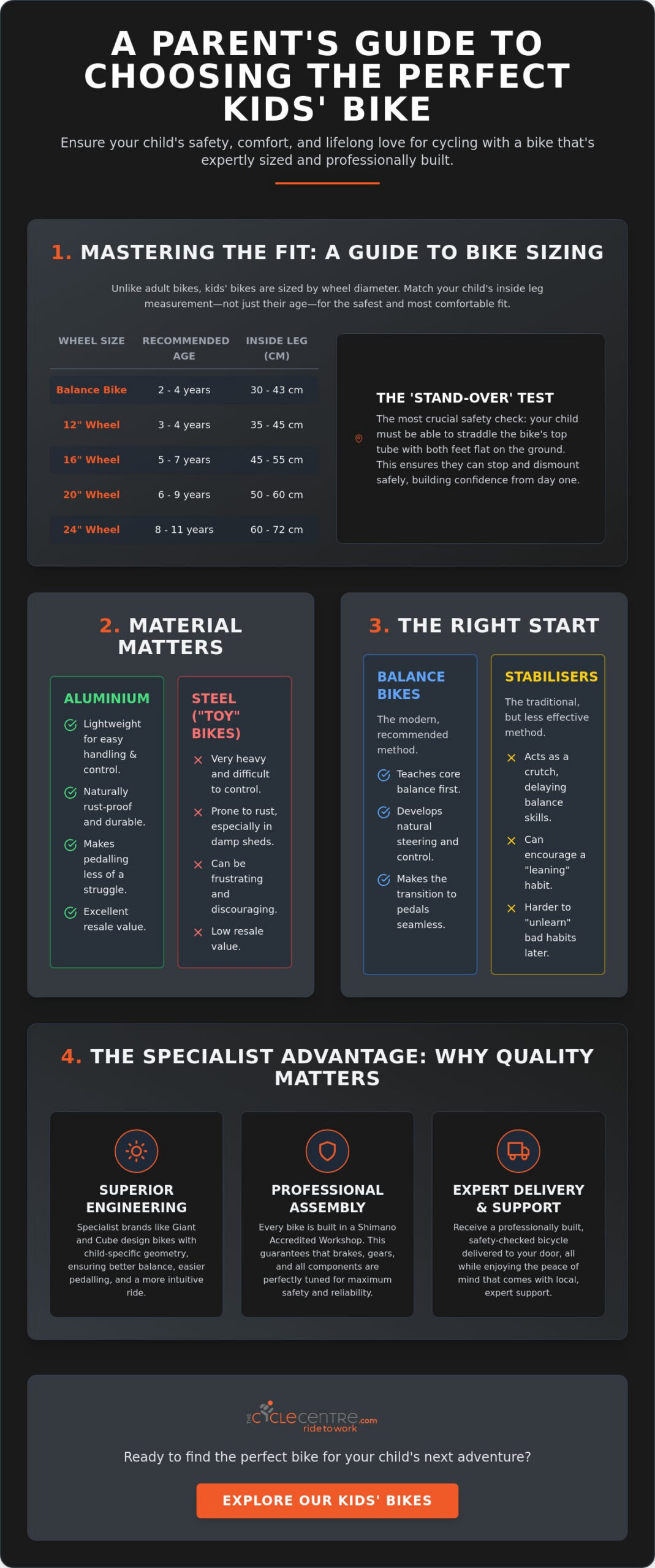
The modern approach to teaching a child to ride has shifted significantly. Balance bikes are now the preferred starting point because they focus on the most difficult skill first: core balance. By scooting along without the distraction of pedals, children learn to steer and lean naturally. If you’re choosing between a 10-inch balance bike and a 12-inch pedal bike, consider your child’s current coordination. Whilst stabilisers are still useful for older beginners who need an immediate sense of security, they can sometimes encourage a “leaning” habit that’s difficult to unlearn later. Removing pedals from a small bike can often serve as a better bridge to independent riding than adding extra wheels.
Material Matters: Why Aluminium Beats Steel for Kids
Weight is the single most important technical factor in a child’s bike. Aluminium frames offer a superior weight-to-strength ratio, allowing for a sturdy build that won’t exhaust a young rider. This is especially vital in the Irish climate. Steel frames are prone to corrosion if stored in a damp shed or ridden through puddles, whereas aluminium remains resilient against the elements. Premium brands like Cube and Giant also maintain excellent resale value. Because these bikes are built to last, you’ll often find they can be passed down through siblings or sold on once your child outgrows them. This makes the initial investment much more cost-effective in the long run and ensures a better experience for the next little cyclist in line.
Mastering the Fit: A National Guide to Kids Bike Sizing
Finding the correct fit is the most essential part of choosing a kids bicycle Dundalk parents can feel confident about. Unlike adult cycles, which are classified by frame height, children’s bikes are categorised by wheel diameter. This standard exists because wheel size directly influences the bicycle’s proportions, including the distance to the handlebars and the height of the pedals from the ground. Selecting the wrong size doesn’t just make the bike uncomfortable; it makes it technically difficult to handle. It is the geometry of the whole machine, not just the seat height, that determines how well a child can steer and balance.
We often see parents tempted to buy a size up so the child can “grow into” the bike. Whilst the intention is practical, it often results in a bike that is too heavy and unwieldy for a beginner. Safety is paramount, and a child needs to be able to straddle the bike with their feet flat on the floor to feel in control. Using a reliable guide to kids bike sizing ensures that your child begins their journey on a machine they can actually master. A bike that is too large is a safety risk that can lead to avoidable falls and a loss of confidence.
When you are looking at a kids bicycle Dundalk retailers offer, don’t rely on age alone. To get an accurate fit at home, measure your child’s inside leg. Have them stand against a wall without shoes and measure from the floor to the crotch. This figure is far more important than their birth date. Once you have the bike, perform the stand-over test. Your child should be able to stand over the top tube with a clear gap between themselves and the metalwork. If they have to tip-toe or lean the bike to stand over it, the frame is currently too large for them to ride safely.
Wheel Size by Age and Height
- 12 to 14-inch: Best for toddlers aged 2 to 4 years, typically between 85cm and 100cm tall.
- 16 to 18-inch: A transition size for children aged 4 to 6 years, or 105cm to 120cm in height.
- 20 to 24-inch: These sizes usually introduce gears and are suited for ages 7 to 11, or heights of 120cm to 145cm.
Adjustability for Longevity
A well-designed bike should adapt as your child develops. Look for models with a generous saddle height range and adjustable brake levers. Reach adjustment is particularly important; it ensures that smaller hands can safely operate the brakes without straining. Learn more in our ultimate kids bike size guide Ireland for a deeper look at these technical specifications. If you need personalised advice, our specialists can help you find the right kids bike for your child’s specific build.
Top Brands for Young Riders: Giant, Cube, and Capriolo
Selecting the right brand is the final piece of the puzzle once you’ve determined the correct size for your child. When searching for a kids bicycle Dundalk families can trust, it’s vital to look beyond the aesthetics and focus on the engineering beneath the paintwork. High-quality manufacturers design their youth ranges with the same attention to detail as their professional adult models. This ensures that the bike is not just a smaller version of an adult cycle, but a machine specifically tuned for a child’s unique centre of gravity and strength levels.
The Giant ARX range is widely regarded as the gold standard for lightweight performance. By utilising high-grade aluminium and stripping away unnecessary weight, Giant has created a bike that is exceptionally easy for a child to manoeuvre and accelerate. Similarly, Cube’s CUBIE and KID series bring German engineering to the local trail. These bikes are built to handle rugged Irish terrain, featuring robust frames and geometry that provides stability on grass, gravel, or tarmac. For parents seeking a balance of safety and affordability, Capriolo offers excellent value. They prioritise essential safety components, ensuring that even their entry-level models provide a reliable and secure riding experience.
It isn’t just about the frame; the components must be child-specific. We look for narrower grips that suit smaller palms and short-reach brake levers that allow a child to stop confidently without straining their fingers. These small technical details make a significant difference in how much control a young rider feels they have over their machine.
Gears and Brakes: When to Level Up
Simplicity is key for a first pedal bike. A single-speed setup allows a child to master the basics of balance and pedalling without the distraction of shifting. As they gain confidence and tackle steeper inclines, moving to a 7-speed system becomes beneficial. Whilst coaster brakes (pedalling backwards to stop) are common on very small bikes, we generally recommend transitioning to V-brakes early. Hand-operated brakes build the necessary coordination for future cycling. Once a child is comfortable with hand brakes, the introduction of trigger shifters allows them to explore more varied terrain with ease.
Resale Value of Premium Brands
Investing in a premium brand like Cube or Giant is a sound financial decision. These bicycles are built with high-quality bearings and durable finishes, meaning they often retain 50-60% of their original value on the second-hand market. They are designed to survive the “hand-me-down” phase, lasting through multiple siblings whilst requiring only routine maintenance. This durability ensures that your investment provides a high-quality experience for several years, rather than ending up in a scrap heap after a single season of use.
Safety First: Essential Gear and Maintenance for Ireland
Safety is the foundation of every cycling adventure. Once you’ve selected a high-quality kids bicycle Dundalk families can trust, the next step is ensuring your child is properly equipped for the road and trails. In Ireland, where light levels can change rapidly and the weather is famously unpredictable, visibility and protection are paramount. It’s about creating a safe environment where a child feels secure enough to push their boundaries whilst remaining protected from avoidable risks. Proper gear doesn’t just prevent injury; it builds the confidence a young rider needs to enjoy the experience fully.
A helmet is the single most important accessory you will ever purchase for your child. It is a non-negotiable part of the kit. However, a helmet only provides protection if it is fitted correctly. It should sit level on the head, covering the forehead, rather than being tilted back. Visibility is equally vital. Even on a bright afternoon in County Louth, grey skies and sea mists can make a small cyclist difficult for motorists to spot. Using lights and reflective gear isn’t just for night-time; it’s a daytime essential for safety. Explore our range of cycling apparel in Ireland to find high-visibility gear that keeps them visible and comfortable in all conditions.
Teaching your child the “M-Check” is a wonderful way to foster responsibility and mechanical awareness. This simple routine involves checking the bike in the shape of an “M,” starting at the front wheel, moving up to the handlebars, down to the pedals, back up to the saddle, and finally down to the rear wheel. It ensures the machine is mechanically sound before every ride. If you want to ensure your child’s bike is in peak condition, you can book a professional service with our expert technicians.
The Essential Kids Safety Checklist
- Helmet fit: Use the “two-finger” rule. There should be two fingers of space between the eyebrows and the helmet, and two fingers should fit snugly between the chin and the strap.
- Bell and reflectors: These are more than just accessories; they are vital for alerting others to your child’s presence and are often a legal requirement for road use.
- Gloves: Padded cycling gloves protect small hands during the occasional tumble and provide a barrier against the biting Irish wind chill.
Maintaining the Small Machine
Maintaining a child’s bike is slightly different from looking after an adult road bike. Tyre pressure, for instance, should be kept lower to provide more grip and a cushioned ride for lighter bodies. Because of the damp Irish climate, chain lubrication is essential to prevent rust and ensure smooth pedalling. We recommend a regular cleaning routine to keep road grit away from moving parts. As your child grows and puts more miles on the clock, booking a professional Workshop Silver or Gold Service ensures that brakes remain sharp and gears stay perfectly indexed for their next journey.
Why Choose The Cycle Centre for Your Child’s First Bike?
Selecting a first bike is a decision rooted in trust. Since our family-owned business was established in 1974, we’ve helped generations of young riders in County Louth and beyond take their first wobbling turns. We believe that a kids bicycle Dundalk families choose should be backed by decades of mechanical expertise and a genuine commitment to the local cycling community. It isn’t just about selling a product; it’s about facilitating an experience that is safe, encouraging, and built to last. Our long-standing heritage as a trusted local expert ensures that every piece of advice we offer is grounded in practical, real-world experience.
We operate a Shimano Accredited Workshop, which signals a level of technical competence that goes far beyond a standard retail store. When you purchase from us, you aren’t just getting a bike in a box. Every machine undergoes a rigorous inspection by our professional mechanics before it ever reaches your hands. Whilst many retailers offer “flat-pack” options, we prioritise your peace of mind by ensuring that every component is perfectly tuned. Whether you visit us in person or take advantage of our nationwide delivery across Ireland, your bike arrives fully assembled and ready to ride from the very first metre.
Professional Assembly vs Boxed Delivery
The dangers of “flat-pack” bikes from non-specialist retailers are often overlooked. A bicycle is a mechanical vehicle, and incorrect assembly can lead to serious safety risks. Our mechanics perform a comprehensive safety check that includes precise brake alignment, verifying bolt torque settings, and ensuring correct tyre seating. We take the technical burden off your shoulders so you can focus on the joy of watching your child ride. This professional touch ensures that the kids bicycle Dundalk parents buy from us is 100% safe and mechanically sound, preventing the frustrations of loose handlebars or rubbing brakes that often plague cheaper alternatives.
The Cycle to Work Advantage
We believe that cycling is a shared family experience. Whilst the government’s tax-incentive schemes are often associated with the daily commute, they are also a fantastic way for parents to secure high-quality gear to ride alongside their children. By saving on your own road or hybrid bike, you can invest more into your family’s weekend adventures. Our guide to the Bike to Work scheme in Ireland explains exactly how you can navigate the administrative process to maximise your savings. We invite you to browse our full range of kids’ bikes and get expert advice today to start your family’s journey on the right track.
Ready for the Next Great Adventure
Selecting the right bike is about more than just aesthetics; it’s about giving your child the tools to explore the world with confidence. By prioritising a lightweight aluminium frame and ensuring a precise fit through wheel-size measurements, you’re investing in their long-term safety and enjoyment. As a family-owned business established in 1974, we’ve seen how the right machine can transform a hesitant beginner into a lifelong enthusiast.
When you choose a kids bicycle Dundalk families have relied on for decades, you benefit from our status as an authorised dealer for premium brands like Giant and Cube. Every bike is meticulously prepared in our Shimano Accredited Workshop, ensuring it’s technically perfect before it reaches your door. Whether you’re teaching them to balance for the first time or introducing them to the world of gears, we’re here to provide the seasoned authority and support you deserve.
Shop our curated collection of Kids’ Bikes with Nationwide Delivery
Frequently Asked Questions
What size bicycle does my 5-year-old need?
A 5-year-old typically requires a 16-inch wheel bicycle, though height is the most accurate indicator for a correct fit. If your child is between 105cm and 120cm tall, this size provides the best balance of control and comfort. It’s vital to measure their inside leg to ensure they can stand over the frame safely with their feet flat on the ground.
Is it better to get a balance bike or a bike with stabilisers first?
Balance bikes are the superior modern choice for developing coordination and core stability from a young age. Whilst stabilisers offer immediate upright security, they often delay the learning process by allowing a child to lean away from turns. Starting without pedals helps a child master the art of balance before they have to worry about the complexity of pedalling.
How much should a good kids’ bike weigh?
A high-quality kids’ bike should ideally weigh less than 10kg, as heavy steel frames can be difficult for small riders to manoeuvre. When you are searching for a kids bicycle Dundalk parents can rely on, look for aluminium models like the Giant ARX series. A lighter bike builds confidence much faster than a heavy “toy” alternative that might weigh half as much as the child themselves.
Can I get a kids’ bike on the Cycle to Work scheme in Ireland?
The Cycle to Work scheme in Ireland is strictly for the employee’s own bicycle and safety equipment used for commuting to the office. It cannot be used to purchase a child’s bike directly. However, many parents use the scheme to upgrade their own gear, such as a new road or gravel bike, so they can comfortably accompany their children on family adventures.
Do kids’ bikes come fully assembled when ordered online?
Many department stores ship bikes in boxes for home assembly, but we provide a fully built and safety-checked service for every order. When you order from a specialist, our Shimano Accredited Workshop technicians perform a comprehensive check of all bolts, brakes, and bearings. This ensures your bike arrives ready for the road without the need for you to use complex tools at home.
What is the best brand for a first pedal bike?
Giant and Cube are widely considered the best brands for a first pedal bike due to their child-specific geometry and lightweight components. These manufacturers focus on details like narrower grips and short-reach brake levers. Choosing a kids bicycle Dundalk families trust, such as the Cube Acid or Giant ARX, ensures a durable machine that will maintain a high resale value.
How do I know if my child is ready for a bike with gears?
A child is usually ready for gears once they can confidently operate hand brakes and maintain balance whilst looking at the road ahead. This transition typically happens around age 7 or 8 when moving to a 20-inch or 24-inch wheel bike. Introducing gears too early can be distracting, so it’s best to wait until they have mastered the basics of steering and stopping.
Should I buy a bike for my child to grow into?
You should never buy a bike for a child to “grow into” because a frame that is too large is a significant safety hazard. A child needs to be able to reach the ground comfortably whilst seated or standing over the frame to feel in control. A bike that fits perfectly today will be much safer and more enjoyable, whereas a bike that is too big can lead to a loss of confidence.