
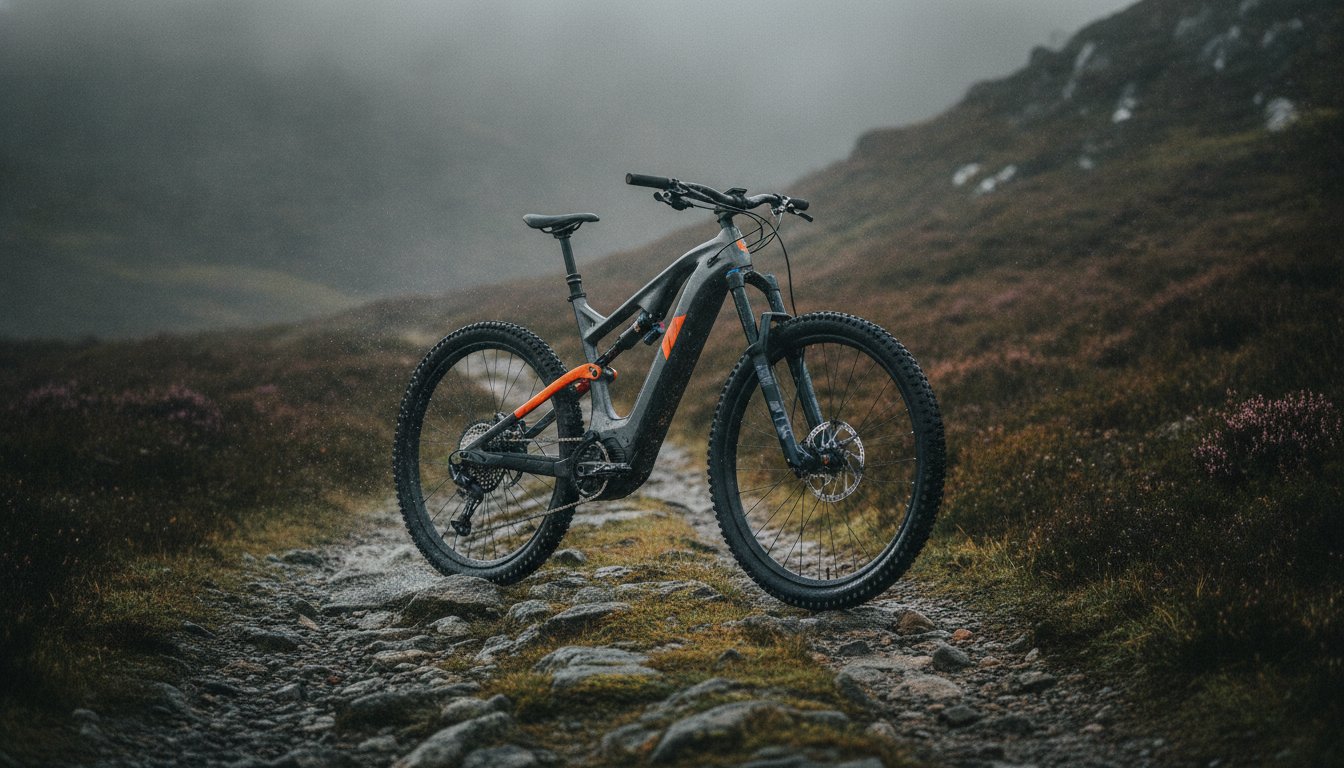
What if the most important component of your next bike isn’t the frame material, but the weather-sealing on its motor? Tackling the rugged, often sodden trails of the Irish countryside is a thrill, but it’s also a serious test for any piece of machinery. You’ve likely felt that nagging worry about whether a Bosch or Shimano system can truly handle a muddy Sunday, or if your battery will give up the ghost whilst you’re miles from home. When researching Electric Mountain Bikes Ireland, it’s easy to feel overwhelmed by technical jargon and the fear of making an expensive mistake in such a demanding climate.
This guide will demystify the technical specs and show you how to select, maintain, and finance your ideal ride for 2026. We’ll help you confidently choose between hardtail and full-suspension setups, explain the critical difference between various motor torques, and provide a clear path to maximising your tax savings. By the end, you’ll understand how to access the €1,500 Cycle to Work threshold and keep your motor running smoothly through every Atlantic downpour. Whether you’re a seasoned rider or a curious newcomer, our goal is to move you from a state of uncertainty to one of informed confidence.
Key Takeaways
- Understand how Ireland’s unique topography and rugged trails make modern pedal-assist systems the ultimate tool for extending your off-road adventures.
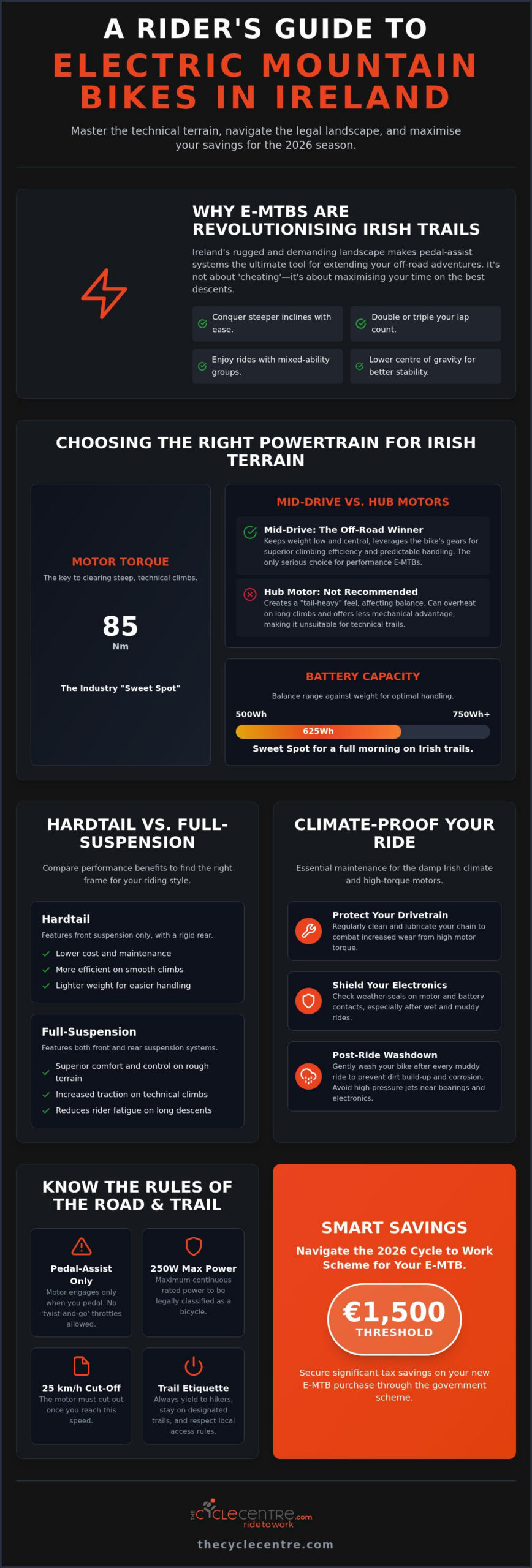
- Identify why mid-drive motors and 85Nm torque ratings are the gold standard for Electric Mountain Bikes Ireland when tackling steep, technical ascents.
- Compare the performance benefits and cost-to-performance ratios of hardtail versus full-suspension designs to find the right frame for your riding style.
- Master essential maintenance techniques to protect your drivetrain and electronics from the increased stress of motor torque and the damp Irish climate.
- Navigate the 2026 Cycle to Work scheme to secure significant tax savings on your E-MTB purchase through the €1,500 government threshold.
The Evolution of Electric Mountain Bikes in Ireland
The modern E-MTB is far more than a bicycle with a motor bolted on. It represents a sophisticated integration of electric bicycle technology designed specifically to handle the rigours of off-road terrain. For those exploring Electric Mountain Bikes Ireland, it is vital to understand that these machines use a pedal-assist system, meaning the motor only provides power whilst you are actively pedalling. This preserves the authentic feel of mountain biking whilst allowing you to tackle steeper inclines and longer distances. In Ireland, a legal E-MTB is classified as a pedal-assist cycle with a motor that cuts out once you reach 25km/h.
Why E-MTBs are Revolutionising Irish Trail Riding
Ireland’s landscape is beautiful but notoriously demanding. Steep, technical climbs at trail centres like Ticknock or Ballyhoura can often leave riders exhausted before they even reach the best descents. Electric Mountain Bikes Ireland provide a logical solution to this physical barrier. By smoothing out the gradients, these bikes allow you to double or even triple your lap count in a single session. It isn’t about “cheating”; it’s about heart-rate management and maximising your time on the trails. This technology also levels the playing field for mixed-ability groups, ensuring friends with different fitness levels can enjoy the same trails together without anyone feeling left behind. Additionally, the added weight of the motor and battery lowers the bike’s centre of gravity, providing a more stable and planted feel when descending through rocky sections.
Legal Requirements for E-MTBs on Irish Roads and Trails
Understanding the legal framework is essential for any rider. To remain exempt from tax, insurance, and licensing requirements under the Road Traffic and Roads Act 2023, your E-MTB must have a maximum continuous rated power of 250W. If a bike features a “twist-and-go” throttle that works without pedalling, it’s often classified as an e-moped, which carries entirely different legal obligations. When exploring national parks or Coillte-managed forests, trail etiquette remains paramount. E-MTB riders should always:
- Yield to hikers and non-motorised trail users to maintain a positive community spirit.
- Stay on designated trails to prevent soil erosion and protect the local environment.
- Respect local access rules, as some sensitive areas may have specific restrictions for motorised assists.
By adhering to these standards, we ensure that the growing community of E-MTB enthusiasts remains welcome amongst all outdoor user groups. This proactive approach helps maintain trail access for everyone whilst enjoying the freedom that electric assistance provides.
Choosing the Right Motor and Battery for Irish Terrain
The motor is the heart of any E-MTB, and for the technical trails found across the island, not all systems are created equal. When browsing Electric Mountain Bikes Ireland, you’ll find that premium brands like Giant and Cube almost exclusively utilise mid-drive motors from Bosch, Shimano, or Yamaha. The most critical metric to watch is torque, measured in Newton-metres (Nm). For the steep, often slippery ascents of the Galtees or the Wicklow Mountains, 85Nm has become the industry “sweet spot.” This level of torque provides the grunt needed to clear technical root sections without the motor stalling, even when your cadence drops on a sudden incline.
Mid-Drive vs Hub Motors: Which Wins Off-Road?
Performance mountain biking requires precise balance and predictable handling. Mid-drive motors are positioned at the bike’s crank, which keeps the centre-of-gravity low and central between the wheels. This is vital for stability when you’re navigating tight switchbacks or dropping into technical descents. Unlike hub motors, which sit in the rear wheel and can make the bike feel “tail-heavy,” mid-drives leverage the bike’s own drivetrain. By shifting through your gears, you allow the motor to operate at its most efficient RPM. This mechanical advantage makes mid-drives the only serious choice for climbing, as they won’t overheat on long, slow grinds like a hub motor might.
Battery Management and Cold Weather Performance
Battery capacity in 2026 typically ranges from 500Wh to 750Wh. Whilst a larger battery offers more range, it also adds weight, which can affect how nimble the bike feels. For most Irish trail centres, a 625Wh battery provides an excellent balance for a full morning of riding. However, keep in mind that Irish conditions are notorious “range killers.” Strong Atlantic head-winds and significant elevation gain will drain power far faster than a flat road commute. If you are budgeting for a high-capacity system, it’s helpful to review the official Cycle to Work Scheme rules to see how the €1,500 e-bike limit can be applied to your investment.
Cold weather also plays a significant role in performance. Lithium-ion batteries can lose up to 20% of their effective range when temperatures drop below 5°C. To prolong your battery’s lifespan, follow the “20-80%” charging rule and avoid storing your bike in a freezing shed during the winter months. Bringing the battery indoors to charge at room temperature ensures the cells remain healthy. For those planning epic, all-day adventures across the Wild Atlantic Way, many modern frames now support “Range Extenders” — secondary batteries that fit into a standard bottle cage. If you’re feeling overwhelmed by the technical specs, our Smart-bike Search can help you filter models by motor type and battery capacity to find your perfect match.
Hardtail vs Full Suspension E-MTBs: Finding Your Flow
The debate between hardtail and full suspension has shifted significantly with the arrival of high-performance Electric Mountain Bikes Ireland. In the past, riders often chose hardtails to ensure better climbing efficiency and to save weight. However, the presence of a mid-drive motor effectively neutralises the weight penalty of a rear shock and its associated linkage. This means your choice now depends more on the specific trails you intend to ride and your long-term maintenance preferences rather than just pure pedalling efficiency. Frame design determines how the bike manages the rough Irish terrain, and choosing the right one is the first step toward a more enjoyable ride.
The Case for Hardtail E-MTBs
A hardtail E-MTB features a front suspension fork but a rigid rear frame. This design offers a direct power transfer that feels incredibly responsive on groomed fire roads and established forest paths. Because there are no rear pivots or bearings to worry about, maintenance is simpler and far more affordable. This is a vital consideration given the grit and mud common in the Irish climate, which can quickly wear down moving parts. For riders who mostly enjoy cross-country (XC) routes or use their bike for a mix of commuting and weekend forest loops, a hardtail provides an excellent cost-to-performance ratio. It’s often the most accessible entry point for those looking to stay within the official Revenue guidelines for tax-free purchases whilst still securing a premium motor system.
Why Full Suspension E-MTBs Dominate Technical Trails
When you move into technical trail centres filled with wet roots and slippery rocks, full suspension becomes a game-changer. By providing 140mm to 160mm of travel at both ends, these bikes keep your tyres in contact with the ground more consistently. This increased traction is essential for maintaining control on the unpredictable surfaces found in the Wicklow or Slieve Bloom mountains. Beyond just grip, rear suspension significantly reduces rider fatigue. The bike absorbs the chatter of the trail, allowing you to stay in the saddle longer without feeling physically drained by the terrain. Whilst the initial investment and the need for periodic servicing of pivot bearings are higher, the confidence gained on technical descents is often worth the extra effort. For the majority of Irish riders who want a versatile machine that can handle everything from rocky enduro lines to casual forest tracks, a 150mm full-suspension E-MTB is the definitive choice.
Essential Maintenance for E-MTBs in the Irish Climate
Owning one of the premium Electric Mountain Bikes Ireland offers is an investment in your outdoor lifestyle, but the damp, gritty conditions of our local trails demand a specific care routine. Unlike a traditional bicycle, an E-MTB drivetrain is subjected to massive mechanical stress. The motor’s torque pulls the chain with significantly more force than human legs alone, which can lead to rapid wear on cassettes and chainrings if left unchecked. We recommend measuring your chain for stretch every few hundred kilometres to prevent a costly replacement of the entire drivetrain. It is a simple check that can save you hundreds of Euros over the life of the bike.
A clean bike is a fast bike, but you must be careful with the hose. Whilst modern motors from Bosch, Shimano, and Yamaha are well-sealed, they are not designed to withstand high-pressure washers. Blasting water directly into motor housings or pivot bearings can force moisture past the seals, leading to internal corrosion and electrical faults. Instead, use a low-pressure garden hose and a soft brush to remove Irish mud. This methodical approach ensures your electronics remain dry whilst your frame stays pristine.
Protecting Electronics from Irish Rain and Mud
Rain is a constant companion for Irish riders. After a sodden session, always dry the charge port and battery contacts with a clean, lint-free cloth before plugging in the charger. Mud and grit act like sandpaper on your bike’s moving parts, so choosing the right lubricant is vital. During the wetter months, a thick “wet” lube is essential as it won’t wash away in the first puddle. Don’t forget to inspect your bearing seals; if you hear a “crunchy” sound from your frame pivots after a muddy winter ride, it is a clear signal that grit has bypassed the external protection.
Professional Servicing: Silver vs Gold Packages
In 2026, maintaining your E-MTB is as much about software as it is about hardware. A professional service at a Shimano accredited workshop includes a full motor diagnostic and firmware check. These updates can improve battery management and refine the power delivery of your motor, ensuring you get the most out of every charge. Regular professional care is the best way to catch small issues before they become trail-side failures.
- Workshop Silver Service: This is ideal for a mid-season tune-up to ensure your gears and brakes are crisp and your firmware is up to date.
- Workshop Gold Service: A comprehensive deep-clean and strip-down. This is essential for preserving your bike’s resale value and ensuring long-term motor health.
If you notice unusual vibrations, error codes on your display, or a sudden drop in battery performance, do not wait for a total failure. Book your Workshop Gold Service today to ensure your ride is ready for the next weekend adventure.
Navigating the Cycle to Work Scheme for Your E-MTB
The decision to invest in Electric Mountain Bikes Ireland is often made easier once you understand the financial support available through the state. In 2026, the Cycle to Work scheme remains the most effective way to purchase a premium off-road machine whilst reducing your overall tax liability. For standard electric bicycles, the tax-free threshold is capped at €1,500. This allowance is designed to cover the cost of the bike and essential safety equipment. Because the purchase is handled via a salary sacrifice arrangement, you don’t pay Income Tax, PRSI, or USC on the amount used for the bike. It’s a logical solution for those looking to upgrade their equipment without the full upfront cost.
Maximising Savings on Performance Electric Bikes
The actual cost of your E-MTB is significantly lower than the sticker price when you factor in these tax reliefs. For a higher-rate taxpayer in the 40% bracket, the total savings can reach up to 52% of the purchase price. This means a €1,500 e-bike effectively costs you approximately €720. Even for those in the 20% tax bracket, the savings remain substantial, bringing the effective cost down to around €975. This financial bridge makes premium brands like Giant and Cube much more accessible for the average rider. To explore the full details of this process, read The Ultimate Guide to the Bike to Work Scheme Ireland 2026. It provides a step-by-step breakdown of how to coordinate with your employer’s payroll department.
Why Choose an Independent Specialist for Your E-MTB?
Purchasing through a specialist like The Cycle Centre offers advantages that big-box retailers simply cannot match. We’ve been a constant presence in the industry since 1974, and that 50-year heritage means we understand which frame geometries and motor specs actually work for Irish conditions. At The Cycle Centre, every Electric Mountain Bikes Ireland purchase includes professional assembly by our Shimano accredited technicians. This ensures your motor firmware is updated and your suspension is tuned to your specific rider weight before you ever hit the trail. Use our Smart-bike Search tool to filter through our stock by motor type or battery capacity. Once you’ve found your ideal model, you can request a no-obligation quote directly from our website to start your application process.
Ready to Conquer the Irish Trails?
Choosing the right machine is the first step toward a transformative riding experience. By prioritising mid-drive motors and understanding the nuances of Irish-weather maintenance, you’re setting yourself up for years of reliable adventure. Remember that the Cycle to Work scheme offers a powerful financial incentive to invest in quality engineering from the start. As an independent family business since 1974, we’ve seen technology evolve into the high-performance Electric Mountain Bikes Ireland riders enjoy today. We’re proud to be a Shimano Accredited Workshop, ensuring your bike receives the precision care it deserves.
Whether you’re eyeing a robust Giant, a versatile Cube, or a reliable Romet, we’re here to facilitate your journey from the shop floor to the summit. Our team is dedicated to providing the expert guidance you need to find your flow on the trails. Don’t let technical details hold you back from the freedom of the outdoors. Explore our range of premium Electric Mountain Bikes and get a no-obligation quote today. We look forward to helping you discover your next great adventure amongst the hills.
Frequently Asked Questions
How much can I save on an electric mountain bike with the Cycle to Work scheme?
You can save up to 52% on the cost of an electric bike through the government scheme. For 2026, the tax-free threshold for e-bikes is set at €1,500. A higher-rate taxpayer can save approximately €780 on this amount, whilst a standard-rate taxpayer saves around €375. These savings are achieved via salary sacrifice, meaning you don’t pay Income Tax, PRSI, or USC on the purchase price. It is the most cost-effective way to buy Electric Mountain Bikes Ireland.
What is the average range of an E-MTB on Irish trails?
Most modern systems with a 625Wh battery offer a range between 40km and 80km on technical trails. However, your actual mileage depends on several local factors. Steep climbs in the Wicklow Mountains or strong Atlantic head-winds will drain power significantly faster than a flat road commute. To maximise your range, we recommend using lower assist modes on flat sections and saving the high-torque settings for the most challenging technical ascents.
Do I need a licence or insurance for an electric mountain bike in Ireland?
No licence, tax, or insurance is required if your bike meets the legal “pedelec” criteria. Under the Road Traffic and Roads Act 2023, the motor must have a maximum continuous rated power of 250W and the assistance must cut off at 25km/h. If your bike exceeds these limits or has a functional throttle that works without pedalling, it is classified as an e-moped. This requires registration, a Category AM licence, and valid insurance.
Can I ride my E-MTB in the rain and through deep puddles?
Yes, premium E-MTBs are designed to handle the wet Irish climate. Motors and battery compartments are well-sealed against rain and trail splashes. However, you should avoid submerging the motor in deep water for extended periods. After a sodden ride, always dry the charge ports and battery contacts with a clean cloth. Crucially, never use a high-pressure power washer on your bike, as this can force moisture past the protective seals and damage internal electronics.
How often does an electric mountain bike motor need servicing?
We recommend a professional motor diagnostic and firmware check at least once a year. Whilst the internal gears are designed for longevity, the high torque of an E-MTB puts extra stress on the external drivetrain. Bringing your bike to a Shimano accredited workshop ensures your system is updated and any potential issues are caught early. Regular servicing is vital for maintaining the manufacturer’s warranty and preserving the long-term health of your motor and battery.
Is a hardtail or full suspension E-MTB better for a beginner?
Full suspension is generally better for beginners because it provides significantly more traction and stability. The rear shock helps keep the tyre in contact with the ground on bumpy Irish trails, which builds confidence on technical descents. Whilst a hardtail is simpler to maintain and often fits better within Cycle to Work budgets, the added comfort and control of a full-suspension bike allow new riders to explore more challenging terrain with much less physical fatigue.
What happens if my E-MTB battery runs out mid-ride?
If your battery dies, your E-MTB functions exactly like a traditional bicycle. You can still pedal home, though you will notice the extra weight of the motor and battery, especially on hills. Most modern displays provide a clear percentage countdown to help you manage your power. It is a good habit to switch to a lower assist mode if you notice your battery dropping below 20% to ensure you have enough power for the final climb.
How long does a typical E-MTB battery last before it needs replacing?
A high-quality lithium-ion battery typically lasts between 500 and 1,000 full charge cycles before its capacity significantly degrades. For most riders, this equates to roughly three to five years of regular use. You can prolong this lifespan by following the 20-80% charging rule and storing the battery at room temperature during the winter months. Once the capacity drops below 60%, you might consider a replacement to maintain your full trail range for Electric Mountain Bikes Ireland.