

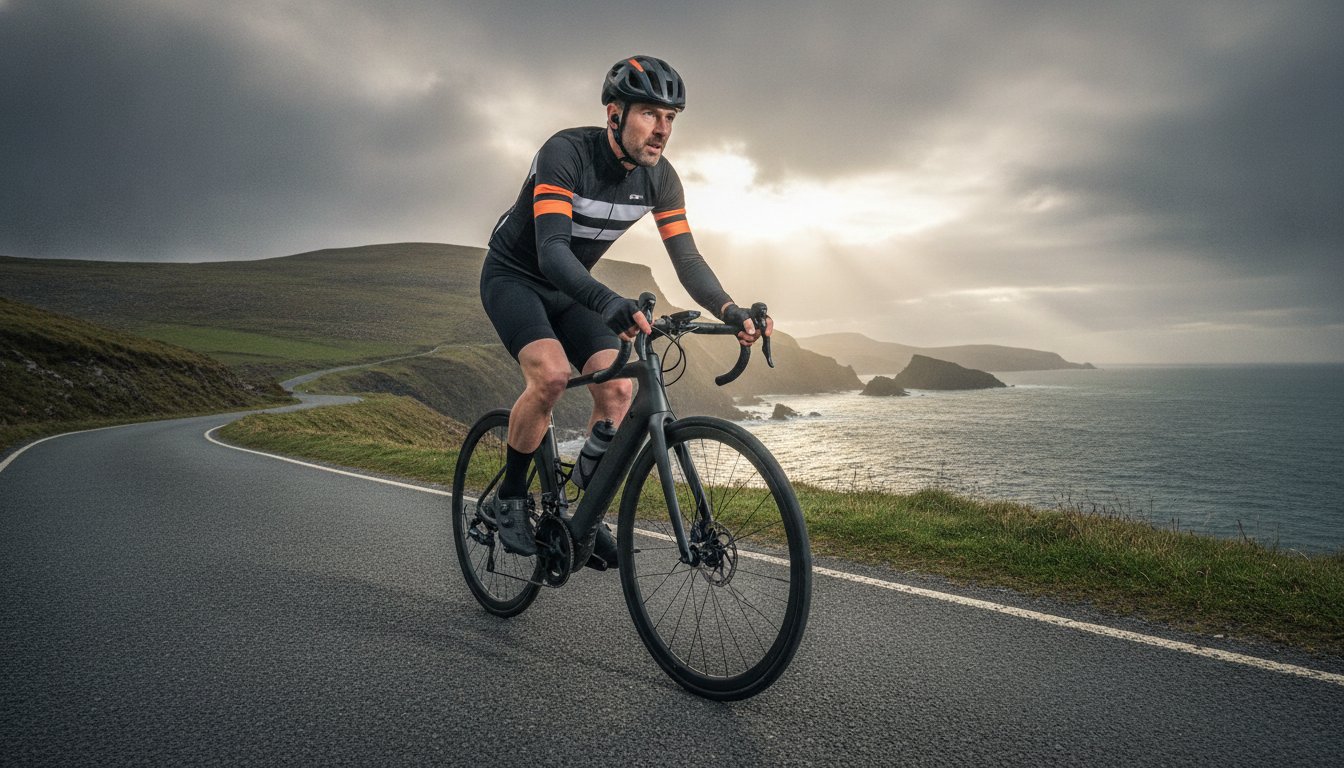
Imagine you’re halfway up a coastal climb when that familiar, relentless Atlantic headwind begins to push back, making every pedal stroke feel like a battle against the elements. It’s a scenario many of us face on the weekend sportive, where the joy of the ride is often overshadowed by the struggle to keep pace with the lead group. Finding the right electric road bike Ireland riders can rely on isn’t about replacing your effort; it’s about augmenting it so those steep gradients feel like flat roads. We understand that for a seasoned cyclist, the thought of going electric can feel like a compromise on the traditional road experience you love.
You’ll discover how to select a high-performance machine that maintains a natural feel whilst providing the power to conquer the toughest Irish hills. This guide explores the latest lightweight motor systems, range-extending batteries, and the essential details of the 2026 Cycle to Work scheme. We’ll show you how to maximise your budget with the €1,500 limit for electric bikes, ensuring your next endurance ride is defined by the scenery rather than the struggle.
Key Takeaways
- Understand the shift towards lightweight, aerodynamic designs that provide discrete assistance while preserving the classic road bike aesthetic.
- Discover how to identify the ideal electric road bike Ireland conditions require, ensuring your motor and battery setup can handle the most demanding coastal routes.
- Learn why endurance geometry and specific tyre clearance are essential for comfort and stability on Irish chip-seal roads.
- Navigate the 2026 Cycle to Work scheme rules to maximise your savings on premium models with the updated €1,500 limit.
- Recognise the value of professional, accredited maintenance packages to keep your e-road motor and components performing at their peak.
The Evolution of Electric Road Bikes in Ireland: Performance Meets Power
The modern electric road bike Ireland cyclists are seeing on the roads today is a far cry from the bulky, utility-focused machines of the past. In 2026, the technology has reached a point where integration is seamless, with retailers such as Sherwood E-Bikes Ltd. providing the high-performance models that enthusiasts and commuters now demand. These are lightweight, aerodynamic machines designed for the enthusiast who wants to maintain a high-performance lifestyle without the fear of being left behind. We’ve seen a massive shift in the national cycling community. Riders aren’t just looking for a way to get to work; they’re looking for a tool that allows them to stay in the pack during demanding club rides or to tackle the Wicklow Mountains with renewed confidence.
Flattening the Irish Landscape
The primary appeal of modern electric bicycle technology in an Irish context is its ability to neutralise our unique environmental hurdles. Whether it’s a relentless coastal headwind or a 15% gradient, the electric assist provides a smooth, progressive boost. On group rides, the 25km/h assist limit is particularly effective. It kicks in when the pace slows on a climb, ensuring you don’t get dropped, but cuts out naturally once the group hits cruising speed on the flat. This democratises the sport, allowing riders of different fitness levels to share the same road. You can conquer those ‘unclimbable’ hills without sacrificing the thrill of the descent.
E-Road vs. Traditional Road Bikes
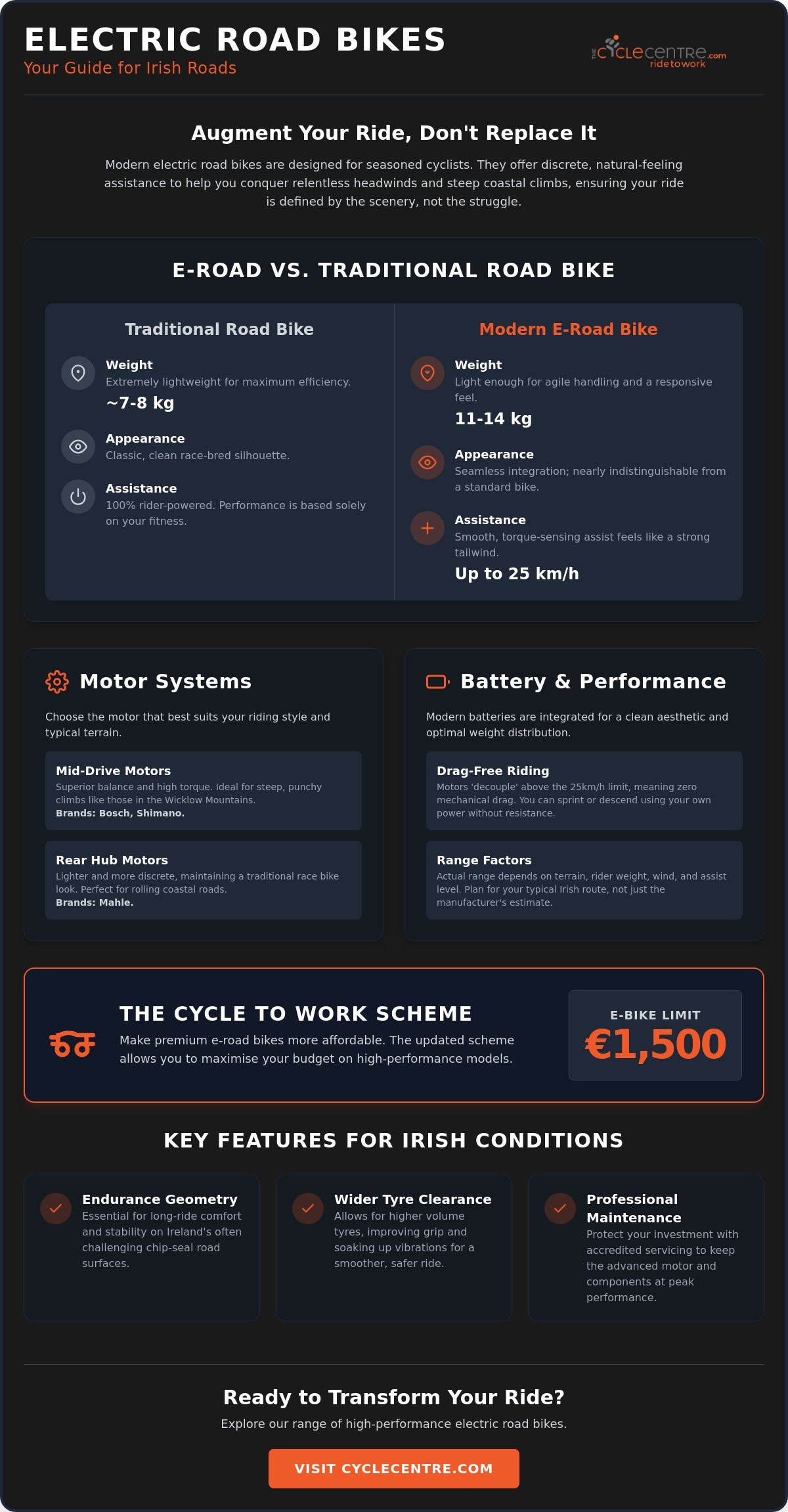
Visually, 2026 models are nearly indistinguishable from high-end road performance bicycles. Manufacturers have mastered the art of hiding batteries within the downtube and miniaturising motors. The weight penalty has also plummeted. While a standard carbon road bike might sit around 7kg or 8kg, the performance e-road sweet spot is now between 11kg and 14kg. This weight is low enough that the bike still feels agile and responsive when you’re out of the saddle. It’s a balance that provides enough heft for stability in crosswinds but stays light enough for easy handling.
The “real bike” feel is perhaps the most significant advancement for the purist. Modern torque sensors measure your input hundreds of times per second, ensuring the motor mirrors your natural pedalling behaviour. You won’t feel a sudden surge of power; instead, it feels like you’re simply having a very strong day on the bike. It’s about preserving the soul of cycling whilst removing the barriers that might otherwise keep you at home. By choosing an electric road bike Ireland riders can enjoy the freedom of the open road with the confidence that they’ll always make it back home, regardless of the terrain.
Understanding E-Road Technology: Motors, Batteries, and Range
Choosing an electric road bike Ireland riders can truly rely on requires a solid grasp of the internal technology. It isn’t just about the frame’s aesthetics; the motor placement and battery capacity dictate how the bike behaves on our varied terrain. Mid-drive motors, positioned at the bottom bracket, offer superior balance and high torque, making them ideal for the steep, punchy climbs found in the Wicklow Mountains. In contrast, rear hub motors are often lighter and allow the bike to maintain a traditional racing silhouette, which is perfect for those who want a discrete boost on rolling coastal roads.
Motor Systems: Bosch, Shimano, and Mahle
Shimano Steps systems are a favourite for riders who value seamless integration, especially if you’re already accustomed to Di2 electronic shifting. The Mahle X20 system is currently the go-to choice for the purest road bike silhouette; it’s so discrete that most observers won’t even realise you’re receiving assistance. For those who frequently tackle the steepest gradients in the West of Ireland, the Bosch Performance Line provides maximum torque. This ensures you never stall on a 20% incline, providing a steady, reassuring push when your legs need it most.
Battery integration has also seen massive leaps. Most 2026 models feature fixed downtube batteries to keep the weight as low as possible, though some brands offer removable options for those who can’t bring their bike inside to a charging point. For cyclists who are also part of the broader electric vehicle community, Charging Shop provides the high-performance wallboxes and hardware needed for efficient home charging. A critical technical feature to look for is the ‘decoupling’ effect. This ensures that once you exceed the legal 25km/h assist limit, the motor disengages completely. You won’t feel any mechanical drag, allowing you to descend or sprint on the flat using your own power without resistance.
Calculating Your Range on Irish Terrain
Range is rarely a fixed number. Significant elevation gain amongst the Irish mountains will drain battery life much faster than a flat loop around the Curragh. It’s also worth noting that colder Irish winters can temporarily reduce lithium-ion battery efficiency by up to 20%. To maximise your distance, we recommend active cadence management. Keeping your pedalling between 70 and 90 RPM keeps the motor in its most efficient power band, extending your range on long weekend sportives.
Making sense of these technical specs is easier when you consider the financial incentives available. Many of our customers use the Cycle to Work Scheme to help fund their purchase, utilising the specific €1,500 limit for electric bikes to secure a premium motor system. If you want to see how these different systems feel on the road, you can browse our latest range and speak with our expert team about which setup matches your favourite routes.
Choosing the Right Electric Road Bike for Irish Roads
Irish roads are notoriously demanding. Between the coarse chip-seal surfaces of our rural boreens and the unpredictable weather, your choice of bike geometry and components will define your riding experience. Selecting an electric road bike Ireland riders can truly enjoy means looking beyond the motor and focusing on how the frame interacts with the terrain. Whilst a pure racing geometry might look fast, it can be punishing over a four-hour ride in the wind. For most of us, prioritising stability and comfort is the most logical path to a successful purchase.
Disc brakes have become a non-negotiable feature for any serious road cyclist in this country. They provide consistent, reliable stopping power in the wet, which is essential when navigating a greasy descent in the rain. Similarly, tyre clearance is a vital consideration. We recommend looking for a frame that can accommodate 28mm to 32mm tyres. These larger volumes allow you to run lower pressures, which significantly improves grip and absorbs the high-frequency vibrations caused by rough Irish tarmac. This small technical detail can be the difference between a smooth journey and a bone-shaking ordeal.
Endurance Focus: Comfort for the Long Haul
It’s no surprise that endurance road bikes in Ireland are the preferred choice for those moving to electric assistance. These bikes feature a slightly more upright posture, reducing the strain on your lower back and neck during long weekend sportives. Many 2026 models include advanced vibration-dampening materials in the fork and seatpost to further enhance comfort. Don’t forget to check for integrated mudguard mounts. Even on a high-performance electric road bike Ireland weather often demands protection from road spray if you plan on riding year-round. Utilising the Cycle to Work Scheme can often help bridge the price gap to a carbon fibre frame, which offers superior natural dampening compared to alloy alternatives.
The E-Gravel Hybrid Option
The rise of the Irish greenway network has sparked a massive interest in gravel and adventure bikes with electric motors. These machines offer incredible versatility, allowing you to transition from smooth asphalt to canal paths or light forest trails without hesitation. When you’re comparing adventure bikes vs gravel bikes in Ireland for an e-assisted setup, consider your typical route. An adventure-focused e-bike usually offers more mounting points for bags, making it the ideal partner for overnight trips or long-distance touring where the motor helps offset the weight of your gear. For those who want to take their electric riding completely off-road, our guide to choosing the right electric mountain bike Ireland trails demand is an excellent next step.
The Cycle to Work Scheme: Making Premium E-Road Bikes Affordable
Investing in a high-performance electric road bike Ireland enthusiasts often seek out can feel like a significant financial commitment. However, the Irish government provides a powerful incentive that makes these advanced machines far more accessible than they might first appear. The bike to work scheme in Ireland is specifically designed to encourage a shift towards sustainable transport, and it offers distinct advantages for those choosing electric assistance. Unlike standard pedal cycles, which have a tax-free limit of €1,250, the threshold for electric bikes is set at €1,500. This increased limit reflects the higher cost of the integrated motor and battery technology we’ve discussed in previous sections.
The scheme operates through a salary sacrifice arrangement between you and your employer. Essentially, your company pays for the bike upfront, and you repay the cost from your gross salary over a period of up to twelve months. Because these deductions happen before tax is applied, you don’t pay Income Tax, PRSI, or USC on that portion of your earnings. This can lead to a real-world saving of up to 52% on the retail price for those in the higher tax bracket. It’s a logical way to secure a premium road bike whilst keeping your monthly outgoings manageable.
Maximising Your Savings
When you’re calculating your potential savings, don’t forget that the €1,500 limit includes both the bike and essential safety equipment. You can bundle high-quality cycling helmets and apparel into your application, ensuring you’re fully equipped for the road without any additional out-of-pocket expense. If you’ve used the scheme before, it’s worth checking your eligibility; employees can now avail of the benefit every four years. If your last purchase was in 2022, you’re eligible to upgrade to a modern e-road model as of January 1, 2026.
Employer Logistics and Paperwork
Getting started is a straightforward process, but it does require some basic coordination with your HR department. Most Irish employers are well-versed in the ‘Ride to Work’ proposal, as it costs the company nothing and actually saves them money on employer PRSI contributions. We’ve developed a streamlined online quote system to help facilitate these national applications. You simply select your desired electric road bike Ireland model, add your accessories, and we’ll provide a formal quote for your employer to approve.
Once the salary sacrifice period ends, the bike is yours. However, protecting that investment is vital. We recommend factoring in a professional maintenance schedule from the start to keep your motor and drivetrain in peak condition. You can request a Cycle to Work quote today and take the first step towards a more effortless, high-performance ride.
Expert Maintenance: Protecting Your E-Road Investment
Owning a high-performance electric road bike Ireland riders choose for endurance is an investment in your future fitness and freedom. It requires specialist care to ensure that the sophisticated integration of motor, battery, and drivetrain continues to perform as it did on day one. Standard mechanical skills aren’t enough when dealing with integrated motor systems and complex internal wiring. To maintain the longevity of your machine, you need a technical partner who understands the specific stresses that electric assistance places on components like chains and cassettes.
Shimano accredited workshops are vital for this process. These centres have the specific training and authorised tools required to interface with your bike’s onboard computer. During a standard service, we don’t just look at the brakes and gears. We perform full diagnostic checks on your Bosch or Shimano motor to ensure everything is functioning within factory parameters. Our Workshop Silver Service provides a comprehensive mechanical tune-up, whilst the Gold Service adds a deep drivetrain clean and detailed electrical system analysis. This preventative approach stops minor sensor issues from becoming expensive repairs.
Software updates are a frequently overlooked aspect of e-bike ownership. Manufacturers regularly release firmware that improves battery efficiency and refines how the motor delivers power. Keeping your system updated ensures you’re always getting the best possible range and a more natural pedalling feel. Additionally, battery health checks are essential. We provide data-driven insights into your power cell’s charge cycles and capacity. To prolong the life of your battery, we recommend storing it in a dry, room-temperature environment and avoiding leaving it at 0% or 100% charge for extended periods.
Specialist E-Bike Servicing
Diagnostic testing for Bosch, Shimano, Yamaha, and Bafang systems allows us to pinpoint electrical faults that aren’t visible to the naked eye. A high end road bike service in Ireland requires specific e-bike tools to manage the increased torque of mid-drive motors. This torque means your chainring and chain will wear faster than on a traditional bike. Regular inspections allow us to replace these parts before they damage your expensive motor drive unit. The same motor expertise that applies to road systems is equally relevant if you’re considering an electric mountain bike Ireland riders use on more demanding off-road terrain, where drivetrain wear is even more pronounced.
The Cycle Centre Guarantee
We leverage over 50 years of independent bike shop expertise to support our community. This heritage means we’ve seen every technological shift in the industry and have modernised our workshop to meet the demands of 2026 technology. Whether you bought your bike in-store or through our online centre, we provide national support to keep you on the road. Our team is proactive and solution-oriented, ensuring your electric road bike Ireland experience remains trouble-free.
Browse our full range of Electric Road Bikes and get a quote today!
Ready to Transform Your Irish Cycling Experience?
Modern cycling is about removing barriers and rediscovering the thrill of the open road. Whether you’re looking to neutralise a coastal headwind or keep pace with a faster club group, the right electric road bike Ireland provides offers the perfect balance of performance and assistance. By choosing a machine with discrete motor integration and endurance geometry, you ensure that every mile remains as rewarding as a traditional ride. You now have the knowledge to flatten the steepest hills whilst maintaining the natural feel of a high-performance bicycle.
As an approved Cycle to Work provider, we’re here to help you navigate the 2026 scheme limits and secure the best value for your investment. Our family-owned business has been a constant presence in the Irish cycling community since 1974, offering national delivery and the peace of mind that comes with a Shimano Accredited Workshop. We don’t just sell bikes; we facilitate the adventures that define your weekends. Explore our 2026 Electric Road Bike Collection today and see how we can help you conquer the steepest gradients with confidence. We look forward to seeing you out on the road.
Frequently Asked Questions
Is an electric road bike considered a motor vehicle under Irish law?
No, a compliant electric bike is treated as a standard bicycle under the Road Traffic and Roads Act 2023. To qualify, the motor must have a maximum continuous rated power of 250 watts and the assistance must cut off once you reach 25 km/h. You don’t need a license, insurance, or road tax to ride one, provided you’re at least 16 years old.
How much does an electric road bike weigh compared to a standard road bike?
Modern performance models generally weigh between 11kg and 14kg. Whilst a traditional carbon road bike might sit around 8kg, the 3kg to 5kg difference is becoming less noticeable as motor integration improves. This slight weight increase is easily offset by the motor’s power on climbs; the bike remains agile enough for sharp handling on technical descents.
Can I ride an electric road bike in the rain and through Irish puddles?
Yes, these bikes are specifically designed to handle wet conditions and road spray. The motors and battery compartments are sealed to protect the internal electronics from moisture. While they’re perfectly safe for riding through a typical Irish downpour, you should avoid submerging the motor in deep water or using a high-pressure power washer directly on the electrical components.
What is the typical battery range for an E-road bike on hilly Irish terrain?
Most riders can expect a range between 60km and 100km depending on the assistance level used. Hilly routes amongst the Gap of Dunloe or the Wicklow Mountains will naturally consume more power than flat coastal loops. Choosing an electric road bike Ireland conditions demand often means prioritising a system with efficient energy management to ensure you have enough support for the final climb home.
Do I still get a good workout when riding an electric road bike?
You definitely still get a workout because the motor only provides assistance whilst you are actively pedalling. The technology is designed to augment your effort, not replace it. Many cyclists find they actually get more exercise because the assistance encourages them to tackle longer routes and steeper hills that they might have otherwise avoided on a traditional bike.
Can I use the Cycle to Work scheme to buy an electric road bike in 2026?
Yes, the scheme is a fantastic way to fund your purchase. In 2026, the tax-free limit for an electric road bike Ireland employees can claim is €1,500. This is significantly higher than the €1,250 limit for standard bicycles, allowing you to put the savings towards a higher-specification motor or a lighter carbon frame whilst reducing your taxable income.
How often does an electric road bike motor need to be serviced?
The motor units themselves are largely maintenance-free, but the system should receive a professional diagnostic check-up at least once a year. We recommend an annual service to install firmware updates and check the electrical connections. Because the motor puts extra torque through the chain and cassette, you may find these components need replacing slightly more often than on a standard bike.
Is it possible to ride an E-road bike if the battery runs out mid-ride?
Yes, you can continue to ride just as you would on a conventional bicycle. Modern e-road systems are designed to decouple the motor when it’s switched off, meaning there is no mechanical resistance or drag against your pedalling. You’ll simply be riding a slightly heavier road bike until you can reach a charging point to replenish the battery.