

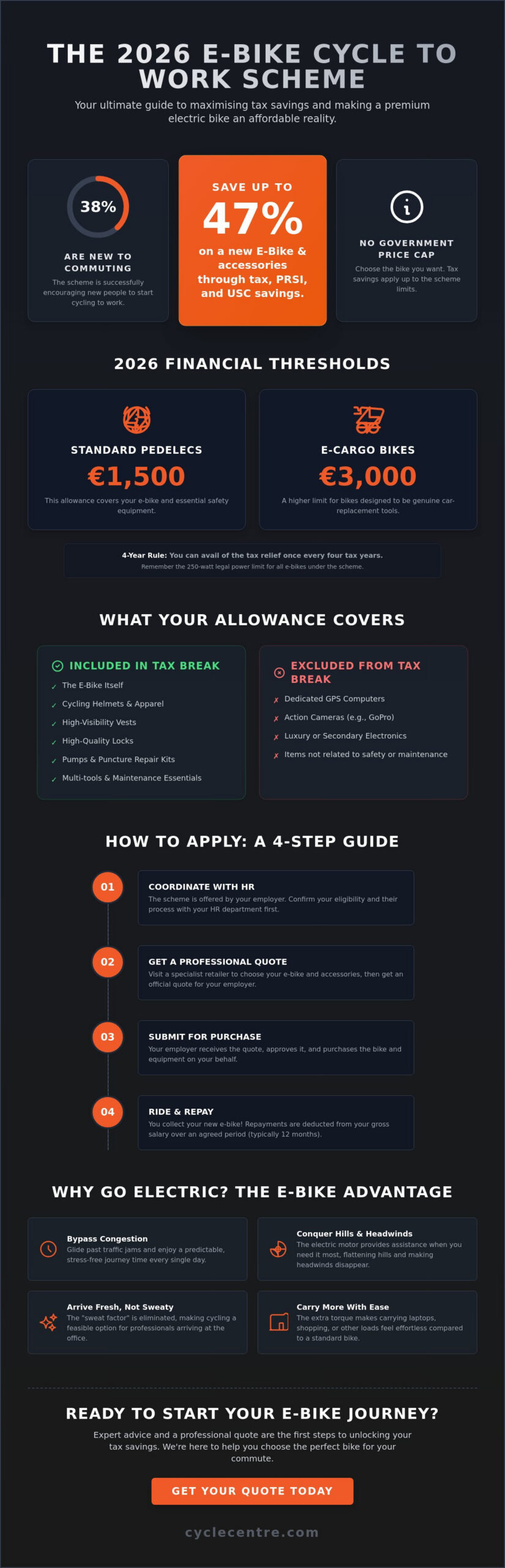
Did you know that 38% of participants currently using the cycle to work scheme electric bike incentive are completely new to commuting on two wheels? It’s a telling statistic that reflects a growing shift in how we approach our daily journeys. You likely recognise that a motor-assisted glide is the ideal solution for bypassing morning congestion, yet the initial cost of a premium e-city bike or a versatile e-MTB can feel like a significant hurdle. We understand that navigating the technicalities of battery range and tax bands can feel overwhelming when you just want a reliable way to get from A to B.
This ultimate 2026 guide will show you how to maximise your tax savings, which can reach up to 47% depending on your income bracket, making those high-end models far more accessible. We’ll clarify the current regulations, including the absence of a government price cap and the essential 250-watt power limits. By the end of this article, you’ll have a clear, step-by-step roadmap to choosing a bike that lasts and completing your application with total confidence.
Key Takeaways
- Understand the 2026 financial thresholds, including the €1,500 allowance for standard pedelecs and the higher €3,000 limit specifically for e-cargo bikes.
- Identify the critical differences between hub and mid-drive motors to ensure your cycle to work scheme electric bike handles your specific daily commute with ease.
- Master the application process by coordinating with your HR department and obtaining a professional quote from a specialist retailer to streamline your purchase.
- Recognise the importance of specialised aftercare, such as firmware updates and motor diagnostics, to protect your investment and ensure long-term reliability.
Why the Cycle to Work Scheme is the Best Way to Buy an Electric Bike in 2026
The Cycle to Work scheme isn’t merely a tax break; it’s a strategic move for anyone looking to reclaim their time and health. At its core, the initiative operates as a salary sacrifice arrangement sanctioned by the government. This means your employer purchases the bike and equipment, whilst you hire it back through deductions from your gross salary. Because these payments are taken before tax is applied, you significantly reduce your taxable income. It’s a pragmatic solution that has transformed the Irish commute since 2020, turning what was once a stressful crawl through traffic into a reliable, breezy journey.
Electric bikes have surged in popularity because they solve the primary hurdles of traditional cycling. You no longer need to worry about arriving at a meeting out of breath or struggling against a headwind on the way home. Choosing a cycle to work scheme electric bike allows you to maintain a consistent speed with far less physical exertion. Beyond the personal benefits, the environmental impact is substantial. By swapping four wheels for two, you contribute to a cleaner urban environment and bypass the gridlock that defines modern rush hours. The scheme also extends beyond the frame itself; you can include essential cycling helmets and apparel in your application to ensure you’re fully equipped from day one.
The Financial Logic: Tax, PRSI, and USC Savings
The brilliance of the scheme lies in the “pre-tax” deduction. When repayments come out of your gross salary, you aren’t just paying for the bike; you’re actively lowering the amount of your pay subject to income tax and national insurance. According to 2026 data, employees can save up to 47% on the cost of an e-bike and accessories, depending on their income tax bracket. When you contrast the monthly “out-of-pocket” deduction against the total retail price, the value becomes undeniable. It effectively turns a premium investment into a manageable, discounted monthly expense that fits comfortably into a household budget. For a detailed breakdown of cycle to work scheme how it works and how to maximise your savings, our dedicated guide walks you through every step of the process.
E-Bikes vs. Traditional Bikes: Why Go Electric?
Professionals often hesitate to cycle because of the “sweat factor.” Arriving at the office needing a shower isn’t always feasible. Electric motors remove this barrier entirely by providing assistance exactly when you need it. This technology levels the playing field for commutes exceeding 10km, making longer distances feel like a short spin. Additionally, the extra torque makes it easy to carry heavier loads, such as laptops or groceries, without the physical exhaustion associated with a standard bicycle. It’s about making the commute functional rather than just a workout.
Understanding the 2026 Scheme Limits and Rules
Success with your application depends on a clear grasp of the financial boundaries set by the Revenue Commissioners. Whilst the programme is generous, it isn’t a blank cheque. For most commuters, the limit for a cycle to work scheme electric bike is currently €1,500. This figure includes both the bicycle and any associated safety equipment you choose to add. This cap was established following updated government guidance which recognised that quality electric motors naturally command a higher price point than traditional acoustic bikes.
A significant distinction exists for those with different transport needs. If you’re looking at cargo or e-cargo bikes, the limit doubles to €3,000. This is a game-changer for families or individuals who need a genuine car-replacement tool capable of carrying children or heavy groceries. It’s also vital to remember the four-year rule. You can only avail of the tax relief once every four tax years. If you choose a premium model that exceeds these limits, you’ll simply pay the balance from your net pay, whilst still enjoying the tax savings on the first €1,500 or €3,000 of the purchase price.
What Equipment is Included in the Tax Break?
The scheme isn’t just about the frame and motor; it’s designed to get you on the road safely and legally. You can include essential safety gear such as cycling helmets and apparel, high-visibility vests, and high-quality locks. Maintenance essentials like pumps, puncture repair kits, and multi-tools are also covered. However, Revenue is quite specific about what doesn’t count. Luxury items or secondary electronics, such as dedicated GPS computers or GoPro cameras, are generally excluded from the tax-free allowance. If you’re unsure about a specific accessory, you can always request a formal quote from our experts to ensure every item is compliant.
Eligibility: Who Can Apply in 2026?
All full-time and part-time employees who pay tax through the PAYE system in Ireland can participate. Self-employed individuals aren’t eligible in the traditional sense, unless they are also processed as a proprietary director of a company. A critical operational rule is that your employer must be the one to pay the retailer directly. You cannot buy the bike yourself and ask for a reimbursement later. Your company pays the invoice, and you then repay them through a salary sacrifice agreement over a period of up to 12 months. This structured approach ensures everything remains transparent and fully compliant with current tax laws.
Choosing the Right E-Bike Motor and Battery for Your Commute
Selecting the right drive system is the most critical technical decision you’ll make when choosing a cycle to work scheme electric bike. In Ireland, where coastal winds and undulating terrain are common, the motor’s placement dictates how the bike handles. We recommend sticking to industry leaders like Bosch, Shimano, or Yamaha. These manufacturers provide reliable systems with extensive service networks, ensuring your investment remains on the road for years rather than months. It’s about matching the technology to your specific route.
Whilst a hub motor might suffice for a spin through flat urban docklands, a mid-drive system is often essential for the inclines found in many Irish suburbs. You should also consider the total weight of the bike; a heavier frame requires a more robust motor to maintain a consistent speed. By selecting a reputable brand, you gain access to sophisticated sensors that adjust the power delivery based on how hard you’re pedalling, creating a natural and intuitive riding experience.
Mid-Drive Motors: The Gold Standard for Hills
Mid-drive motors are positioned at the bike’s crank, allowing the system to leverage the bicycle’s gears. This is similar to how a car engine uses its transmission to climb steep hills efficiently. For commuters facing significant inclines or those opting for E-MTB models, this is the superior choice. Whilst these systems often sit closer to the €1,500 tax-free threshold, they offer better weight distribution and long-term reliability for demanding daily use.
Hub Motors: Perfect for Flat Urban Routes
Rear-hub motors are simpler and often found on budget-friendly e-city bikes or lightweight folding models. They provide a “push” sensation from the back wheel, which is ideal for shorter, flatter commutes. If your journey is primarily through a city centre with minimal climbing, a hub motor is often more than enough. They are generally lighter and can help keep the total cost well within the standard scheme limits.
Battery Range and Charging Logistics
Battery capacity is measured in Watt-hours (Wh), which you can think of as the size of your e-bike’s fuel tank. A 400Wh or 500Wh battery is usually sufficient for most daily commutes, even when accounting for the extra drain caused by Irish wind and rain. We suggest choosing a model with a removable battery. This allows you to charge the unit conveniently at your desk, ensuring you always have a full charge for the ride home.
How to Apply: A Step-by-Step Guide to Your New E-Bike
Applying for a cycle to work scheme electric bike is a methodical process that rewards early preparation. It isn’t a complex administrative burden. Most Irish workplaces are now intimately familiar with the logistics. Following a logical sequence ensures your application moves smoothly from the initial inquiry to the moment you collect your keys. You’ll find that a structured approach helps avoid the common delays associated with incorrect paperwork or misaligned expectations.
First, consult your HR department. They will confirm if they participate and which specific scheme provider they use. Next, visit a specialist retailer. This is where you’ll select your bike and receive a formal, itemised quote. Once you submit this to your employer, they will process the payment directly to the shop. Finally, you’ll sign a salary sacrifice agreement. This document outlines how the deductions will be taken from your gross pay over a period of up to 12 months. For a comprehensive walkthrough of every stage, our cycle to work scheme application step-by-step guide covers the full process in detail. It’s a transparent system designed to get you on the road quickly.
The Importance of the Test Ride
You should never buy an e-bike online without trying the frame size first. Ergonomics are vital for a comfortable daily commute. During a test ride, pay close attention to the braking power and how the motor responds to your pedalling input. Is the motor noise intrusive? Does the upright position feel stable? We recommend using the Smart-bike Search tool to filter options based on your specific needs before visiting the showroom. This ensures you only spend time testing bikes that actually fit your lifestyle.
Handling the Paperwork and Quotes
Accuracy in your paperwork prevents unnecessary delays. A valid Cycle to Work invoice must clearly state the bicycle’s specifications and list all safety equipment. By bundling your lock, lights, and helmet into one quote, you maximise your tax efficiency. The Cycle Centre specialises in providing these no-obligation quotes for HR departments, ensuring all items meet Revenue’s strict criteria. Once the paperwork is in order, you can focus on the ride home. If you’re ready to begin the process, get started with your application today to secure your new e-bike.
Why Expert Support Matters for Your Electric Bike Journey
Purchasing a cycle to work scheme electric bike is more than a simple retail transaction; it’s the start of a long-term partnership with your transport. Unlike a traditional acoustic bike, an e-bike is a sophisticated piece of technology that integrates mechanical components with sensitive electronic systems. Since our foundation in 1974, we’ve watched the industry evolve. We understand that whilst a standard bicycle can often be maintained with basic tools, an electric motor requires a higher level of technical proficiency. This is where the value of a trusted local expert becomes clear.
Our workshop is Shimano-accredited, meaning we possess the specific diagnostic tools and training required to manage complex motor and battery systems. Whether it’s a firmware update to improve battery efficiency or diagnosing a sensor issue, having professional support on your doorstep is vital. Relying on an online retailer often leaves commuters stranded when technical glitches occur. Local expertise provides the peace of mind that your investment will remain reliable, safe, and ready for the Irish weather every morning.
Specialist E-Bike Servicing
We offer tailored Workshop Silver and Gold Service packages specifically designed for the unique needs of electric bikes. These aren’t just standard tune-ups. Our technicians perform deep-level diagnostics on systems from Bosch, Yamaha, and Bafang to ensure your software is current and your hardware is secure. Motor-specific knowledge is essential for safety, as incorrect handling of high-torque systems can lead to premature wear. If you’re curious about the specific rules governing these investments, you can find more detail in The Ultimate Guide to the Bike to Work Scheme Ireland 2026.
Making the Transition to E-Commuting
Choosing an e-bike is a significant lifestyle upgrade. You’ll soon notice the cumulative benefits of avoiding expensive fuel, parking fees, and rising insurance costs. Beyond the financial logic, the improvement in your physical and mental well-being is often the most rewarding aspect of the switch. You’ll arrive at work feeling energised rather than exhausted, having bypassed the stress of morning gridlock. If you’re ready to transform your daily journey and join a community of forward-thinking commuters, apply for your no-obligation Cycle to Work quote today and let our decades of experience guide you toward the perfect ride.
Transform Your Daily Journey Today
You now have a comprehensive understanding of the tax savings available and the technical nuances of motor selection. By utilising the cycle to work scheme electric bike incentive, you’re not just purchasing a commuter tool; you’re investing in a more efficient, sustainable lifestyle. Navigating the financial limits and the application paperwork is a straightforward process when you have the right guidance and a clear roadmap to follow.
As an independent, family-owned business since 1974, we provide the seasoned authority you need to make an informed choice. Our Shimano Accredited Workshop and specialist e-bike motor diagnostics ensure that your bike remains in peak condition long after your first ride. We’re here to facilitate your transition to two wheels with practical empathy and deep-rooted expertise, ensuring you feel supported at every stage of your journey.
Get a No-Obligation Cycle to Work Quote for Your E-Bike
Your new commute is waiting. We look forward to helping you discover the freedom and exploration that a quality electric bike provides.
Frequently Asked Questions
Can I buy an electric bike that costs more than €1,500 on the scheme?
Yes, you can choose a bike that exceeds the €1,500 threshold. However, the tax relief only applies to the first €1,500 of the purchase price for a standard e-bike. You’ll need to pay the remaining balance directly to the retailer using your net (after-tax) income. This allows you to still enjoy the maximum possible tax saving whilst securing the premium model that best fits your needs.
Is a cargo e-bike covered under a different limit in 2026?
Yes, cargo and e-cargo bikes have a significantly higher limit of €3,000. This specific allowance recognises the higher manufacturing costs of these car-replacement tools. It’s an excellent opportunity for families or those needing to transport heavy loads to invest in a high-quality cycle to work scheme electric bike with substantial tax backing. You can check if a specific model qualifies as a cargo bike by consulting with our specialist staff.
How often can I use the Cycle to Work scheme for an electric bike?
You can avail of the scheme once every four tax years. This four-year period is calculated from the date you last used the incentive, regardless of whether your previous purchase was a traditional bicycle or an electric model. It’s a “rolling” limit, so once four years have passed since your last application, you’re eligible to upgrade to the latest motor and battery technology again.
Does the scheme cover electric scooters in Ireland?
No, electric scooters are currently excluded from the scheme. The legislation is strictly designed for bicycles and electrically assisted pedal cycles (pedelecs) that require pedalling to engage the motor. Whilst e-scooters are becoming more common on Irish roads, they don’t yet qualify for the tax-free salary sacrifice arrangements offered by the Revenue Commissioners.
What happens to the bike if I leave my job before the repayments are finished?
If you leave your employment before the salary sacrifice term ends, you’re responsible for paying the remaining balance. Typically, your employer will deduct the outstanding amount from your final salary payment. It’s important to note that this final payment is usually taken from your net pay, meaning you won’t receive the tax benefit on that remaining portion of the bike’s cost.
Can I use the scheme to buy a used or second-hand electric bike?
No, the scheme is only applicable to new bicycles and equipment purchased from an authorised retailer. Second-hand bikes, whether bought from a private seller or a shop, don’t qualify for the tax relief. This rule ensures that all bikes obtained through the scheme meet modern safety standards and come with a full manufacturer’s warranty for your protection.
Do I need to pay for the bike upfront and get reimbursed?
No, and you must not pay for the bike yourself if you wish to use the scheme. Your employer must pay the retailer directly after you’ve provided them with a formal quote. If you pay for the bike personally, the Revenue Commissioners won’t recognise the transaction as part of the cycle to work scheme electric bike programme, and you’ll lose the tax savings entirely.
Is insurance for my e-bike covered under the Cycle to Work scheme?
No, the scheme doesn’t cover the cost of insurance premiums. It’s limited to the bike itself and specific safety equipment like helmets, lights, and locks. Since e-bikes are a significant investment, we strongly recommend taking out a separate insurance policy to protect against theft or accidental damage, as these are not covered by the purchase scheme or the manufacturer’s warranty.