


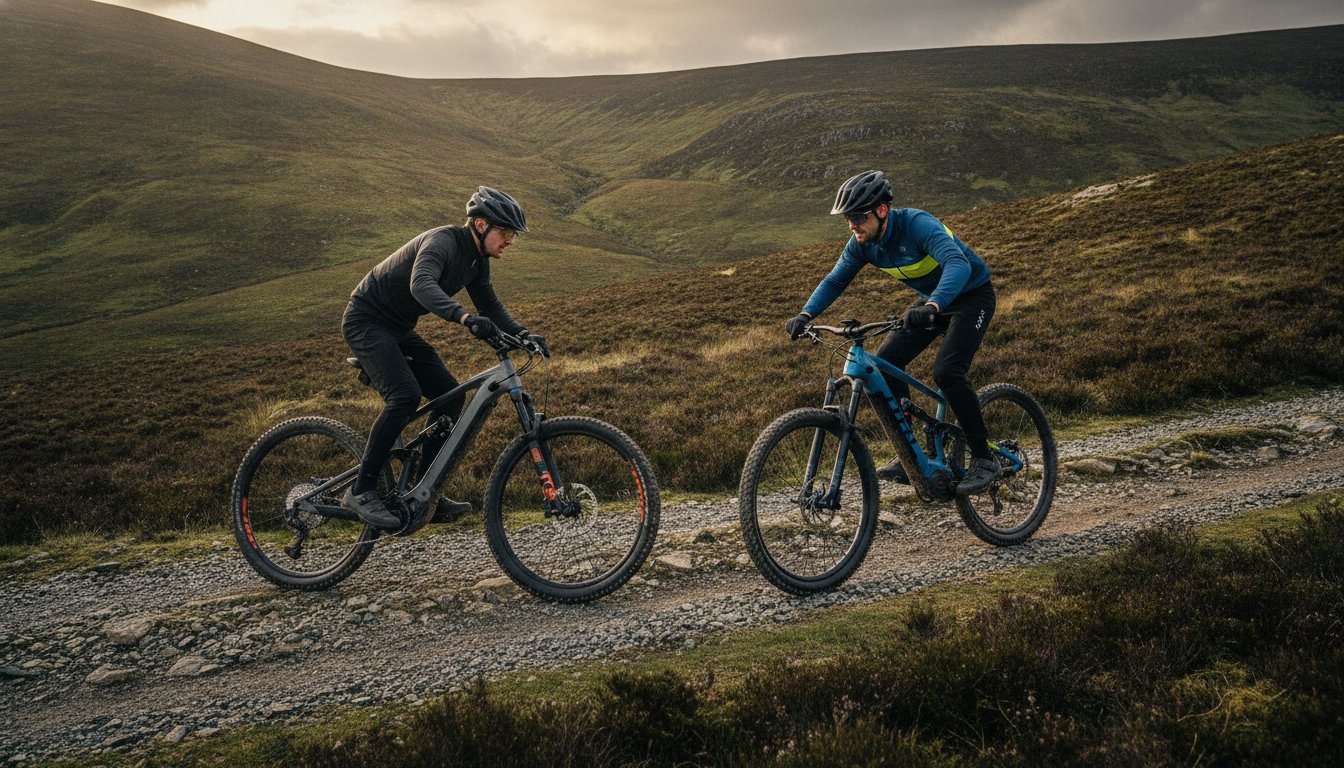
You might think that choosing between Giant vs Cube electric mountain bikes is a simple matter of comparing price tags; however, the real decision lies deep within the motor integration and how each frame handles a technical Irish climb. Selecting a high-performance e-MTB is a significant investment. It is perfectly normal to feel overwhelmed by technical jargon regarding torque, wattage, and battery longevity whilst trying to justify the cost. You want a bike that won’t leave you stranded halfway up a mountain or feeling twitchy on a fast descent.
This comparison cuts through the marketing noise to reveal how Giant’s bespoke system harmony stacks up against Cube’s aggressive value for money. We shall examine the 2026 motor updates, such as the Giant SyncDrive Pro 3 and the Bosch Performance Line CX, alongside battery range realities for steep ascents. By the end, you will understand which brand’s geometry suits your riding style and which motor system offers the most natural support for your weekend adventures. Let’s find the perfect ride for your budget and your favourite local trails.
Key Takeaways
- Compare the natural torque of Giant’s SyncDrive motors with the robust ecosystem of Cube’s Bosch Smart Systems to find your ideal power delivery.
- Evaluate how Giant’s Maestro suspension provides superior traction on technical climbs whilst Cube’s FSP 4-Link offers a plush, maintenance-friendly ride.
- Identify the core differences between Giant vs Cube electric mountain bikes to decide if you prefer bespoke frame integration or high-spec component value.
- Maximise your 2026 budget by understanding how the Irish Cycle to Work scheme can reduce the cost of a premium E-MTB by up to 52%.
- Prepare for a test ride with the knowledge of which geometry and motor system aligns with your personal riding style on rugged Irish terrain.
Giant vs Cube: The Battle for Irish Trail Supremacy in 2026
If you have spent any time at Ticknock, Ballyhoura, or the Gortin Glen trail centres recently, you will have noticed two logos appearing more than any others. The rivalry between Giant and Cube has defined the Irish E-MTB market for years. As we move into 2026, the competition has reached a fever pitch. Whilst both brands have embraced the latest electric bicycle technology, they approach the mountain with very different priorities. This year is particularly pivotal because motor systems have reached a level of sophistication where raw power is no longer the only metric that matters. Integration, software customisation, and chassis harmony are now the deciding factors for riders looking to invest their hard-earned money.
Choosing between Giant vs Cube electric mountain bikes often comes down to a choice between two distinct engineering cultures. Giant focuses on vertical integration, controlling every step of the process from the raw aluminium ore to the final motor tuning. Cube, conversely, applies German precision to create the ultimate “value-to-spec” ratio, utilising world-class third-party components on incredibly robust frames. Both brands offer fantastic machines, but the right choice depends on whether you value a bespoke, unified feel or the highest possible component level for your budget. If you are still exploring your options more broadly, our guide to the best electric bike Ireland 2026 has to offer covers the full spectrum of top-rated models tested against the unique demands of Irish terrain.
The Giant Advantage: Master of the Frame
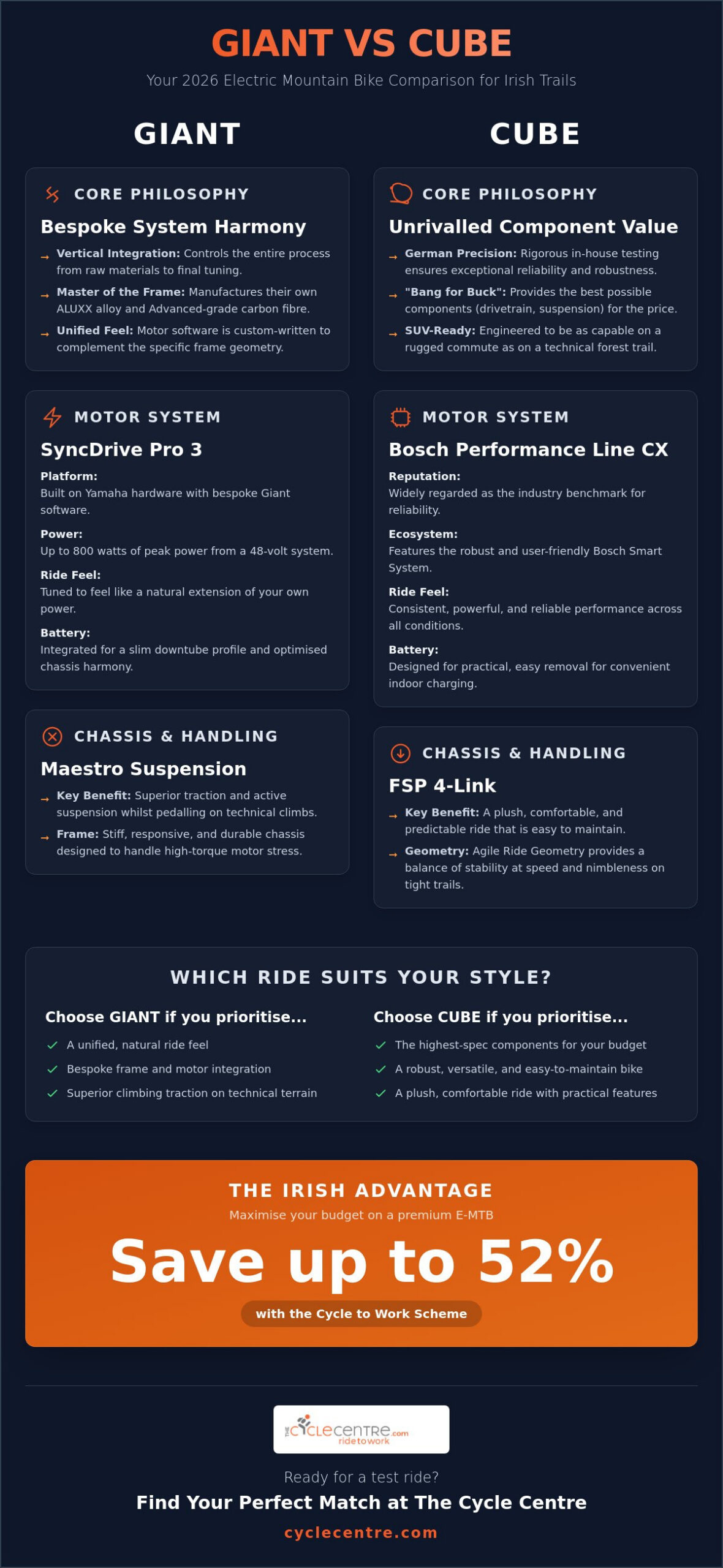
Giant holds a unique position as the world’s largest manufacturer of premium bicycles. Unlike many competitors who outsource their frame production to third-party factories, Giant owns the entire process. This allows for an extraordinary level of quality control in their 2026 line-up. Because they manufacture their own ALUXX alloy and Advanced-grade carbon fibre, they can manipulate tube shapes to handle the specific high-torque stresses of an electric motor without adding unnecessary weight. This mastery of materials results in a frame that feels stiff and responsive during technical climbs whilst remaining durable enough for the roughest descents. Furthermore, their 2026 models benefit from bespoke motor tuning, where the software is written specifically to complement the flex and geometry of the frame, creating a ride that feels remarkably natural.
The Cube Advantage: Unrivalled Component Value
Cube has built a loyal following in Ireland by making high-performance riding accessible to a wider audience. Their philosophy is simple: provide the best possible parts for the lowest possible price. When comparing Giant vs Cube electric mountain bikes at a similar price point, you will frequently find that the Cube model features higher-tier Shimano or SRAM drivetrains and superior suspension forks. This “bang-for-buck” approach does not mean they cut corners on engineering. Based in Waldershof, Germany, Cube operates one of the most rigorous testing laboratories in Europe. Their 2026 range is designed to be “SUV-ready,” meaning these bikes are as comfortable on a technical forest trail as they are on a rugged commute. For the rider who wants a bike that is easy to maintain and loaded with top-shelf components, Cube remains the industry benchmark for value.
Motor Performance: SyncDrive vs Bosch Smart Systems
The motor is the heart of any E-MTB, and for 2026, the technical gap between Giant and Cube has become a matter of “ride personality” rather than raw power. When evaluating Giant vs Cube electric mountain bikes, you are essentially choosing between two different philosophies of power delivery. Giant utilises their SyncDrive technology, which is built on a Yamaha platform but features bespoke software tuning. Their 2026 SyncDrive Pro 3 is a 48-volt system that produces up to 800 watts of peak power, designed to feel like an extension of your own legs. Cube, meanwhile, sticks with the Bosch Performance Line CX, widely regarded as the industry benchmark for its robust ecosystem and reliable performance across the Stereo Hybrid range.
Battery integration has also seen significant refinements this year. Giant’s frames often feature a slimmer downtube profile due to their vertical integration, whilst Cube focuses on practical removal. If you need to take your battery indoors for charging during a cold Irish winter, you will find the Bosch system on Cube bikes exceptionally user-friendly. For a deeper look at the technical specifications of these drive units, you might find this comprehensive e-bike motor comparison helpful for understanding the underlying hardware differences. Before purchasing any E-MTB, it is also worth familiarising yourself with the electric bike laws Ireland now in full effect, as power output limits and motor cut-off requirements directly affect which models are road-legal.
Climbing and Torque: Which Motor Conquers the Steepest Slopes?
On technical ascents, the SyncDrive Pro 3 offers up to 400% support. This means the motor can quadruple your pedalling input, providing instant engagement that is vital when you are trying to restart on a steep, muddy incline. Bosch counteracts this with its “Extended Boost” feature. This clever software allows the motor to continue providing a fraction of a second of assistance after you stop pedalling, helping you “pop” the rear wheel over roots or rocks without striking your pedals. Whilst the Bosch system has a distinctive mechanical hum, many riders find the 2026 SyncDrive units to be slightly quieter under heavy load.
Range and Efficiency: Going the Distance
Battery capacity has taken a leap forward for 2026, with 800Wh units now becoming the standard for high-end models. This extra capacity is a direct response to the “range anxiety” often felt by riders tackling long days in the mountains. If you are worried about your battery longevity on steep climbs, we have a guide on overcoming electric bike range anxiety that explains why modern cell technology has made mid-ride failures a thing of the past. Both brands use high-density cells that manage heat efficiently, though the Bosch Flow app offers slightly more granular data on your remaining range based on your current riding style. If you want to feel this power delivery for yourself, come and try our Electric Mountain Bikes to see which system feels most natural to you.
Customisation is handled via smartphone apps: Giant RideControl and the Bosch Flow app. Both allow you to tweak torque settings and support levels. If you prefer a “set and forget” approach, Cube’s Bosch system is incredibly intuitive. However, for the rider who loves to nerd out on data and fine-tune every aspect of the motor’s behaviour, Giant provides a slightly more open platform for adjustment.
Suspension and Handling: Maestro vs Agile Ride Geometry
Whilst a powerful motor helps you reach the summit, the suspension system determines how much fun you have on the way back down. High-performance E-MTBs are significantly heavier than their non-electric counterparts, which makes chassis control and traction even more critical. When comparing Giant vs Cube electric mountain bikes, the difference in handling often comes down to how each brand manages this extra mass. Giant relies on its sophisticated Maestro system to provide a racing-edge feel, whilst Cube utilises its Agile Ride Geometry and FSP 4-Link suspension to prioritise comfort and predictable stability on rugged Irish singletrack.
The choice between these two brands often reflects your riding aspirations. If you are looking for a bike that feels nimble and rewards aggressive line choices, Giant’s engineering likely fits your profile. If you prefer a “planted” feel that smooths out technical errors and keeps you comfortable during long days in the saddle, Cube’s design philosophy is hard to beat. Because these bikes represent a serious investment in your lifestyle, it is helpful to remember that the official Cycle to Work Scheme rules now support purchases up to €1,500 for e-bikes, making these premium suspension systems more accessible than ever before.
Maestro: Why Giant’s Suspension is a Game-Changer
Giant’s Maestro suspension is widely regarded as one of the most efficient designs in the industry. It uses four strategically positioned pivot points and two linkages that work together to create a single “floating” pivot point. This clever bit of engineering accomplishes three things: it eliminates “pedal bob” during steep climbs, remains fully active under heavy braking, and provides incredible small-bump sensitivity. For Irish riders tackling slippery descents at trail centres, the ability to brake hard without the rear suspension stiffening up is a massive safety advantage. The pivot bearings are also exceptionally well-sealed, which is vital for maintaining performance amongst the mud and grit of a typical Irish winter.
Cube’s Agile Ride Geometry: Comfort and Confidence
Cube approaches handling with a focus on “Agile Ride Geometry,” which aims to give their 29er E-MTBs the playful feel of a smaller-wheeled bike without sacrificing stability. Their FSP 4-Link suspension is a reliable, plush system that excels at absorbing the “chatter” of rocky trails. It is a very forgiving setup. This makes Cube a favourite for riders who might be transitioning from a hardtail or those who find aggressive “race” geometries a bit too taxing on the back and neck. By balancing a slightly more upright riding position with a low centre of gravity, Cube ensures that you feel “in” the bike rather than “on” it, providing instant confidence from the first pedal stroke.
Wheel size strategy also differs across the 2026 ranges. Giant has leaned heavily into “Mullet” setups (a 29-inch front wheel for rolling over obstacles and a 27.5-inch rear wheel for quick cornering) on many of their E-MTBs. Cube, conversely, continues to champion the dual 29-inch setup for its superior momentum and stability. Both brands offer fantastic handling, but the Giant vs Cube electric mountain bikes debate ultimately hinges on whether you want a surgical trail tool or a plush, all-terrain cruiser.
Choosing Your Ride: Value and the Cycle to Work Scheme
Investing in a high-performance E-MTB is a significant financial commitment. It is not just about the sticker price; it is about the total cost of ownership over several years of rugged Irish trail use. When weighing up Giant vs Cube electric mountain bikes, you are balancing two different types of value. Cube typically wins on the initial “spec-sheet” comparison, often providing higher-tier groupsets and suspension for a lower entry price. Giant, conversely, offers a level of vertical integration and brand prestige that often results in higher resale demand and better long-term frame security. Both brands represent a smart investment, provided you choose the one that aligns with your financial priorities.
The most effective way to reduce your expenditure is through the bike to work scheme Ireland. For 2026, the tax-free limit for electric bikes stands at €1,500. Whilst many premium mountain bikes exceed this figure, you can still apply the first €1,500 of the purchase price to the scheme, potentially saving up to 52% on that portion through tax, PRSI, and USC deductions. This makes a high-end Cube or Giant much more accessible for the average worker. If you are ready to upgrade your commute and your weekend adventures, you can apply for the Cycle to Work scheme through our dedicated portal.
The €3,000 Threshold: Finding the Best E-MTB Fit
In the 2026 market, €3,000 has become a critical threshold for “trail-ready” electric bikes. Below this price, you might find Cube models that offer incredible “bang for buck,” featuring reliable Bosch motors and air-sprung suspension that rivals more expensive competitors. When you move above this price point into the premium Giant range, you are paying for refined Maestro suspension kinematics and a lifetime frame warranty. Giant’s commitment to their frames is a major differentiator. Whilst Cube offers robust engineering, Giant’s lifetime guarantee provides a level of peace of mind that many of our customers find invaluable when they plan to keep their bike for many years.
Maintenance and Serviceability in Ireland
Owning an E-MTB requires a different approach to maintenance than a standard bicycle. The high torque of these motors puts extra strain on chains, cassettes, and brake pads. Because Cube uses standard Bosch and Shimano parts, finding spares is generally straightforward across Ireland. Giant’s use of bespoke SyncDrive components means you should ensure your local shop is an authorised dealer with the correct diagnostic tools. Professional servicing is vital for E-MTB longevity because a technician can perform software updates and motor health checks that are impossible to do at home. Our workshop offers both Workshop Gold Service and Silver options to keep your motor and drivetrain in peak condition regardless of the weather.
Conclusion: Finding Your Perfect Match at The Cycle Centre
Deciding between Giant vs Cube electric mountain bikes isn’t a matter of finding a winner, but rather identifying which engineering philosophy aligns with your goals. Giant offers a surgical, integrated experience that rewards technical skill, whilst Cube provides a robust, high-value platform that opens the mountain to everyone. Both brands have reached a pinnacle of reliability in 2026, meaning your choice is safe regardless of the logo on the downtube. However, the nuances in torque delivery and frame geometry are best understood through a physical trial.
We always encourage riders to visit us to feel these differences firsthand. A test ride allows you to compare the natural assistance of Giant’s SyncDrive against the punchy reliability of Bosch. For a deeper technical dive before you arrive, you should read our guide on Bosch vs Shimano e-bike motors to see which ecosystem fits your lifestyle. Our staff are here to translate that data into real-world trail performance, ensuring you don’t just buy a bike, but the right bike for your specific needs.
Why Buy Your E-MTB from The Cycle Centre?
Our team in Dundalk has spent decades watching the industry evolve, and we have remained a constant, reliable presence for the Irish cycling community. We aren’t just sellers; we are riders who understand the unique demands of our local terrain. By choosing us, you gain access to our buy electric bike Ireland resource centre and the support of a specialist E-bike workshop. Whether you need a standard check-up or a complex motor diagnostic, our accredited technicians provide the peace of mind that your investment is protected for years to come. We take pride in being a facilitator of experiences, not just a retail outlet.
Take the Next Step
If you are ready to begin your search, our website features a Smart-bike Search tool that allows you to filter the latest 2026 Giant and Cube models by motor type, battery capacity, and price. Once you have narrowed down your favourites, you can book a consultation with us to receive a formal Cycle to Work quote. This is the first step toward reclaiming your weekends and exploring the hills with a level of freedom you never thought possible. The trails are calling, and with the right E-MTB, no climb is too steep and no loop is too long. We look forward to seeing you in the showroom and helping you start your next adventure.
Your Next Trail Adventure Starts Here
The choice between Giant vs Cube electric mountain bikes is a testament to how far cycling technology has come. Whether you opt for the integrated harmony of a Giant or the component-heavy value of a Cube, you’re investing in a machine built for the rigours of the Irish landscape. It’s about finding the balance between a natural ride feel and the raw power needed to conquer the steepest climbs. Modern battery efficiency and motor torque have transformed what’s possible on two wheels.
Our team brings over 50 years of cycling expertise to every conversation. As a Cycle to Work Scheme specialist and a Shimano Accredited Workshop, we don’t just sell bikes; we facilitate long-term riding confidence. We understand the technical nuances of these 2026 models and can help you maximise your budget whilst ensuring your bike is maintained to the highest standards. Every rider’s journey is unique, and we take pride in matching you with the right frame and motor for your style.
Browse our full range of Giant and Cube E-MTBs today and take the first step toward a more adventurous lifestyle. We’re here to help you navigate the technical details so you can focus on the freedom of the open trail.
Frequently Asked Questions
Is Giant a better brand than Cube for electric mountain bikes?
Neither brand is objectively superior, as they cater to different riding priorities. Giant focuses on vertical integration, meaning they manufacture their own frames and tune their own motors for a seamless, unified ride feel. Cube prioritises German engineering and exceptional component value, often providing higher-tier parts for a lower initial outlay. Your choice depends on whether you value bespoke system harmony or the best possible specification for your budget.
Which motor is more reliable, Giant SyncDrive or Bosch?
Both motor systems are industry leaders with excellent reliability records. The Bosch system found on Cube bikes is praised for its extensive service network and robust “Smart System” ecosystem. Giant SyncDrive, powered by Yamaha, is highly regarded for its instant engagement and natural pedalling feel. Both are designed to withstand the rigours of off-road use, provided they receive regular software updates and professional maintenance.
Can I get a Giant or Cube E-MTB on the Cycle to Work scheme?
You can certainly use the Irish Cycle to Work scheme to purchase Giant vs Cube electric mountain bikes. Under the 2026 regulations, you can save up to 52% on the first €1,500 of the bike’s cost through tax-free salary deductions. Whilst many high-performance E-MTBs exceed this limit, the scheme remains a fantastic way to subsidise a significant portion of your investment in a premium electric bike.
How long does the battery last on a Giant vs Cube electric mountain bike?
Range varies based on rider weight and trail steepness, but 2026 models with 800Wh batteries often provide enough power for four to six hours of technical trail riding. Both brands utilise high-density lithium-ion cells designed to retain the majority of their capacity for hundreds of charge cycles. You can expect several years of consistent performance if you follow standard battery care and storage guidelines.
Are Cube electric bikes made in Germany?
Cube bikes are designed, engineered, and assembled in Waldershof, Germany. They operate one of Europe’s most advanced testing laboratories to ensure every frame meets strict safety standards. Whilst raw materials and some components are sourced globally, the final assembly and quality control happen in their German facility. This centralised process ensures that every Cube E-MTB maintains a high standard of build quality and reliability.
What is the warranty period for Giant E-MTB frames?
Giant provides a lifetime warranty on the frame for the original purchaser. This comprehensive guarantee covers manufacturing defects in both their ALUXX aluminium and Advanced-grade carbon frames. It is one of the strongest warranties in the cycling industry and reflects Giant’s confidence in their in-house manufacturing. Bear in mind that components like motors and batteries typically have separate two-year warranties from the original manufacturer.
Do Giant and Cube E-MTBs require special servicing?
E-MTBs require specialised diagnostics that standard bicycles don’t. You should visit an accredited workshop for motor software updates and battery health reports at least once a year. Our technicians use specific electronic tools to ensure the drive unit and sensors are calibrated correctly. Regular professional servicing is vital for maintaining the longevity of the motor and ensuring your drivetrain handles the high torque loads effectively.
Which brand is better for beginner mountain bikers?
Cube is often the preferred choice for beginners because of its predictable handling and comfortable, upright riding position. Their Agile Ride Geometry builds confidence quickly on uneven terrain. Giant’s Maestro suspension is incredibly capable and efficient, but it is generally favoured by riders who want a more aggressive, performance-tuned setup as their technical skills progress. Both brands offer entry-level models that are perfect for discovering Irish trails.